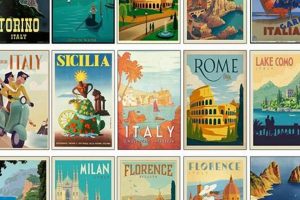
These graphic art pieces, typically produced from the early 20th century through the 1960s, were designed to promote air travel and specific destinations. Characterized by vibrant colors, stylized illustrations, and evocative typography, they aimed to romanticize the experience of flying. For instance, a poster from Pan American World Airways might depict a sun-drenched beach in Hawaii with the slogan “Fly the Pacific.”
These promotional artworks are valuable historical artifacts that reflect the evolution of commercial aviation and travel culture. They provide insights into the societal attitudes and aspirations of past eras. The visual appeal and craftsmanship of these images continue to captivate collectors and enthusiasts, contributing significantly to the art and design markets. They offer a tangible link to a bygone era of travel, when air travel was considered a luxury.
The following sections will delve further into the artistic characteristics, the historical significance, the collection and valuation, and the enduring appeal of these vintage promotional materials.
Tips for Appreciating and Collecting Authentic Examples
These materials represent a significant intersection of art, design, and aviation history. Identifying and preserving genuine pieces requires careful consideration and informed decision-making.
Tip 1: Examine Printing Techniques. Original examples often exhibit characteristics of lithography or screen printing, processes common during their production era. Examine the surface under magnification to identify telltale dot patterns or layering effects indicative of these techniques. Digital reproductions, conversely, typically display a uniform dot matrix.
Tip 2: Assess Paper Quality and Age. The paper used in original artworks typically possesses a distinct texture and patina indicative of age. Modern paper stocks often lack the same visual and tactile qualities. Seek signs of slight yellowing, foxing (small brown spots), or subtle imperfections consistent with natural aging.
Tip 3: Scrutinize Colors and Ink. The colors in original pieces often exhibit a richness and depth achieved through specific ink formulations available at the time. Be wary of examples with overly bright or saturated colors, as these may suggest recent printing or digital enhancement. Look for consistent ink coverage and absence of streaking or bleeding.
Tip 4: Research Artist Signatures and Printer Marks. Many authentic items bear the signatures of the artists or the marks of the printing companies involved in their creation. Conduct thorough research to verify the authenticity of these signatures and marks against known databases or reference materials.
Tip 5: Compare to Known Authentic Examples. Consult reputable auction catalogs, museum collections, and online archives to compare potential acquisitions against verified originals. Pay close attention to details such as size, composition, and typographic elements.
Tip 6: Investigate Provenance. Whenever possible, gather information about the item’s ownership history. A documented provenance can significantly enhance its value and credibility.
Tip 7: Consider the Condition. While pristine condition is desirable, minor imperfections like edge wear or slight creases are often expected in authentic examples. Focus on structural integrity and the absence of significant damage such as tears, stains, or fading.
Employing these strategies enables informed evaluation and enhances the likelihood of acquiring valuable and historically significant vintage examples.
The ensuing sections will delve into the impact of preservation and the future market trends regarding these historical artworks.
1. Aesthetic Styles

The aesthetic styles evident in promotional graphic arts significantly shaped their appeal and effectiveness. Primarily, the influence of Art Deco is unmistakable in many pieces produced during the 1930s and 1940s. Streamlined forms, geometric patterns, and bold, sans-serif typography were common features, reflecting the era’s fascination with modernity and speed. For example, the iconic posters for Imperial Airways often employed these elements, conveying a sense of luxury and technological advancement. The use of airbrushing techniques further enhanced the sleek, polished appearance characteristic of Art Deco.
The subsequent Mid-Century Modern movement, prevalent from the late 1940s through the 1960s, introduced a more playful and optimistic visual language. Characterized by vibrant color palettes, whimsical illustrations, and a focus on aspirational lifestyles, Mid-Century Modern graphics sought to capture the allure of exotic destinations. Posters promoting Trans World Airlines (TWA), for instance, frequently depicted stylized landscapes and smiling passengers, emphasizing the accessibility and enjoyment of air travel. This shift in aesthetic reflected a broader societal trend towards consumerism and leisure.
Understanding these aesthetic styles provides crucial context for appreciating the historical and cultural significance of these artworks. They serve as visual markers of evolving design trends and shifting perceptions of air travel. Recognizing these elements enhances the ability to authenticate original pieces and to discern the artistic intent behind their creation, contributing to a deeper understanding of their value and enduring appeal.
2. Destination Promotion

The convergence of destination promotion and vintage airline posters represents a pivotal strategy in shaping early tourism and defining aspirational travel experiences. These posters served as visual ambassadors, enticing potential travelers with idealized depictions of distant locales.
- Visual Storytelling and Romanticism
These artworks utilized vivid imagery and evocative slogans to craft compelling narratives about destinations. Rather than merely presenting factual information, they focused on creating a sense of romance and adventure. For example, posters promoting travel to the French Riviera often depicted sun-kissed beaches, glamorous figures, and luxury yachts, fostering an association of elegance and leisure. This approach aimed to stimulate desire and transform travel into a symbol of status and sophistication.
- Iconography and Symbolic Representation
Effective destination promotion relied on the strategic use of iconography to represent a location’s unique identity. Prominent landmarks, cultural symbols, and natural features were frequently featured to instantly convey a sense of place. Mount Fuji in Japanese travel promotions or the Eiffel Tower in Parisian advertisements exemplify this approach. These visual shorthand techniques enabled viewers to quickly grasp the essence of a destination, creating a lasting impression and associating specific imagery with a particular location.
- Influence on Tourism Trends
The success of vintage airline posters in promoting specific destinations directly influenced tourism trends. Destinations that were heavily featured in visually appealing and widely distributed advertising campaigns often experienced a surge in tourist arrivals. This demonstrates the potent impact of visual marketing on shaping travel preferences and creating new tourism hotspots. The posters not only reflected existing travel interests but also actively cultivated new markets and redefined popular destinations.
- Evolution of Travel Aesthetics
The style and content of destination promotion graphics evolved alongside changing societal values and travel preferences. Early posters often emphasized exoticism and adventure, targeting affluent travelers seeking unique experiences. Later campaigns, reflecting the democratization of air travel, focused on accessibility and family-friendly activities. This evolution underscores the posters’ role as a barometer of shifting cultural attitudes towards travel and leisure, providing valuable insights into the historical development of the tourism industry.
These interconnected facets highlight the profound influence of destination promotion on the creation, dissemination, and lasting impact of vintage airline posters. They serve as a testament to the power of visual communication in shaping perceptions, driving travel trends, and defining the cultural landscape of tourism.
3. Printing Techniques

The production of vintage airline posters relied on distinct printing techniques that significantly influenced their aesthetic qualities, durability, and overall value. Understanding these techniques is crucial for authenticating and appreciating these historical artifacts.
- Lithography
Lithography was a prevalent method for producing these posters, particularly in the early to mid-20th century. This process involves creating an image on a flat stone or metal plate using a greasy substance, which then attracts ink while repelling water. The image is transferred to paper through direct pressure. The result is typically characterized by rich colors, smooth gradients, and fine detail. Examples include many early posters from Pan American and Air France, notable for their vibrant depictions of exotic destinations. The labor-intensive nature of lithography contributed to the high quality and cost of these posters.
- Screen Printing (Serigraphy)
Screen printing, also known as serigraphy, emerged as another significant technique, especially for posters with bold colors and graphic designs. This method involves forcing ink through a stencil onto the paper using a mesh screen. Each color requires a separate screen, making the process multi-layered and capable of producing striking visual effects. Swissair and British Overseas Airways Corporation (BOAC) frequently utilized screen printing for their posters. The technique allowed for the use of opaque inks and resulted in posters with strong color saturation and durability.
- Offset Lithography
Offset lithography is an indirect printing method where the image is transferred from a plate to a rubber blanket, and then to the paper. This process allowed for greater efficiency and cost-effectiveness compared to direct lithography, making it suitable for large print runs. While the image quality might not always match that of direct lithography, offset printing provided a balance between quality and affordability. Many posters from the late 1950s and 1960s were produced using this technique as commercial aviation expanded and demand for promotional materials increased.
- Halftone Printing
Halftone printing is a technique used to reproduce continuous-tone images, such as photographs, by converting them into a series of dots of varying sizes. When viewed from a distance, these dots create the illusion of continuous tones. This method was often combined with lithography or offset lithography to incorporate photographic elements into the posters. This allowed for more realistic depictions of destinations and aircraft, enhancing their appeal to potential travelers. The use of halftone printing marked a shift towards more representational imagery in airline advertising.
These printing techniques played a critical role in shaping the visual identity of vintage airline posters. The choice of technique influenced the aesthetics, durability, and production costs, ultimately affecting their value and collectibility today. Recognizing these printing methods enhances one’s ability to appreciate the craftsmanship and historical significance of these artifacts of aviation history.
4. Historical Context

Understanding the historical context surrounding promotional artworks is fundamental to appreciating their significance and impact. These visual artifacts reflect not only the evolution of air travel but also broader societal, economic, and technological developments of their time.
- The Golden Age of Travel
The period from the 1930s to the 1960s, often referred to as the “Golden Age of Travel,” witnessed a surge in air travel’s popularity, transitioning from a luxury reserved for the elite to a more accessible form of transportation. This era is directly reflected in these promotional graphics, which often depicted glamorous destinations and sophisticated passengers, romanticizing the experience of flight. Airlines like Pan American and TWA strategically used these images to position themselves as purveyors of a luxurious and aspirational lifestyle. The post-World War II economic boom further fueled this trend, leading to increased leisure travel and a greater demand for enticing promotional materials.
- Technological Advancements in Aviation
Advancements in aircraft technology, such as the introduction of jet engines and larger, more comfortable planes, significantly impacted the portrayal of air travel in promotional materials. These advancements allowed for longer flights, increased passenger capacity, and a smoother flying experience. Posters from the late 1950s and 1960s frequently highlighted these technological marvels, emphasizing the speed, safety, and comfort of jet travel. The sleek designs of new aircraft became central visual elements, symbolizing progress and innovation.
- Global Geopolitical Influences
Global geopolitical events, such as the Cold War, also influenced the content and style of promotional graphic arts. Airlines often promoted destinations that aligned with their respective nations’ political alliances, fostering cultural exchange and economic ties. The depiction of certain destinations was sometimes subtly shaped by ideological considerations, reflecting the broader geopolitical landscape. For example, airlines from Western countries might have emphasized travel to democratic nations, while those from communist countries promoted travel within the Eastern Bloc.
- The Rise of Consumer Culture
The mid-20th century witnessed the rise of consumer culture, with advertising playing an increasingly prominent role in shaping consumer preferences and lifestyles. Airline posters became a crucial tool for promoting air travel as a desirable and accessible form of leisure. These posters not only advertised specific destinations but also promoted a lifestyle of travel, adventure, and sophistication. The increasing availability of disposable income and the growing emphasis on personal fulfillment contributed to the success of these marketing campaigns.
These interconnected historical factors underscore the role of vintage airline posters as not just advertising tools, but as cultural artifacts that reflect the changing world. Their value extends beyond their aesthetic appeal, offering invaluable insights into the social, economic, and technological forces that shaped the history of air travel and the evolution of consumer culture.
5. Artist Influence

The impact of individual artists and design movements on vintage airline promotional materials cannot be overstated. These artists’ unique styles and creative vision significantly shaped the visual identity and cultural appeal of these artworks, contributing to their enduring legacy.
- Distinct Artistic Styles and Techniques
Individual artists brought their unique stylistic approaches to these projects. Some favored realistic depictions of destinations and aircraft, employing meticulous detail and technical skill. Others adopted more stylized and abstract approaches, influenced by movements such as Art Deco or Surrealism. A notable example is Paul George Lawler, known for his striking travel posters that often depicted abstracted landscapes and figures. These distinctive styles allowed airlines to differentiate their brands and appeal to specific audiences.
- Signature Elements and Motifs
Many artists developed signature elements and motifs that became closely associated with their work. These might include recurring color palettes, typographic styles, or compositional techniques. For example, artist David Klein’s vibrant, colorful posters for TWA frequently featured bold, geometric shapes and optimistic imagery. These recurring elements not only enhanced the aesthetic appeal of the posters but also contributed to the creation of a recognizable visual identity for the airlines they represented.
- Collaboration with Airlines and Agencies
Artists often worked closely with airline marketing departments and advertising agencies to develop promotional campaigns that aligned with the airlines’ branding and target audience. This collaborative process involved detailed briefings, concept development, and iterative revisions. The success of these campaigns depended on the artist’s ability to translate the airline’s marketing objectives into visually compelling and emotionally resonant images. The relationship between the artist and the airline was thus critical to the creation of effective and memorable posters.
- Legacy and Recognition
The work of influential artists in this field has gained recognition and appreciation over time. Many of these artists have become celebrated figures in the history of graphic design, and their posters are highly sought after by collectors and museums. The recognition of their artistic contributions has elevated the status of vintage airline posters from mere advertising materials to valuable works of art. Exhibitions and publications dedicated to these artists have further solidified their legacy and ensured that their contributions continue to be appreciated by future generations.
The artistic contributions to airline promotional graphic arts are essential to understanding their enduring appeal and cultural value. The skill, creativity, and vision of these artists transformed advertising materials into iconic works of art that continue to captivate audiences today, solidifying their place in the history of both art and aviation.
6. Collectibility

The collectibility of promotional graphics is intrinsically linked to several key factors, transforming them from mere advertising ephemera into valuable historical artifacts. Scarcity, condition, artistic merit, and historical significance collectively drive their desirability among collectors. The limited production runs of certain posters, especially those from smaller or short-lived airlines, contribute to their rarity, directly impacting market value. A poster advertising the now-defunct Braniff International Airways, for instance, may command a higher price due to its limited availability compared to a poster from a more established airline like Pan American.
Furthermore, the condition of a poster significantly influences its value. Collectors prioritize pieces with minimal damage, such as tears, fading, or staining. Expert restoration can enhance a poster’s appearance, but unrestored, well-preserved examples often retain higher value due to their originality. The artistic design and the identity of the artist also play a critical role. Posters designed by renowned artists or featuring iconic imagery, reflecting the Art Deco or Mid-Century Modern styles, are more sought after. The subject matter of a poster also contributes to its collectibility; destinations and aircraft that evoke a sense of nostalgia or represent a significant moment in aviation history tend to be particularly desirable.
Ultimately, the understanding of the collectibility aspect is essential for both seasoned collectors and newcomers. It dictates investment strategies, guides preservation efforts, and deepens the appreciation of these objects as tangible links to a bygone era of travel and design. Recognizing the factors that contribute to collectibility ensures informed decisions in acquiring, preserving, and valuing these important cultural artifacts, solidifying their place in both art and aviation history.
Frequently Asked Questions
The following section addresses common inquiries regarding the nature, value, and preservation of promotional materials from the history of commercial aviation.
Question 1: What distinguishes an original promotional graphic from a reproduction?
Original examples were typically printed using techniques such as lithography or screen printing, resulting in unique textural characteristics and color profiles. Reproductions often employ modern digital printing methods, lacking the subtleties and patina of authentic pieces. Examination under magnification can reveal the printing process used.
Question 2: How does condition affect the value?
Condition significantly impacts value. Posters in pristine condition command higher prices. However, slight imperfections consistent with age, such as minor creases or edge wear, are often acceptable. Significant damage, including tears, stains, or fading, can substantially diminish value.
Question 3: What factors contribute to the scarcity?
Scarcity is influenced by several factors, including the airline’s size, the poster’s print run, and its survival rate. Posters from smaller or short-lived airlines are generally rarer and more valuable. Certain promotional campaigns may have had limited distribution, further increasing rarity.
Question 4: What are some key indicators of authenticity?
Authenticity can be verified by examining the printing technique, paper quality, ink composition, and the presence of artist signatures or printer’s marks. Comparing the item to known authentic examples in reputable collections is also advisable. Consulting with experts can further assist in authentication.
Question 5: How should be preserved?
Preservation requires careful handling and storage. Items should be stored flat in acid-free materials, away from direct sunlight, heat, and humidity. Framing with UV-protective glass can further safeguard the artwork from environmental damage.
Question 6: Where can authentic examples be acquired?
Authentic examples can be acquired through reputable auction houses specializing in vintage posters, established dealers with expertise in travel memorabilia, and select antique markets. Due diligence and thorough research are essential when purchasing.
In summary, careful assessment, proper preservation, and informed acquisition strategies are paramount for those interested in these artworks. Their value extends beyond aesthetics, representing tangible connections to the historical evolution of aviation and design.
The subsequent sections will delve into the impact of preservation and the future market trends regarding these historical artworks.
Conclusion
This exploration of airline posters vintage has illuminated their multifaceted significance. From reflecting the stylistic trends of their time to serving as powerful tools for destination promotion and brand building, these posters offer valuable insights into the history of aviation, design, and consumer culture. Their enduring collectibility underscores their continued relevance and appeal.
The preservation and appreciation of airline posters vintage are vital for maintaining a tangible connection to the past. Continued research and responsible collecting will ensure that these artifacts remain accessible and informative for future generations, offering a unique perspective on a transformative era in travel and visual communication. These artworks serve as reminders of the power of design to shape perceptions, influence behaviors, and capture the spirit of an age.