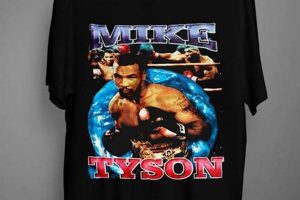
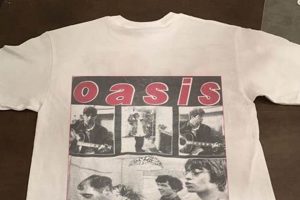
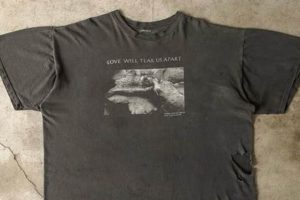
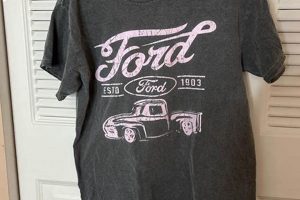
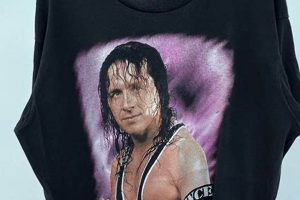
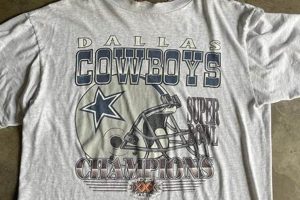
The creation of personalized apparel with an aged aesthetic is a growing trend. This approach often involves employing vintage graphics, distressed textures, or specific manufacturing techniques to replicate the look and feel of garments from past eras. For instance, a modern t-shirt might be printed with a design reminiscent of 1970s concert posters and then subjected to a washing process that simulates years of wear.
This particular form of personalized clothing offers several advantages. It allows individuals to express their unique style and interests while simultaneously tapping into a sense of nostalgia or appreciation for historical periods. Furthermore, the distressed nature of such items can contribute to a more relaxed and authentic appearance. Historically, repurposing and modifying existing clothing was a common practice driven by resourcefulness and individual expression, a spirit that resonates with this current trend.
Understanding the nuanced aspects of design elements, printing techniques, and fabric selection is crucial for creating successful pieces within this category. The subsequent sections will delve into these specific areas, providing detailed information on achieving the desired vintage effect and delivering durable, high-quality personalized garments.
Guidance on Personalized Aged Apparel
The following guidelines are intended to assist in the successful creation and acquisition of personalized garments with a vintage aesthetic. Careful consideration of these points will contribute to a product that effectively captures the desired look and feel.
Tip 1: Design Authenticity. Thoroughly research the historical period or style intended to be replicated. Employ genuine vintage graphics or meticulously recreate designs that are consistent with the target era. Avoid anachronistic elements that may detract from the overall authenticity.
Tip 2: Fabric Selection. Opt for fabrics that were commonly used in the period being emulated. Consider materials such as ring-spun cotton, linen blends, or other natural fibers. Pay attention to fabric weight and texture to ensure a realistic feel.
Tip 3: Printing Techniques. Utilize printing methods that accurately reflect the techniques of the past. Screen printing with water-based inks or discharge printing can produce a softer, more vintage-appropriate print than direct-to-garment (DTG) printing in some cases.
Tip 4: Distressing Processes. Employ distressing techniques judiciously. Over-distressing can appear artificial. Consider methods such as enzyme washing, garment dyeing, or controlled abrasion to achieve a subtle, natural-looking wear effect.
Tip 5: Color Palette. Research the color palettes prevalent during the chosen historical period. Faded or muted tones often contribute to a more convincing vintage appearance. Avoid excessively bright or modern colors.
Tip 6: Tag and Label Accuracy. Replicate vintage-style tags and labels. These small details can significantly enhance the overall authenticity of the garment. Research appropriate fonts, materials, and placement for these elements.
Tip 7: Consider the Garment Style. The cut and construction of the garment should align with the targeted vintage era. Research common silhouettes and construction techniques to ensure accuracy.
Adhering to these guidelines will enhance the likelihood of creating or acquiring a personalized garment with a convincingly aged and authentic appearance. Attention to detail and a commitment to historical accuracy are essential for success in this area.
The subsequent sections will delve into specific applications and market considerations for personalized aged apparel, providing further insights into this evolving area of garment customization.
1. Authenticity of Design

In the realm of personalized aged apparel, the authenticity of design serves as a foundational element, directly influencing the perceived value and appeal of the resulting garment. It dictates whether the item successfully evokes a sense of historical accuracy and genuine vintage character, or merely presents as a modern imitation.
- Historical Accuracy in Imagery
The accurate representation of historical imagery is paramount. This involves careful research into the specific era or style being emulated. Graphics, logos, and typography must align with established design conventions. For example, a design intended to evoke the 1960s counterculture movement should feature typography and imagery consistent with that period, avoiding anachronistic elements that would compromise authenticity. Failure to adhere to these principles results in a diluted and less credible vintage aesthetic.
- Accurate Color Palettes and Distressing
The selection and application of color palettes consistent with the targeted historical period are critical. Faded or muted tones, common in vintage garments due to age and wear, should be replicated accurately. Similarly, distressing techniques must be applied judiciously to simulate natural wear and tear, avoiding artificial or excessive damage that detracts from the overall authenticity. The goal is to replicate the subtle imperfections and character of genuinely aged garments, rather than creating an overtly artificial effect.
- Material and Production Appropriateness
The choice of garment material and production techniques should align with the historical context. Selecting fabrics commonly used in the past, such as cotton, linen, or wool blends, contributes to a more authentic feel. Printing methods, such as screen printing with appropriate inks, further enhance the vintage aesthetic. Modern DTG (Direct-to-Garment) methods, while efficient, may lack the texture and feel of older printing styles and should be used cautiously to preserve design authenticity.
- Contextual Relevance and Narrative
Beyond mere aesthetic replication, the design should possess contextual relevance and contribute to a coherent narrative. Designs that evoke a specific historical event, cultural movement, or personal story carry greater weight and resonate more deeply with consumers. For example, a design featuring a vintage-style concert poster from a specific music festival evokes a particular time and place, adding depth and meaning to the garment. A well-executed narrative enhances the perceived value and authenticity of the personalized aged apparel.
These facets collectively underscore the critical role of design authenticity in the creation of personalized aged apparel. A commitment to historical accuracy, combined with careful attention to detail, enhances the value and appeal of the final product. Garments that successfully capture the essence of a bygone era resonate more deeply with consumers, offering a tangible connection to the past and a unique form of personal expression.
2. Fabric Era Accuracy

Fabric era accuracy plays a crucial role in achieving a convincing “custom shirt vintage” aesthetic. The selection of materials directly influences the garment’s texture, drape, and overall appearance, thereby determining its ability to authentically replicate the look and feel of clothing from a specific historical period. For example, utilizing a modern, tightly woven polyester blend for a shirt intended to emulate the 1970s would be incongruous, as such fabrics were not prevalent during that era. Consequently, the garment would lack the desired vintage character, regardless of the design printed upon it.
The importance of fabric selection extends beyond mere aesthetics. The fiber content and weave structure affect the garment’s comfort, breathability, and durability, all of which contribute to the user’s overall experience. A heavy, coarse cotton canvas, common in workwear from the early 20th century, will feel significantly different from a lightweight, mercerized cotton jersey used in contemporary t-shirts. Reproducing a vintage military shirt, for instance, necessitates understanding the specific cotton twill used at the time to ensure an accurate tactile and visual representation. Disregarding fabric accuracy introduces a disconnect that diminishes the garment’s perceived authenticity and potentially compromises its functional qualities.
In summary, fabric era accuracy is an indispensable element in crafting effective “custom shirt vintage” pieces. It significantly impacts the garment’s aesthetic appeal, tactile qualities, and overall authenticity. Failing to consider the historical context of fabric selection can undermine the entire project, resulting in a product that falls short of its intended objective. Successful execution requires diligent research into the textiles and manufacturing techniques prevalent during the targeted historical period, thereby ensuring a cohesive and convincing vintage aesthetic.
3. Printing Technique Appropriateness

The suitability of a given printing technique is paramount in achieving an authentic vintage aesthetic in customized apparel. The selected method significantly influences the visual texture, durability, and overall period-accurate representation of the design, dictating the success of any “custom shirt vintage” endeavor.
- Screen Printing with Plastisol Inks
Screen printing, particularly with plastisol inks, was a dominant method in mid-20th-century apparel production. Plastisol inks create a raised, durable print with a slightly rubbery texture. Replicating vintage designs often necessitates utilizing this technique to capture the characteristic look and feel of screen-printed graphics from that era. Failing to employ screen printing where appropriate can result in a print that appears too clean and modern, detracting from the desired vintage effect. For instance, replicating a 1970s band t-shirt would ideally involve screen printing to accurately represent the printing methods common at the time.
- Discharge Printing for Soft Hand Feel
Discharge printing offers an alternative approach, particularly for achieving a softer, more worn-in feel. This method removes the original dye from the fabric, replacing it with the desired color. The result is a print that is integrated directly into the fabric, lacking the raised texture of screen printing. This technique is especially suitable for emulating the faded and distressed look of well-worn vintage garments. An example would be recreating a 1960s protest shirt where the print feels like it is part of the fabric itself due to years of washing.
- Consideration of Halftone and Dot Gain
The implementation of halftone patterns and the intentional allowance for dot gain are critical for emulating the visual characteristics of older printing techniques. Halftone patterns, consisting of tiny dots of varying sizes, create the illusion of tonal gradients. Dot gain, the phenomenon of ink spreading during the printing process, can soften the edges of the design and contribute to a more aged appearance. Careful manipulation of these elements can significantly enhance the authenticity of the print. For example, recreating a newspaper advertisement on a t-shirt involves accurately reproducing the halftone dot structure to capture the look and feel of vintage print media.
- Direct-to-Garment (DTG) Printing Limitations
While DTG printing offers versatility in terms of color and detail, it may not always be the most suitable choice for “custom shirt vintage” projects. DTG prints often lack the texture and depth of screen-printed or discharge-printed designs. The ink sits on top of the fabric, rather than being integrated into it. While advancements in DTG technology are improving the vintage look that it can achieve, DTG is often best utilized for more modern-looking shirts. It is essential to carefully evaluate the specific requirements of the design and the desired aesthetic before selecting DTG printing.
Ultimately, the selection of an appropriate printing technique is a crucial factor in successfully creating “custom shirt vintage” apparel. A nuanced understanding of the characteristics and limitations of each method, combined with a careful consideration of the desired vintage aesthetic, is essential for achieving an authentic and compelling result. Selecting the wrong printing technique can diminish the overall impact of the design and undermine the intended vintage appeal.
4. Distressing Subtlety

The connection between distressing subtlety and the creation of personalized aged apparel is fundamental. Overly aggressive or unrealistic distressing techniques detract from the authenticity of the finished product, diminishing its perceived value and historical accuracy. Effective distressing mimics the natural wear and tear that occurs over time, reflecting genuine usage patterns and environmental exposure. The absence of subtlety results in a contrived appearance, undermining the very essence of the “custom shirt vintage” concept. For instance, strategically placed fading around seams and stress points, coupled with minor fabric abrasions, authentically simulates years of wear. Conversely, indiscriminate application of harsh chemicals or excessive tearing creates an artificial and unconvincing effect.
Further emphasizing this connection, practical applications of distressing subtlety can be observed in reproductions of vintage workwear. Garments intended to replicate the appearance of well-used overalls or denim jackets often incorporate subtle fading, staining, and minor repairs to convey a sense of history and utility. The placement and intensity of these distressing elements are carefully considered to mirror the wear patterns associated with specific occupations or activities. For example, a reproduction of a railroad worker’s jacket might feature grease stains around the pockets and fading along the shoulders, reflecting the demands of the job. These deliberate yet restrained distressing techniques enhance the garment’s credibility and contribute to its overall appeal.
In conclusion, distressing subtlety is a critical component of successful “custom shirt vintage” creations. Its importance lies in its ability to create a believable and engaging illusion of age and authenticity. The challenge lies in achieving a balance between simulating wear and tear and avoiding an overly contrived or artificial appearance. Mastery of distressing techniques, coupled with a thorough understanding of historical context and usage patterns, is essential for producing high-quality personalized apparel that resonates with consumers seeking an authentic vintage aesthetic. This nuanced understanding links directly to the broader theme of quality and authenticity in apparel customization.
5. Personalization Uniqueness
The degree to which personalized garments exhibit originality and distinctiveness directly impacts their value and appeal, particularly within the niche of apparel featuring vintage aesthetics. The following discussion delineates key facets of this phenomenon.
- Original Graphic Integration
The incorporation of custom graphics, distinct from widely available vintage imagery, is a crucial element. Employing hand-drawn illustrations, modified vintage photographs, or unique typographic arrangements enhances the singular nature of the garment. For example, integrating a personalized family crest with a 1920s art deco design creates a distinctive product. The antithesis of this would be using commonly available, unedited stock vintage graphics, which diminishes the garment’s exclusivity.
- Thematic Narrative Connection
A unique narrative or thematic element that links the vintage aesthetic to a specific individual or event significantly elevates the garment’s personalization. A shirt commemorating a specific year of a historic car race, customized with the owner’s name and car number, serves as an example. Simply applying a generic vintage racing graphic lacks this level of personalized storytelling and emotional connection, reducing the garment to a commodity.
- Material and Construction Variations
Deviating from standard fabric choices and construction methods allows for greater personalization uniqueness. Using vintage-sourced fabrics, implementing custom stitching patterns, or modifying the garment’s cut to reflect a specific era elevates the item beyond a standard product. For instance, a custom-tailored shirt using vintage linen and incorporating period-specific button closures offers a higher degree of personalization than a standard t-shirt with a vintage-inspired graphic.
- Limited Edition Production
Restricting the production run of a particular personalized design enhances its exclusivity and desirability. Creating a limited series of shirts, each numbered and accompanied by a certificate of authenticity, elevates the garment from a mass-produced item to a collectible piece. This approach fosters a sense of ownership and distinction among consumers. Conversely, mass production of a design dilutes its perceived value and reduces its appeal to those seeking unique and individualized apparel.
These dimensions collectively underscore the importance of personalization uniqueness in the realm of garments with vintage aesthetics. Items exhibiting originality, thematic relevance, material distinction, and limited availability command a higher value and offer consumers a greater sense of individual expression and historical connection. The absence of these elements results in a diluted product lacking the distinctiveness associated with true personalized vintage apparel. The consideration and implementation of these features elevates the product from a trend piece to a meaningful expression of identity.
Frequently Asked Questions
This section addresses common inquiries regarding personalized apparel designed to emulate a vintage aesthetic, providing clarity on key aspects of the creation and acquisition process.
Question 1: What constitutes an authentic “custom shirt vintage” design?
An authentic design accurately reflects the visual and stylistic elements of the targeted historical period. This includes typography, imagery, color palettes, and printing techniques consistent with the era being emulated. Accurate historical research is essential.
Question 2: How important is fabric selection in achieving a convincing vintage appearance?
Fabric selection is paramount. The chosen material significantly impacts the garment’s texture, drape, and overall visual appeal. Utilizing fabrics commonly used during the targeted historical period enhances the garment’s authenticity.
Question 3: What printing techniques are most suitable for replicating a vintage print?
Screen printing, particularly with plastisol inks or discharge printing, is often preferred. These techniques can replicate the characteristic texture and appearance of older printing methods more effectively than modern direct-to-garment (DTG) printing in some cases.
Question 4: How should distressing techniques be applied to achieve a natural-looking aged effect?
Distressing techniques must be applied with subtlety and restraint. Over-distressing can appear artificial and detract from the garment’s authenticity. The goal is to simulate natural wear and tear, focusing on areas that would experience typical usage patterns.
Question 5: What are the limitations of DTG printing when creating a vintage look?
While versatile, DTG printing may not always be ideal for replicating a vintage aesthetic. DTG prints often lack the texture and depth of screen-printed or discharge-printed designs. The ink sits on top of the fabric, which may not accurately replicate the look of vintage printing methods, however advancements in DTG can improve the vintage look it can achieve.
Question 6: How can personalization be integrated while maintaining a cohesive vintage design?
Personalization should be integrated thoughtfully and seamlessly. Custom elements, such as names, dates, or unique graphics, should complement the overall vintage aesthetic and enhance the garment’s individual appeal without compromising its historical accuracy.
The pursuit of a convincing vintage aesthetic in personalized apparel requires careful consideration of various factors, including design authenticity, material selection, printing techniques, and distressing methods. A nuanced understanding of these elements is essential for achieving a successful outcome.
The subsequent sections will explore market trends and future directions in the “custom shirt vintage” sector, providing further insights into this evolving area of garment customization.
Conclusion
The preceding analysis has illuminated the critical elements involved in creating personalized apparel that authentically embodies a vintage aesthetic. Key considerations encompass the veracity of design elements, the appropriate selection of fabrics, the careful application of printing techniques, and the judicious use of distressing methods. These factors collectively determine the success of any “custom shirt vintage” endeavor, impacting its perceived value and historical accuracy.
The pursuit of excellence in this niche demands a commitment to historical research, technical proficiency, and artistic sensibility. The capacity to seamlessly integrate personalization while maintaining a cohesive vintage design represents the ultimate benchmark of success. As the market continues to evolve, a discerning approach to these principles will distinguish superior offerings and drive continued innovation within the realm of “custom shirt vintage” apparel.