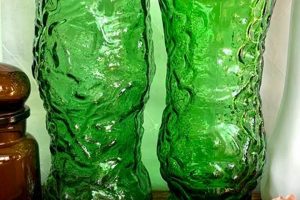
Collectible tableware crafted from tinted glass, typically in shades of emerald, forest, or lime, and originating from the early to mid-20th century constitutes a significant area of interest for collectors and enthusiasts of retro homewares. Examples encompass various forms such as plates, bowls, cups, and serving platters produced by manufacturers during this period.
These items represent a tangible connection to past eras and interior design trends, often evoking feelings of nostalgia and appreciation for craftsmanship. Their aesthetic appeal lies in the vibrant color, distinctive designs, and the inherent quality of the materials used. Furthermore, acquiring these pieces presents opportunities for enhancing the visual presentation of food and adding personality to dining experiences.
Subsequent sections will delve into the identifying features, common patterns, and key manufacturers associated with this segment of decorative arts, providing valuable knowledge for both novice collectors and seasoned aficionados.
Guidance on Appreciating and Maintaining Collectible Tinted Tableware
The following guidelines are intended to assist in the identification, preservation, and responsible acquisition of historic colored glassware.
Tip 1: Examine for Manufacturer’s Marks: Check the underside of items for embossed or etched marks. These markings frequently reveal the producer, date of manufacture, and pattern name, facilitating research and authentication. Examples include marks from Hazel Atlas, Jeannette Glass, or Anchor Hocking.
Tip 2: Assess Color Consistency: Variations in hue can indicate different production runs or potential damage from sun exposure. Original sets will typically exhibit a uniform coloration across all pieces.
Tip 3: Inspect for Damage: Carefully scrutinize surfaces for chips, cracks, scratches, or clouding. These imperfections can significantly impact the value and structural integrity of the glassware.
Tip 4: Research Patterns and Designs: Familiarize yourself with common patterns, such as Depression-era designs or mid-century modern styles. This knowledge will aid in identifying rare or highly sought-after pieces.
Tip 5: Practice Responsible Cleaning: Utilize gentle, non-abrasive detergents and soft cloths to prevent scratching or dulling the surface. Avoid harsh chemicals or dishwashers, as they can damage delicate finishes.
Tip 6: Provide Proper Storage: Store the glassware in a cool, dry location away from direct sunlight. Employ padded dividers or cloths between pieces to prevent chipping or scratching.
Tip 7: Consider Purchasing from Reputable Sources: Acquire items from established antique dealers, reputable online marketplaces, or estate sales to minimize the risk of acquiring reproductions or misrepresented items.
Adherence to these recommendations will contribute to the long-term preservation and enjoyment of this historically significant form of decorative art, ensuring its continued appreciation by future generations.
The subsequent section will address strategies for integrating this vintage tableware into contemporary settings, exploring its versatility and enduring aesthetic appeal.
1. Color Variation

Color variation in vintage green glass tableware represents a significant characteristic impacting value and authenticity. These variations can arise from several factors inherent in the glass manufacturing processes of the early to mid-20th century. Variations in the chemical composition of the glass batch, subtle differences in furnace temperatures, and inconsistencies in the timing of the annealing process all contributed to minor shifts in the final color. For instance, a set of Jeannette Glass “Jade-ite” plates might exhibit slight differences in the intensity of the green hue, even within the same production run. These minor inconsistencies, while perhaps imperceptible to the untrained eye, can be crucial indicators of originality and serve as distinguishing features for collectors.
Exposure to ultraviolet (UV) radiation from sunlight also induces noticeable color changes over time. Prolonged sun exposure leads to a process known as solarization, where the manganese dioxide, often used as a decolorizing agent in the glass, reacts to produce a subtle amethyst or pink tint. This effect is particularly evident in items displayed near windows or in brightly lit environments. Understanding the mechanisms of solarization is vital for accurately assessing the original color and identifying pieces that have undergone significant environmental alteration. The presence or absence of such solarization, alongside other signs of age, contributes to the overall narrative and value assessment of these items.
In conclusion, assessing color variation requires a nuanced understanding of both manufacturing processes and environmental factors. While precise matching of color across entire sets is desirable, slight variations are often indicative of authenticity and historical context. However, drastic color changes caused by excessive sun exposure can diminish the aesthetic appeal and market value. Careful observation and informed interpretation of color variations are, therefore, essential skills for collectors and enthusiasts of vintage green glass tableware.
2. Manufacturer Markings

Manufacturer markings on vintage green glass dishes serve as crucial identifiers, providing essential information about their origin and authenticity. The presence, absence, or specific characteristics of these markings directly influence the value and collectibility of the glassware. These marks, typically found on the base or underside of the dishes, offer insights into the producer, production period, and sometimes even the specific pattern or design line. For example, a “green glass dishes vintage” piece bearing the “Anchor Hocking” mark indicates it was produced by the Anchor Hocking Glass Corporation, a prominent American manufacturer known for its mass-produced but widely collected glassware. The style and font of the mark itself can often help narrow down the production timeframe. The importance of these markings stems from their ability to differentiate authentic vintage pieces from modern reproductions or similarly styled items produced by other companies. Without a verifiable manufacturer mark, the provenance and therefore the value of the piece is considerably diminished.
Furthermore, the absence of a known manufacturer marking does not automatically render a piece valueless, but necessitates further investigation. Some manufacturers used paper labels that have long since deteriorated, while others opted for unmarked designs. In such cases, identification relies on a combination of factors, including the color and type of glass, the style and design of the dish, and comparison with documented examples in collector’s guides or museum archives. Understanding common manufacturing techniques and design trends of different eras becomes essential for attribution. Even the presence of a partial or damaged mark can offer clues, allowing researchers to piece together the manufacturer’s identity. Cross-referencing design elements with known patterns from identified manufacturers further supports the identification process.
In conclusion, manufacturer markings are paramount for establishing the authenticity and provenance of vintage green glass dishes. While their absence presents challenges, a comprehensive approach combining stylistic analysis, historical research, and comparative examination can often lead to accurate identification. Careful documentation and ongoing research in the field of glass manufacturing history contribute to a deeper understanding and appreciation of these vintage items, safeguarding their value and preserving their historical significance.
3. Pattern Identification

Pattern identification stands as a critical element in the accurate assessment and valuation of vintage green glass dishes. The correlation between a specific design motif and the period of manufacture, coupled with the manufacturer’s documented output, allows for a robust determination of authenticity and historical context. A particular pattern may be indicative of a specific era, such as the floral designs prevalent during the Depression era, or the geometric motifs characteristic of the Art Deco movement. The ability to recognize and categorize these patterns allows collectors and historians to distinguish between genuine artifacts and later reproductions. For instance, the “Cherry Blossom” pattern by Jeannette Glass, immediately identifiable by its raised cherry blossom design, provides a clear marker of origin and a means of verifying its production timeframe. This identification hinges on recognizing the distinctive features and correlating them with established documentation.
Furthermore, accurate pattern identification facilitates the assessment of rarity and market value. Certain patterns, due to limited production runs or historical significance, command higher prices among collectors. Recognizing a less common variant of a well-known pattern, or identifying a design exclusive to a particular manufacturer, necessitates a deep understanding of the design vocabulary and production history of vintage green glass. The “Forest Green” line by Hazel Atlas, while a relatively common color, includes some patterns that are less frequently encountered, and therefore more valuable. The practical significance lies in preventing misidentification, avoiding inflated prices for common items, and accurately assessing the true worth of rare pieces. In auction settings or private sales, a precise identification of the pattern serves as a safeguard against fraud and misrepresentation.
In conclusion, the accurate identification of patterns is indispensable to the study and collection of vintage green glass dishes. This skill necessitates a combination of visual acuity, historical knowledge, and access to reliable reference materials. While challenges arise from variations in production quality and the prevalence of reproductions, the ability to confidently identify patterns remains paramount for both scholarly understanding and practical considerations within the collecting community. This focused attention on pattern recognition elevates the overall appreciation and preservation of this specific segment of decorative arts.
4. Condition Assessment
The condition of vintage green glass dishes directly dictates their aesthetic appeal, functional usability, and market value. Deterioration or damage, resulting from age, use, or improper storage, affects the desirability and overall worth of such items. Cracks, chips, scratches, staining, and clouding represent common forms of damage that reduce both the visual impact and the structural integrity of the glass. For instance, a vintage green glass plate with a significant chip is worth considerably less than an identical plate in pristine condition. Assessing the extent of this damage necessitates a thorough examination under appropriate lighting, utilizing magnification where necessary. This process serves to quantify the level of degradation and informs decisions regarding restoration or valuation. The relative rarity of a particular dish design further influences the impact of its condition on its overall market price.
Evaluation of condition also involves scrutinizing the surface for signs of wear or alteration. The presence of hazing or clouding, frequently caused by prolonged exposure to dishwashing detergents, detracts from the clarity and brilliance of the glass. Discoloration, resulting from prolonged exposure to sunlight or certain cleaning agents, can similarly compromise the aesthetic appeal. Minor surface scratches, while often unavoidable, can accumulate over time, creating a dull or worn appearance. Differentiation between original manufacturing flaws and subsequent damage is crucial. Bubbles or minor imperfections in the glass, inherent in the manufacturing process, may be acceptable to collectors, whereas post-production damage significantly reduces value. Proper storage and gentle cleaning techniques minimize the risk of further damage and maintain the condition of vintage glass pieces. Instances of attempted repairs, such as gluing or filling chips, often diminish value unless performed by a professional restorer.
In summary, condition assessment is paramount in determining the value and desirability of vintage green glass dishes. Thorough examination for cracks, chips, scratches, discoloration, and other forms of damage provides the basis for informed purchasing decisions and appropriate conservation practices. Preservation of original condition, through careful handling and storage, safeguards the aesthetic and historical value of these collectible items. The relationship between the inherent rarity of a piece and its condition further influences market dynamics, necessitating a nuanced understanding of both factors for accurate appraisal.
5. Era Specificity
Era specificity significantly influences the value, style, and collectibility of green glass dishes. Recognizing the period of origin is crucial for accurate identification, valuation, and appreciation of these items.
- Depression Era (1930s)
Green glass dishes produced during the Depression era are often characterized by their affordability and mass production. Patterns such as “Cherry Blossom” and “Madrid” were common. These pieces reflect the economic hardships of the time, offering a touch of color and elegance at a lower cost.
- Mid-Century Modern (1950s-1960s)
The Mid-Century Modern era saw the rise of bolder designs and brighter shades of green in glassware. Pieces from this period often feature atomic patterns, geometric shapes, and sleek, minimalist forms. Manufacturers like Anchor Hocking experimented with new techniques and color palettes, resulting in distinctive and highly collectible pieces.
- Art Deco (1920s-1930s)
Art Deco green glass dishes are typified by their geometric designs, streamlined shapes, and luxurious materials. These pieces frequently incorporate metallic accents, such as gold or silver trim, and exhibit a refined aesthetic reflecting the opulence of the era. The scarcity and unique design characteristics of these pieces contribute to their high collectibility.
- Victorian Era (1837-1901)
While less common, green glass dishes from the Victorian era exhibit intricate detailing, often incorporating floral motifs or elaborate etched patterns. The glass itself may be hand-blown or pressed, reflecting the craftsmanship of the period. These pieces are often considered heirlooms and are valued for their historical significance and delicate beauty.
Understanding the era of production is essential for evaluating the authenticity and value of green glass dishes. Each period contributes distinct characteristics, influencing design, materials, and manufacturing techniques. Recognizing these differences enhances the appreciation and preservation of these collectible items.
Frequently Asked Questions
The following questions address common inquiries and misconceptions regarding collectible tinted tableware from the early to mid-20th century. The aim is to provide clarity and informed guidance to collectors and enthusiasts.
Question 1: How can the age of a green glass dish be reliably determined?
Determining the age of green glass tableware involves assessing several factors, including the presence and style of manufacturer’s marks, the design and pattern characteristics, and the type of glass used. Resources such as collector’s guides and historical catalogs can provide valuable information for dating specific pieces.
Question 2: What factors contribute most significantly to the value of vintage green glass dishes?
Value is primarily influenced by rarity, condition, manufacturer, and pattern popularity. Pieces from well-known manufacturers, in excellent condition, and featuring rare or highly sought-after patterns command the highest prices in the market. Demand from collectors plays a crucial role in determining value fluctuations.
Question 3: Are there specific manufacturers of vintage green glass dishes that are particularly desirable to collectors?
Yes, certain manufacturers such as Hazel Atlas, Jeannette Glass, and Anchor Hocking are highly regarded by collectors. These companies produced a wide range of green glass tableware in various patterns and styles, contributing significantly to the market for vintage glassware.
Question 4: How should vintage green glass dishes be properly cleaned and stored to maintain their condition?
Gentle handwashing with mild soap and water is recommended. Abrasive cleaners and dishwashers should be avoided, as they can damage the glass surface. Proper storage involves wrapping individual pieces in soft cloths or acid-free paper and storing them in a cool, dry place away from direct sunlight.
Question 5: How can reproductions of vintage green glass dishes be identified and avoided?
Careful examination for manufacturer’s marks, attention to detail in the design and pattern, and comparison with known examples can help identify reproductions. Reproductions often lack the crispness of detail and quality of materials found in authentic vintage pieces. Purchasing from reputable dealers minimizes the risk.
Question 6: Is it safe to use vintage green glass dishes for serving food and beverages?
While many vintage green glass dishes are safe for serving, some may contain lead or other potentially harmful substances. Testing for lead content is recommended before using them for food or beverages, particularly if the dishes are heavily worn or damaged. Utilizing such pieces for decorative purposes ensures safety and preservation.
In summary, understanding the historical context, manufacturing techniques, and condition factors associated with vintage green glass tableware is essential for informed collecting and preservation.
The subsequent section will explore strategies for sourcing and acquiring these collectible items, providing guidance on navigating the market effectively.
Green Glass Dishes Vintage
The preceding discourse has explored various facets of collectible tinted tableware. Key areas of examination have included manufacturer identification, pattern recognition, condition assessment, and the impact of era specificity. Understanding these characteristics is crucial for informed collecting and preservation efforts. Discerning color variations, interpreting manufacturer markings, and accurately identifying patterns provide frameworks for evaluating the authenticity and value of these historical artifacts. Furthermore, assessing the condition of such items contributes directly to their aesthetic appeal, functional use, and market worth.
The enduring appeal of such glassware resides in its ability to evoke a tangible connection to past eras and to offer a glimpse into the design sensibilities of preceding generations. Continued research and careful stewardship of these pieces are essential for maintaining their historical significance and ensuring their accessibility to future generations of collectors and enthusiasts. Responsible acquisition and preservation practices will serve to protect and enhance the cultural legacy represented by green glass dishes vintage.