

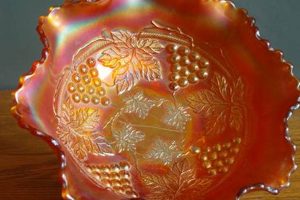

A vibrant and collectible glassware item, typically produced from the early 1900s through the 1930s. Its defining characteristic is an iridescent, shimmering surface created by metallic salt sprays applied during the manufacturing... Read more »
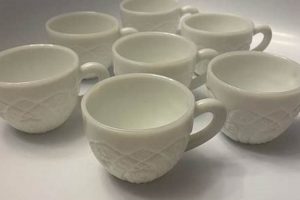
Opaque or translucent glassware, often white but available in other colors, produced primarily from the late 19th century through the mid-20th century, represents a distinct aesthetic in tableware. These items, particularly those... Read more »

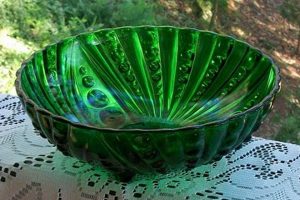
These decorative objects, typically crafted from tinted silicate material and dating from previous eras, offer both functionality and aesthetic appeal. Examples include depression-era glassware with characteristic hues and mid-century modern designs featuring... Read more »
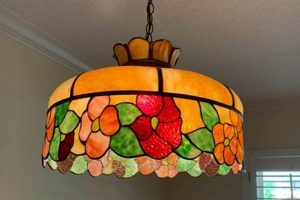
These decorative lighting elements, typically crafted before the mid-20th century, are characterized by panels of colored glass held together by lead cames. They were frequently used to diffuse light and add an... Read more »
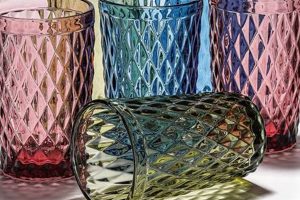
Collectible drinking vessels of an earlier era, crafted from glass, represent a tangible connection to past aesthetics and manufacturing techniques. These items, often acquired for their historical significance, design characteristics, or intrinsic... Read more »
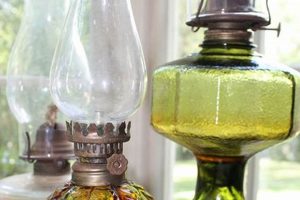
Components crafted from glass, used in illumination devices powered by oil during earlier eras, represent a significant area of collecting. These items encompass a variety of shapes and colors, serving both functional... Read more »
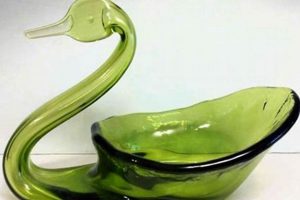
These decorative items, typically crafted from molded glass, are shaped to resemble a swan and designed to function as a bowl. They were particularly popular during the mid-20th century. An example would... Read more »
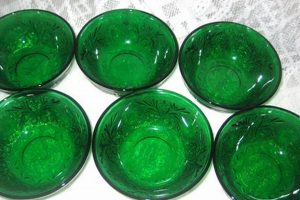
Collectible tableware crafted from tinted glass, typically in shades of emerald, forest, or lime, and originating from the early to mid-20th century constitutes a significant area of interest for collectors and enthusiasts... Read more »
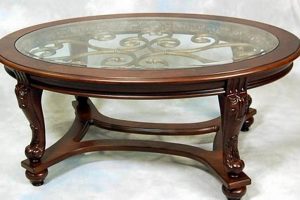
A furniture piece characterized by a transparent top surface, often crafted from tempered or thick plate material, and supported by a base made of various materials such as metal, wood, or lucite,... Read more »

Objects created using a double-walled glass technique, where a silvering solution (often containing metallic mercury, though later formulations used other metals) was introduced between the layers and sealed, are highly sought after.... Read more »