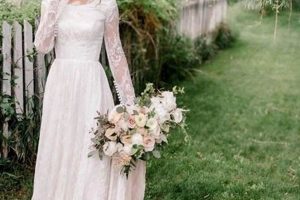
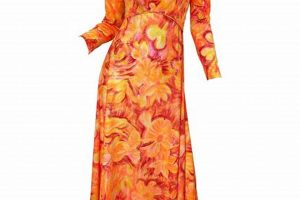
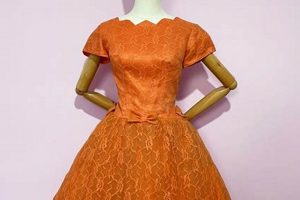
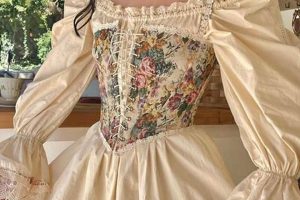
Garments from the World War II era, specifically those designed for women, often reflect the resourcefulness and practicality necessitated by the times. Characterized by A-line skirts, nipped-in waists, and often featuring shorter hemlines due to fabric rationing, these articles of clothing represent a distinct period in fashion history. An example includes a rayon day dress with padded shoulders and a modest floral print.
These sartorial choices hold significant historical value, providing insight into the social and economic climate of the decade. They showcase the evolution of silhouettes and textile usage during a period of considerable global upheaval. Their enduring appeal stems from their classic design and flattering forms, making them coveted pieces for collectors and fashion enthusiasts alike. The influence of this period can still be seen in contemporary design.
The following sections will delve into specific aspects of these iconic garments, exploring variations in style, common materials, and tips for identifying authentic examples.
Tips for Identifying Authentic Garments from the 1940s
Determining the authenticity of garments from the 1940s requires careful examination of several key characteristics. Focus should be given to fabric composition, construction techniques, and design elements that were prevalent during that era. Diligence in these areas aids in accurately assessing the age and originality of a piece.
Tip 1: Fabric Identification: Authentic pieces frequently feature rayon, crepe, or cotton. Synthetics were not yet widely available. A burn test (conducted with extreme caution on a small, inconspicuous area) can help identify fiber content.
Tip 2: Seam Construction: Look for seams that are primarily machine-sewn, but may include hand-finished details. Serged edges are generally indicative of a later period.
Tip 3: Fasteners: Metal zippers were common, often located at the side seam. Buttons were typically made of Bakelite, wood, or covered in fabric.
Tip 4: Label Examination: Original labels provide valuable information about the manufacturer and potentially the garment’s age. Researching vintage label databases can be beneficial.
Tip 5: Silhouette Assessment: The characteristic A-line skirt, nipped waist, and shoulder pads are hallmarks of the period. Assess whether the garment adheres to these typical stylistic features.
Tip 6: Print and Pattern Analysis: Common prints included florals, geometric patterns, and patriotic motifs. Research popular patterns from the era to verify authenticity.
Tip 7: Hem Length Consideration: Due to wartime fabric restrictions, hemlines were typically at or just below the knee. Extremely long or short hemlines may indicate alterations or a later origin.
By meticulously evaluating these aspects, one can increase the accuracy of identifying genuine articles of clothing from the 1940s. Such authentication ensures the preservation of historical fashion and its cultural significance.
The subsequent section will explore preservation techniques for garments of this age, ensuring their longevity and continued appreciation.
1. Wartime practicality

The global conflict of the 1940s profoundly influenced clothing design, particularly in women’s fashion. The need for resource conservation and the changing roles of women directly impacted the styles and materials used in garments. This period saw a shift toward functionality and efficiency, reflecting the demands of a society at war. This influence is evident in authentic articles of clothing from the era.
- Fabric Rationing and Material Substitution
Wartime restrictions on resources like silk and wool led to increased use of rayon and cotton. Designs prioritized efficient use of fabric, resulting in narrower skirts and less elaborate detailing. A rayon day dress, for example, replaced silk dresses, embodying both the style of the era and the limitations imposed by the war effort.
- Simplified Silhouettes and Functional Design
Garments adopted simpler silhouettes to minimize fabric waste and maximize comfort for women entering the workforce. A-line skirts and practical closures like side zippers became common. These designs enabled ease of movement and reduced production time. The absence of ornate embellishments demonstrated the functional considerations in design.
- Utility Clothing Schemes
In some countries, government-regulated utility clothing schemes dictated fabric allowances and standardized designs to ensure fair distribution of resources. These schemes promoted practical, durable clothing that met basic needs. While not all garments adhered strictly to these guidelines, the underlying principles of efficiency and resourcefulness influenced fashion trends.
- Influence of Military Uniforms
Military-inspired details, such as shoulder pads and structured jackets, became fashionable, reflecting the widespread presence and influence of the armed forces. These elements added a sense of formality and strength to women’s attire, subtly acknowledging their increased role in supporting the war effort at home. This sartorial borrowing further solidified the intersection of style and wartime necessity.
The sartorial choices of the 1940s, therefore, offer more than mere aesthetic appeal. They stand as a tangible representation of a society shaped by global conflict, revealing how wartime constraints fostered innovation and functionality in the realm of fashion. These elements significantly shaped the garments of that time, lending them a timeless elegance born from necessity.
2. A-line silhouette

The A-line silhouette is a defining characteristic in understanding garments from the 1940s. This shape, narrower at the shoulders and gradually widening towards the hem, was a prevalent design choice for dresses and skirts during this period. Fabric rationing and the need for practical, easy-to-wear clothing contributed to its widespread adoption. The A-line minimized fabric usage compared to more voluminous styles, aligning with wartime constraints. Its simplicity also lent itself to mass production, an essential consideration for meeting the demands of a changing society. For instance, many day dresses, designed for work or casual wear, featured the A-line skirt as their foundational shape. This design element offered both comfort and a sense of style within the limitations imposed by the era.
The importance of the A-line extends beyond mere aesthetics. Its functionality allowed women greater freedom of movement, vital as they increasingly took on roles outside the home. This shape was adaptable, lending itself to various fabric types and embellishments. From simple rayon day dresses to more formal crepe evening gowns, the A-line provided a versatile canvas. Designers could modify the neckline, sleeves, or bodice while maintaining the core A-line structure, resulting in diverse yet recognizably 1940s styles. The enduring popularity of the A-line in the ensuing decades underscores its timelessness and practicality, demonstrating its effective blend of style and function.
In conclusion, the A-line silhouette is intrinsically linked to the clothing of the 1940s. It represents a direct response to wartime limitations while simultaneously offering a flattering and functional design. Understanding this connection is essential for accurately identifying and appreciating garments from this era. Recognizing the A-line not only helps in dating pieces but also provides insights into the social and economic context that shaped their creation, highlighting the practical considerations shaping fashion during the wartime.
3. Rayon fabric

Rayon held a position of significant importance in the production of garments during the 1940s, largely due to wartime restrictions on other materials, such as silk and wool. This cellulose-based fabric, derived from wood pulp or cotton linters, provided a viable and more accessible alternative. Consequently, rayon became a staple in the creation of garments, particularly in the production of day dresses, blouses, and skirts. The widespread use of rayon during this period directly impacted the texture, drape, and overall aesthetic of garments. For example, a common rayon day dress featured a soft, flowing drape, often adorned with floral prints, reflecting the prevalent style of the decade. Without rayon, the accessibility and affordability of such styles would have been considerably diminished, altering the landscape of women’s fashion during this era.
Further examination reveals that the characteristics of rayon influenced garment construction and care. Its tendency to shrink when washed necessitated specific cleaning instructions, often reflected in the surviving care labels of these pieces. Moreover, different types of rayon, such as viscose and acetate, offered varying properties, allowing for diverse applications within garment design. Viscose provided a soft, absorbent quality suitable for linings and lightweight garments, while acetate offered a silk-like sheen, often used in evening wear or trimmings. The specific type of rayon employed in a given garment provides further insight into its intended use and quality. Thus, understanding rayon’s role extends beyond simple material identification; it encompasses an appreciation of the fabric’s influence on the garment’s design, construction, and maintenance.
In summary, the prominence of rayon in garments stemmed from wartime necessities and the fabric’s inherent versatility. Its widespread adoption not only shaped the aesthetic of the period but also influenced manufacturing processes and garment care. Recognizing the connection between garments and rayon fabric allows for a more thorough understanding of the design considerations, material constraints, and cultural context that defined 1940s fashion. This appreciation underscores the pivotal role that material availability plays in shaping stylistic trends and societal expression through clothing.
4. Shoulder pads

Shoulder pads represent a defining structural component of garments from the 1940s, significantly impacting their silhouette and overall aesthetic. Their prevalence stemmed from a combination of practical and social factors, contributing to the distinctive shape of women’s attire during this era. The broadened shoulder line created by padding provided a sense of strength and empowerment, mirroring the increasingly prominent role of women in the workforce during World War II. Simultaneously, shoulder pads served to balance the A-line skirt, a common feature in garments from the 1940s, thus creating a harmonious and visually appealing shape. A typical example includes a rayon day dress with subtle shoulder padding, designed to enhance the wearer’s posture and project an image of competence and resilience. The inclusion of shoulder pads, therefore, was not merely a stylistic choice but a reflection of the era’s social and economic realities.
The composition and construction of shoulder pads varied, depending on the garment’s intended use and price point. Common materials included cotton batting, felt, and even repurposed scraps of fabric, reflecting wartime resourcefulness. These pads were typically hand-stitched into the garment’s shoulder area, providing a customizable level of support and definition. Garments intended for more formal occasions, such as evening gowns or tailored suits, often featured more substantial and meticulously constructed shoulder pads, creating a more dramatic silhouette. In contrast, casual day dresses might incorporate smaller, less structured pads for a more subtle effect. Understanding the nuances of shoulder pad construction provides valuable insights into the garment’s intended purpose and its position within the broader spectrum of 1940s fashion. Furthermore, examining the condition of the shoulder pads can offer clues about the garment’s age and level of wear.
In summary, shoulder pads are integral to the identity of clothing from the 1940s, influencing both their physical form and symbolic meaning. Their widespread adoption reflects a confluence of social, economic, and aesthetic considerations. Examining the materials, construction, and overall impact of shoulder pads offers a valuable lens through which to appreciate the craftsmanship and cultural context of garments from this era. Recognizing their significance contributes to a more comprehensive understanding of the visual language of clothing from the 1940s, as well as its ability to reflect and shape societal norms.
5. Floral prints

Floral prints held a prominent position in the design of garments from the 1940s, particularly in women’s day dresses. This prevalence stemmed from a confluence of factors, including the availability of printed textiles and the desire for feminine adornment during a period marked by wartime austerity. The accessibility of cotton and rayon, both suitable for printing, facilitated the widespread use of floral patterns. Furthermore, these prints provided a means of adding color and visual interest to clothing at a time when embellishments were often limited due to resource constraints. A common example includes a cotton or rayon day dress featuring small-scale floral motifs, often in pastel or muted tones, reflecting a sense of understated elegance. The adoption of floral patterns, therefore, served a dual purpose: practical resource utilization and the expression of femininity within the confines of wartime austerity.
The significance of floral designs extends beyond mere aesthetic appeal. They offer insight into the social and cultural values of the era. The choice of floral patterns often reflected a sense of optimism and resilience amidst global conflict. Smaller, more delicate floral motifs were generally preferred over large, bold designs, aligning with the prevailing emphasis on modesty and practicality. Moreover, the specific types of flowers depicted in these prints sometimes held symbolic meaning, reflecting themes of hope, remembrance, or patriotism. For example, a dress featuring forget-me-nots might have been intended as a reminder of loved ones serving overseas. Analyzing the floral patterns on garments from the 1940s, therefore, provides a valuable window into the social and emotional landscape of the time.
In summary, the connection between floral prints and garments is multi-faceted, encompassing practical considerations, aesthetic preferences, and cultural symbolism. Their widespread use reflects both the limitations and the creative adaptations of wartime fashion. Understanding the nuances of floral patterns on these garments allows for a more comprehensive appreciation of their historical significance and the values they represent. While challenges may arise in accurately dating and interpreting specific floral designs, the study of these patterns offers a valuable avenue for exploring the rich tapestry of 1940s fashion and its connection to the broader social context.
Frequently Asked Questions
The following questions address common inquiries regarding garments originating from the specified period. The information presented aims to clarify frequently encountered points of confusion and to provide accurate historical context.
Question 1: What distinguishes garments from the 1940s from those of other decades?
Garments from the 1940s are characterized by A-line silhouettes, the frequent use of rayon fabric, shoulder pads, and often feature floral prints. These elements reflect wartime resource constraints and the prevailing aesthetic preferences of the era. Fabric choice and detailing were influenced by wartime scarcity.
Question 2: How does wartime rationing impact garment design?
Wartime rationing led to shorter hemlines, narrower skirts, and a reduction in embellishments. Fabrics such as silk and wool were restricted, leading to increased use of rayon and cotton. Designs prioritized efficient fabric utilization and functional construction. Garments prioritized practical utility over elaborate detail.
Question 3: Where can authentic garments from this era be reliably sourced?
Authentic garments may be found in vintage clothing stores, antique shops, estate sales, and online auction platforms. However, thorough due diligence is essential to verify authenticity, including fabric analysis, construction examination, and label verification. Professional appraisal is advised for valuable pieces. Verification methods should be considered carefully.
Question 4: How should garments from the 1940s be properly stored and cared for?
Proper storage involves wrapping garments in acid-free tissue paper and storing them in a cool, dry environment away from direct sunlight. Cleaning should be performed by a professional specializing in vintage textiles. Avoid machine washing and harsh chemicals. Preserving original condition is crucial to the garment’s value. Careful preservation is essential.
Question 5: What are the common misconceptions regarding articles of clothing from this era?
A common misconception is that all garments from the 1940s were drab and utilitarian. While practicality was a key consideration, many garments also incorporated decorative elements and reflected a desire for feminine expression within the limitations of the time. Some garments reflect both practicality and design consideration.
Question 6: How has the style influenced contemporary fashion?
The A-line silhouette, shoulder pads, and certain design elements continue to inspire contemporary designers. The emphasis on practicality and flattering shapes remains relevant in modern fashion trends. The influence of the 1940s aesthetic can be seen in modern fashion design, continuing their influence.
In summary, understanding the historical context, design characteristics, and proper care techniques is crucial for appreciating and preserving garments of this era. Authentic pieces provide valuable insights into the social, economic, and aesthetic values of the 1940s.
The following section explores famous designers and companies from this period.
vintage 1940’s dresses
This exploration has highlighted essential aspects of attire from the World War II era. The influence of resource constraints, the prevalence of the A-line silhouette, the ubiquitous presence of rayon fabric, the structural role of shoulder pads, and the frequent incorporation of floral prints collectively define garments of the period. These elements, born from a unique historical context, provide insight into both the functional requirements and the aesthetic preferences of the time.
The careful study and preservation of authentic pieces serves to maintain a tangible connection to the past. Further investigation into the design details, manufacturing techniques, and social implications of garments will undoubtedly enhance understanding of this pivotal era in fashion history. Continued scholarly research in this area is essential for future generations.