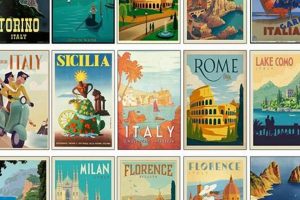
These pictorial advertisements, produced primarily from the 1920s through the 1960s, served as a primary tool for airlines to promote air travel. They often featured stylized depictions of exotic destinations, modern aircraft, and the allure of a luxurious travel experience. As an example, a poster might depict a sleek Lockheed Constellation soaring over the Eiffel Tower, enticing potential passengers with the promise of a swift and glamorous journey to Paris.
The importance of these visual communications lies in their ability to capture the burgeoning optimism and excitement surrounding the dawn of commercial aviation. They played a significant role in shaping public perception of air travel, transforming it from a daring novelty into an accessible and desirable mode of transportation. These artifacts also provide valuable insights into the historical evolution of graphic design, marketing strategies, and the cultural landscape of the mid-20th century.
Therefore, understanding their aesthetic qualities, their impact on the aviation industry, and their value as historical documents becomes the central focus for further examination. This understanding reveals how they became significant and collected works of art and historical documentation.
Tips Regarding Vintage Airline Posters
The following guidelines address key considerations for collectors, historians, and enthusiasts interested in acquiring, preserving, or studying examples of advertising.
Tip 1: Authenticate Thoroughly: Verify the authenticity of the piece through expert consultation and comparison to known originals. Scrutinize printing techniques, paper stock, and signatures for inconsistencies. For example, offset lithography was not commonly used in the early years; therefore, a poster claiming to be from the 1930s printed with this method warrants further investigation.
Tip 2: Assess Condition Meticulously: Evaluate the condition carefully, noting any tears, creases, fading, or staining. Consider professional restoration for significant damage but be aware that excessive restoration can diminish value. A minor tear along a border is less detrimental than a large stain obscuring the central image.
Tip 3: Research Artist and Printer: Investigate the artist and printer associated with the example. Established artists and reputable printers often command higher prices and provide greater historical context. Knowledge of the artist’s style and the printer’s capabilities can aid in authentication and dating.
Tip 4: Consider Subject Matter and Destination: Recognize that the subject matter and destination depicted can influence collectibility. Posters featuring iconic aircraft or popular tourist destinations tend to be more sought after. A poster advertising travel to a then-exotic locale, like Bali or Tahiti, may hold greater appeal.
Tip 5: Understand Rarity and Print Run: Determine the rarity of the specific example. Limited print runs or posters produced for short-lived airlines are typically more valuable. Historical records, when available, can provide insights into the original print quantities.
Tip 6: Protect Against Environmental Damage: Employ archival-quality materials for storage and display to prevent deterioration from light, humidity, and pollutants. UV-resistant glass and acid-free backing boards are essential for preservation.
Tip 7: Document Provenance Carefully: Maintain a detailed record of the poster’s history, including its origin, previous owners, and any relevant information regarding its acquisition. Provenance enhances authenticity and adds to its historical significance.
The careful application of these suggestions will facilitate informed decisions when engaging with these important historical artifacts.
These considerations provide a foundation for further exploration of their artistic and historical value.
1. Destination Imagery

Destination imagery constitutes a fundamental element within promotional materials, serving as a visual gateway to the allure of travel. It leverages the power of scenic representation to evoke desire and inspire potential travelers to embark on new experiences. In the context of vintage airline advertisements, destination imagery played a pivotal role in shaping public perception and driving the growth of the aviation industry.
- Romanticized Landscapes
Vintage airline advertisements frequently presented idealized versions of destinations, often emphasizing exoticism and natural beauty. These representations aimed to create a sense of escape and adventure, appealing to the aspirational desires of potential travelers. A poster depicting a pristine beach in Hawaii, for example, would downplay the realities of travel and emphasize the idyllic escape it offered.
- Cultural Stereotypes
The portrayal of local cultures often relied on simplified or stereotypical representations. While intended to highlight the unique character of a destination, these depictions could inadvertently perpetuate cultural inaccuracies. An advertisement showcasing a Spanish destination might focus heavily on flamenco dancers and bullfighting, potentially overlooking the region’s broader cultural diversity.
- Architectural Landmarks
Iconic architectural landmarks frequently served as visual shorthand for specific locations. The Eiffel Tower for Paris, the Colosseum for Rome, and the Great Wall for China became readily identifiable symbols that instantly conveyed the essence of a destination. These landmarks provided a recognizable and visually appealing focal point for airline advertising.
- Activities and Experiences
Beyond mere scenery, these visual tools also highlighted specific activities and experiences available at a destination. Skiing in the Swiss Alps, sailing in the Mediterranean, or exploring ancient ruins in Egypt were all presented as compelling reasons to choose air travel. Such illustrations showcased the lifestyle associated with a particular location, further enticing potential travelers.
The effectiveness of destination imagery in vintage airline advertisements lay in its ability to create an aspirational narrative, transforming travel from a mere means of transportation into an alluring experience. The strategic use of these elements shaped consumer perceptions and contributed significantly to the growth of the airline industry during the mid-20th century. By understanding these facets, one can better appreciate the historical and cultural significance of these iconic promotional materials.
2. Aircraft Design

Aircraft design served as a potent symbol of technological advancement and played a central role in shaping the visual narrative of vintage airline advertisements. The depiction of aircraft in these posters extended beyond mere representation; it functioned as a key element in projecting an image of modernity, safety, and luxury. The sleek lines of a Douglas DC-6 or the distinctive triple tail of a Lockheed Constellation, for example, communicated the cutting-edge capabilities of air travel at the time. Airlines strategically featured their newest aircraft to convey a sense of innovation and to differentiate themselves from competitors. The artistic portrayal of these machines, often rendered in stylized and idealized forms, was crucial for attracting potential passengers. The inclusion of aircraft design was not merely aesthetic; it aimed to instill confidence and desire in a public increasingly receptive to the possibilities of air travel.
The evolution of aircraft design directly influenced the styles and themes present. The transition from propeller-driven aircraft to jetliners, for instance, prompted a shift in visual language. The introduction of jet aircraft, such as the Boeing 707 and the Douglas DC-8, spurred illustrations emphasizing speed, efficiency, and global connectivity. Illustrators adapted their techniques to capture the essence of jet-age travel, often employing streamlined shapes and dynamic compositions. The placement of aircraft within the advertisement, whether soaring above exotic landscapes or prominently displayed against clear blue skies, was carefully considered to maximize visual impact and to reinforce the aspirational message of air travel. Airline posters became visual records of aviation technology, reflecting design innovations and the evolving perception of flight.
In conclusion, aircraft design constitutes an integral component of these historical advertisements. It facilitated the communication of technological progress, safety, and luxury. The visual emphasis on aircraft served a practical function, shaping public perceptions and driving the growth of the commercial aviation industry. Appreciation of this element enhances understanding of the advertisements’ artistic and historical significance. Furthermore, recognizing how aircraft design was strategically employed offers valuable insight into the marketing strategies and cultural values of the mid-20th century.
3. Typography Styles

Typography styles in promotional advertisements served as a crucial visual component, conveying the intended message and aesthetic of the era. These choices not only reflected the design trends of the time but also influenced the perception of the airline, destination, and the overall travel experience. Consideration of letterform selection, layout, and integration with imagery reveals important information about these advertising materials.
- Art Deco Influences
The Art Deco movement, prevalent in the 1920s and 1930s, exerted a considerable influence on typography styles. Geometric forms, streamlined shapes, and a sense of luxury were conveyed through typefaces like Kabel, Futura, and Broadway. An example of this influence can be seen in posters promoting transatlantic travel, where bold, stylized lettering announced destinations like “Paris” or “London,” evoking a sense of sophistication and modernity.
- Sans-Serif Modernism
The mid-20th century witnessed the rise of sans-serif typefaces, reflecting a shift towards simplicity and functionality. Helvetica, Univers, and other similar fonts became widely used to convey a sense of efficiency and modernity. Airline posters adopting these typography styles communicated a streamlined travel experience, emphasizing speed and accessibility. Swissair’s adoption of Univers is a prime example of corporate identity aligning with modernist design principles.
- Script and Handwritten Styles
Script and handwritten-style fonts offered a contrast to the geometric rigidity of Art Deco and the functional simplicity of sans-serif types. These fonts, like Brush Script or similar calligraphic styles, conveyed a sense of personalized service, romance, and exoticism. A poster advertising travel to a tropical destination might utilize a flowing script font to evoke the feeling of a handwritten postcard, appealing to the desire for a unique travel experience.
- Integration with Imagery
The effective integration of typography with imagery was essential for a cohesive visual message. The placement, size, and color of the type were carefully considered in relation to the overall composition. A poster featuring an aircraft soaring over a landscape might utilize a bold, contrasting typeface to draw the viewer’s eye to the destination, while a more subtle typeface might complement the aircraft itself, conveying a sense of technological sophistication.
The strategic application of various letterforms served to enhance the allure and marketability of air travel. Analysis reveals the historical context, marketing strategies, and cultural values of the mid-20th century. Examination further supports the understanding of design choices and their impact on shaping perceptions of aviation.
4. Color Palettes

Color palettes within promotional advertisements constitute a fundamental aspect of visual communication, influencing the perception and emotional response of viewers. In these vintage visuals, the strategic use of color was paramount in evoking the desired atmosphere and attracting potential travelers. The selection of hues and their arrangement played a crucial role in shaping the overall message and reinforcing the brand identity of the airlines.
- Evocation of Destination Atmosphere
Color palettes were often employed to convey the unique atmosphere of a particular destination. Warm, saturated colors such as oranges, yellows, and reds were frequently used to represent tropical locales, evoking feelings of warmth, relaxation, and exoticism. Conversely, cooler tones like blues, greens, and whites were often used to depict destinations associated with winter sports or serene landscapes. These color choices were intentional, designed to create a sense of place and to appeal to the desires of potential travelers. For example, a poster promoting travel to the Mediterranean might utilize a palette of deep blues and vibrant yellows to capture the essence of the region’s coastline and sunny skies. These combinations help to entice the public, while also capturing the authenticity of a location.
- Reflection of Era and Design Trends
The color palettes present in vintage airline advertisements also reflected the prevailing design trends of the era in which they were created. The Art Deco period, for instance, was characterized by bold, contrasting colors and geometric patterns. Later, the mid-century modern aesthetic favored more muted tones, earthy hues, and a sense of understated elegance. Posters from the 1960s often incorporated vibrant psychedelic colors, reflecting the cultural shifts and artistic experimentation of the time. Examination of the color palettes provides insight into the broader design movements and cultural contexts that shaped the advertisements.
- Brand Identity and Recognition
Consistent use of specific color combinations served to reinforce brand identity and enhance recognition. Airlines frequently adopted signature color schemes that were consistently applied across their promotional materials. Pan American World Airways, for example, often utilized a combination of blue and white, conveying a sense of trustworthiness and global reach. TWA (Trans World Airlines) favored a more vibrant palette, incorporating reds, oranges, and yellows to evoke a sense of excitement and adventure. These brand-specific color palettes became instantly recognizable, contributing to the airlines’ overall marketing strategies and consumer associations.
- Psychological Impact and Emotional Response
The psychological impact of color was carefully considered in the design of vintage airline advertisements. Colors have the power to evoke specific emotions and associations, and airlines strategically leveraged this knowledge to influence consumer perceptions. Blue, for instance, is often associated with trust, reliability, and stability, while red can convey excitement, energy, and passion. A poster utilizing a predominantly blue color palette might aim to instill confidence in the airline’s safety record, while a poster incorporating red might seek to evoke a sense of adventure and spontaneity. This creates a lasting image for the audience, with many remembering it throughout the airline’s duration.
Through strategic color application, the visual communication successfully enticed individuals and promoted travel. These choices reflect historical context, design movements, and marketing tactics. Detailed color palette examinations add valuable insight into aviation promotional materials.
5. Artistic Influence

The aesthetic qualities of vintage airline advertisements are directly attributable to the artistic movements and styles prevalent during their production. The impact of Art Deco, for example, is undeniable. Its influence manifested in the geometric patterns, streamlined shapes, and bold typography found in many posters from the 1920s and 1930s. Artists adapted the Art Deco aesthetic to convey a sense of modernity and luxury, aligning air travel with sophistication. The illustrations of aircraft and destinations often incorporated stylized lines and symmetrical compositions, reflecting the Art Deco emphasis on elegance and order. This stylistic choice aimed to position air travel as a glamorous and cutting-edge experience, attracting a clientele that valued both style and innovation.
Following Art Deco, the mid-century modern aesthetic had a significant effect. This period saw the rise of simpler, more functional designs, with a focus on clean lines and organic forms. In response, airline advertisements began to incorporate more understated color palettes and sans-serif typography. Artists embraced the principles of Swiss design, emphasizing clarity and readability. The visual communication began to focus on communicating efficiency and reliability. For instance, posters promoting jet travel frequently showcased streamlined aircraft against minimalist backgrounds, projecting an image of speed and technological progress. This stylistic shift reflected the changing values and aesthetic preferences of the post-war era.
In conclusion, artistic styles exerted a considerable influence on the aesthetic character of vintage airline advertisements. From the geometric elegance of Art Deco to the functional simplicity of mid-century modernism, these movements shaped the visual language of the advertisements. Understanding these influences provides insight into the cultural values, design trends, and marketing strategies that defined the golden age of air travel. These advertisements serve as visual records of artistic evolution, illustrating how design principles were adapted to promote the growth and appeal of commercial aviation.
Frequently Asked Questions Regarding Vintage Airline Posters
The following questions address common inquiries and misconceptions surrounding the acquisition, preservation, and historical significance of vintage airline advertisements.
Question 1: How can one determine the authenticity of a supposed example?
Authenticity verification requires expert consultation. Examination of printing techniques, paper type, and any signatures is crucial. Comparison with known originals or documented reproductions aids in establishing veracity.
Question 2: What factors most significantly impact the valuation?
Condition, rarity, artist reputation, subject matter, and provenance are significant factors. Exceptional condition and depictions of iconic destinations or aircraft generally command higher valuations.
Question 3: How should these pieces be stored to prevent deterioration?
Archival-quality materials are essential. Acid-free backing boards, UV-protective glazing, and climate-controlled environments mitigate damage from light, humidity, and pollutants.
Question 4: What are common types of damage that can affect these valuable artworks?
Common damage includes tearing, creasing, fading, staining, and foxing (brown spots due to oxidation). Improper handling and exposure to environmental factors exacerbate deterioration.
Question 5: Does professional restoration diminish the value of an airline poster?
Professional restoration, when performed ethically and conservatively, can enhance the value by preserving its visual appeal. However, excessive restoration or alteration can detract from its historical authenticity and potentially decrease value.
Question 6: Why are some considered more historically significant than others?
Historical significance is determined by several factors, including the prominence of the airline, the era represented, the artist’s contribution, and the cultural impact of the imagery. Those reflecting pivotal moments in aviation history or significant design trends tend to hold greater value.
These FAQs provide a foundational understanding for anyone engaging with these historically significant items. Accurate assessment and proper preservation are essential to ensure their legacy.
Understanding these concepts enables deeper appreciation for their artistic and historical importance.
Conclusion
This article has explored the multifaceted nature of these pictorial advertisements, encompassing their artistic styles, historical significance, and cultural impact. The analysis has highlighted key elements such as destination imagery, aircraft design, typography, color palettes, and artistic influences that contribute to their enduring appeal. From the authentication process to optimal preservation techniques, crucial considerations for collectors, historians, and enthusiasts have also been addressed.
The continued study and preservation of advertising remain vital to understanding the evolution of aviation, design, and marketing. By safeguarding these visual artifacts, future generations can gain invaluable insights into the aspirations, innovations, and cultural landscapes of a bygone era. Further research and appreciation will ensure their lasting legacy as documents and works of art.