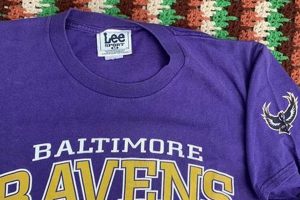
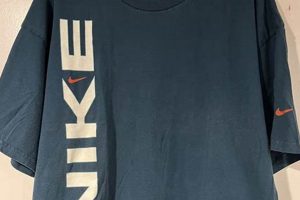
Apparel featuring the University of Alabama’s branding, produced in a prior era, represents a tangible connection to the institution’s history and traditions. These garments, often distinguished by their design, fabric, and printing techniques, embody a specific timeframe within the university’s long-standing existence. A worn crimson tee with a faded elephant mascot, for example, may evoke memories of a particular championship season or campus event.
Such items hold significant value, functioning not only as clothing but also as historical artifacts. They offer insights into past trends, manufacturing processes, and the evolution of the university’s visual identity. Collecting these pieces allows individuals to own a piece of the university’s heritage and showcase their allegiance in a unique and often nostalgic manner. Their scarcity and historical relevance frequently increase their desirability among collectors.
Understanding the characteristics that define these sought-after collectibles is crucial. Factors such as the garment’s age, condition, rarity, and specific design contribute to its overall value and appeal. The following sections will delve into these defining attributes, providing a framework for identifying and appreciating these unique relics of Crimson Tide history.
Identifying Authentic Collegiate Memorabilia
The acquisition of vintage apparel requires careful assessment to ensure authenticity and value. Several factors contribute to accurate identification, guarding against misrepresentation and maximizing the potential for appreciation.
Tip 1: Inspect the Tag: Examine the manufacturer’s label for details regarding brand, fabric composition, and country of origin. Older tags often feature specific logos and markings that correspond to known manufacturing periods. Consult vintage apparel databases to verify tag authenticity.
Tip 2: Assess Fabric and Construction: Fabric characteristics, such as single-stitch seams, ringer collars, and the weight of the cotton, provide clues to the garment’s age. Early t-shirts commonly featured lighter-weight cotton and distinct construction methods.
Tip 3: Analyze the Graphic: Printing techniques evolved over time. Screen-printed designs from earlier eras exhibit unique textures and imperfections compared to modern digital printing. Examine the ink opacity, cracking patterns, and registration accuracy for signs of vintage printing processes.
Tip 4: Research Design History: Familiarize yourself with the University of Alabama’s logos, mascots, and slogans used throughout different decades. Comparing the garment’s design to established historical references helps validate its age and origin.
Tip 5: Evaluate Condition and Flaws: While some wear and tear is expected in vintage items, excessive damage can detract from value. Examine the garment for stains, holes, and fading. Note that strategic imperfections may enhance the item’s character and confirm its age.
Tip 6: Consult with Experts: When in doubt, seek advice from knowledgeable collectors or vintage apparel dealers. They can offer expert opinions based on their experience and access to specialized resources.
By adhering to these guidelines, individuals can more confidently authenticate vintage collegiate apparel, ensuring they acquire genuine pieces of the University of Alabama’s history.
Understanding these identification methods facilitates informed purchasing decisions. The subsequent sections will explore care and preservation strategies for these valuable garments.
1. Authenticity

Authenticity is paramount when evaluating a garment purporting to be a vintage item associated with the University of Alabama. The item’s genuineness directly affects its value, historical significance, and desirability among collectors. Without demonstrable authenticity, a supposed “vintage alabama t shirt” is merely a reproduction, devoid of the historical connection and material qualities that characterize a genuine article. The proliferation of replica and counterfeit goods necessitates a rigorous assessment process to discern true vintage pieces.
Several factors contribute to verifying the authenticity of such garments. Examination of manufacturing tags is critical; these tags often contain details about the brand, fabric content, and manufacturing location that are consistent with specific eras. For example, a t-shirt claiming to be from the 1970s but bearing a tag from a manufacturer that didn’t exist until the 1990s would immediately raise suspicion. Similarly, the construction techniques employed single-stitch seams versus double-stitch, the type of collar ribbing, and the weight of the cotton can provide further evidence. The printing method used for the graphic design is also indicative; screen-printing techniques of earlier decades left distinct textures and imperfections absent in modern digital printing. A keen eye and a detailed understanding of historical manufacturing practices are therefore essential.
In conclusion, authenticity is not merely a desirable attribute but a fundamental requirement for any garment presented as a vintage piece connected to the University of Alabama. Establishing its genuineness through careful examination of tags, construction, fabric, and printing techniques is crucial for preserving its historical value and ensuring its legitimacy as a collectible. The verification process safeguards against deception and upholds the integrity of the vintage marketplace.
2. Era Identification
Era identification is a crucial element in assessing a garment purported to be a “vintage alabama t shirt.” The specific period in which the item was produced dictates its design, materials, and construction techniques. Successfully determining the era affects the valuation, authenticity assessment, and historical context of the item. For example, a t-shirt featuring a specific University of Alabama logo style, known to be used only between 1965 and 1975, assists in narrowing the manufacturing window, thus supporting its vintage claim. Incorrect era identification can result in overvaluation of recent reproductions or dismissal of genuine older pieces.
Distinguishing details such as the fabric composition, the type of stitching used in the seams (e.g., single-stitch versus double-stitch), and the printing method of the graphic are primary indicators of the era. Older garments often used lighter-weight cotton and employed single-stitch construction, while modern reproductions typically use heavier fabrics and double-stitch seams for increased durability. The graphic printing can also reveal the era; early screen-printing techniques often show unique textural qualities, which are difficult to replicate with modern digital printing methods. Knowledge of University of Alabama sports history, including championship seasons, notable players, and significant campus events, provides context for interpreting designs and further refining era estimates. The presence of a design alluding to Bear Bryant’s tenure would naturally suggest a production timeframe between the 1950s and 1980s.
In conclusion, precise era identification is vital for accurately appraising and authenticating garments represented as “vintage alabama t shirts.” The correct assessment impacts not only the monetary value but also the item’s historical significance as a tangible artifact of University of Alabama history. Errors in period determination can lead to misrepresentation, inaccurate valuations, and potential loss of historically significant garments. Therefore, a comprehensive understanding of historical manufacturing techniques, design trends, and University of Alabama milestones is essential for collectors and enthusiasts.
3. Fabric Composition
The fabric composition of a garment represented as a “vintage alabama t shirt” is a critical determinant of its authenticity, age, and overall value. Examining the fiber content and construction methods offers insights into the manufacturing practices prevalent during different historical periods, assisting in validating the item’s claim to vintage status.
- Cotton Weight and Weave
The weight and weave of the cotton fabric are significant indicators of age. Vintage t-shirts, particularly those from the 1960s and 1970s, often feature lighter-weight cotton (e.g., 3.0-4.0 oz.) compared to modern counterparts, which commonly utilize heavier cotton fabrics (5.0 oz. or more). The weave structure, such as jersey knit, can also vary across different eras, with older garments exhibiting looser or more irregular weaves due to less advanced manufacturing techniques. These variations in weight and weave texture provide evidence regarding the t-shirt’s potential age and origin.
- Presence of Blends
The inclusion of synthetic fibers, such as polyester or rayon, in the fabric blend can provide clues about the t-shirt’s production era. While 100% cotton was common for early vintage t-shirts, the introduction of blended fabrics gained popularity in the 1970s and onward, offering enhanced durability and wrinkle resistance. Identifying the presence and percentage of synthetic fibers within the fabric composition can help narrow down the t-shirt’s potential age and align it with known historical trends in textile manufacturing.
- Yarn Type and Ply
The type of yarn used and the ply (number of strands twisted together) can further differentiate vintage from modern garments. Older t-shirts often utilized ring-spun cotton or open-end yarn, each imparting unique textural qualities. Ring-spun cotton generally produces a softer, smoother fabric, while open-end yarn results in a slightly coarser texture. The number of plies used in the yarn can also vary, affecting the fabric’s overall durability and drape. Examining these yarn characteristics provides additional data points for age and authenticity verification.
- Dyeing Techniques
The dyeing techniques employed can leave distinctive markers on the fabric. Vintage t-shirts may exhibit variations in dye penetration and color fastness compared to modern garments. Older dyeing processes sometimes resulted in uneven color distribution or slight fading over time, creating a characteristic vintage aesthetic. Identifying the presence of these dye-related characteristics can further support the t-shirt’s vintage designation and contribute to its overall collectibility.
The fabric composition provides a wealth of information regarding the provenance of a garment presented as a “vintage alabama t shirt.” By carefully analyzing the fiber content, weave structure, yarn characteristics, and dyeing techniques, collectors and enthusiasts can gain valuable insights into the garment’s age, authenticity, and historical context. These details contribute significantly to accurately evaluating and appreciating vintage collegiate apparel.
4. Graphic Design

Graphic design serves as a crucial identifier and value determinant for garments classified as a “vintage alabama t shirt.” The designs imprinted on these items encapsulate specific eras, university traditions, and cultural moments, providing vital clues to their age, authenticity, and desirability among collectors.
- Logo Evolution
The University of Alabama’s logos and mascots have undergone numerous revisions throughout its history. Changes in font style, color palette, and the depiction of the Crimson Tide elephant offer distinct temporal markers. For example, a t-shirt featuring the block ‘A’ logo with a specific serif font, used exclusively between 1985 and 1997, can be readily dated to that period. Analysis of these logo evolutions is essential in validating the age and provenance of a purported vintage garment.
- Typography and Slogans
The typographic choices employed, including font styles and text layouts, reflect prevailing design trends of the time. Similarly, slogans and catchphrases printed on these t-shirts often mirror specific historical events, championship seasons, or university campaigns. A t-shirt emblazoned with a slogan commemorating a particular Rose Bowl victory, and utilizing a typeface popular in the corresponding decade, serves as strong evidence of its authenticity and provides valuable historical context.
- Printing Techniques
The printing techniques used to apply the graphic design also provide insights into the item’s age. Screen-printing methods, commonly used in earlier decades, often exhibit distinct characteristics, such as slight imperfections in registration and a thicker ink deposit, compared to modern digital printing techniques. Examining the texture, opacity, and overall quality of the print helps differentiate between genuine vintage items and more recent reproductions. The use of specific inks and dyes prevalent during certain periods offers further means of authentication.
- Copyright and Trademark Marks
The presence and style of copyright and trademark markings associated with the University of Alabama’s branding are crucial indicators. The absence of such markings, or the use of outdated copyright symbols, can raise questions about the garment’s authenticity. Conversely, the presence of marks consistent with specific eras provides valuable confirmation of its age and official association with the university. Examining these legal indicators contributes to a more accurate assessment of its historical validity.
These facets of graphic design, encompassing logo evolution, typography, printing techniques, and copyright marks, are inextricably linked to the identification and valuation of a “vintage alabama t shirt.” Their careful examination provides a comprehensive framework for assessing authenticity, establishing historical context, and ultimately determining the garment’s significance as a collectible artifact of the University of Alabama’s rich heritage.
5. Condition Assessment
Condition assessment is a critical component in evaluating any garment classified as a “vintage alabama t shirt.” The item’s physical state directly impacts its value, collectibility, and historical significance. Degradation due to age, wear, or improper storage can significantly diminish an otherwise valuable piece. Conversely, a well-preserved item retains a greater portion of its original aesthetic and material integrity, thereby commanding a higher premium. A t-shirt from the 1960s in near-mint condition, exhibiting minimal fading or damage, will invariably be more desirable than a comparable item with extensive staining, tears, or graphic deterioration.
The assessment process involves a systematic evaluation of various factors. Fabric integrity is paramount; this includes checking for holes, tears, fraying, and weakened areas. Staining, discoloration, and fading are also key indicators of wear and environmental exposure. The condition of the printed graphic is equally important, with considerations given to cracking, peeling, and fading of the ink. Furthermore, the integrity of seams, collars, and cuffs contributes significantly to the overall evaluation. For example, a t-shirt with intact single-stitch seams and minimal graphic cracking suggests careful preservation, while a garment with significant seam damage and extensive graphic degradation reflects poor handling or excessive use. The presence of odors or evidence of pest damage also detracts from value and collectibility.
In conclusion, thorough condition assessment is indispensable in determining the worth and desirability of a “vintage alabama t shirt.” This process involves careful scrutiny of fabric integrity, graphic condition, structural soundness, and the presence of any detrimental factors. Accurate assessment ensures fair valuation, protects buyers from misrepresentation, and helps preserve these historical artifacts for future generations. A nuanced understanding of condition allows collectors and enthusiasts to make informed decisions and appreciate the tangible connection to the University of Alabama’s past that these garments represent.
6. Rarity
Rarity is a significant determinant in the valuation of apparel classified as a “vintage alabama t shirt.” The scarcity of a specific design, production era, or event-related garment directly influences its collectibility and market price. Limited production runs, commemorative pieces associated with unique historical occurrences, and items featuring defunct brands contribute to enhanced rarity. For example, a t-shirt celebrating Alabama’s 1961 national championship, produced in a limited quantity solely for team members and staff, commands a substantially higher price than a mass-produced design from a more recent season. This increased value stems from the limited availability and historical significance inherent in the rarer item.
Several factors contribute to the rarity of these items. The lifespan of the original owner, storage conditions, and the natural attrition rate of textiles over time all play a role. Garments produced in smaller quantities, or those associated with less popular sports or events, are inherently rarer than mainstream items. Moreover, alterations or customizations made by the original owner can either increase or decrease rarity, depending on the nature and historical context of the modifications. A t-shirt featuring a hand-stitched patch commemorating a specific game, for instance, might become more valuable if that game holds particular significance within the university’s history. The ability to accurately assess these contributing factors is crucial for determining the true rarity and, consequently, the market value of the item.
Understanding the principles of rarity is essential for collectors and enthusiasts of vintage collegiate apparel. Differentiating between common reprints and genuinely scarce original pieces requires diligent research and a keen eye for detail. The ability to recognize and appreciate the subtle nuances that contribute to an item’s rarity not only enhances the collector’s knowledge but also protects against potential misrepresentation and overpayment. Ultimately, rarity elevates a “vintage alabama t shirt” from a mere piece of clothing to a tangible artifact of University of Alabama history, imbuing it with intrinsic value beyond its material components.
Frequently Asked Questions
The following addresses common inquiries regarding the identification, valuation, and care of apparel categorized as “vintage alabama t shirt.” These responses aim to provide clarity and enhance understanding of the complexities surrounding this specific collectible market.
Question 1: How does one differentiate between a genuine vintage item and a modern reproduction?
Authenticity verification involves meticulous examination of several factors. These include the manufacturing tag details, such as brand and fabric composition, the garment’s construction techniques (e.g., single-stitch seams), the printing method used for the graphic, and a thorough comparison with known historical examples of officially licensed University of Alabama apparel. Discrepancies in any of these areas may indicate a reproduction.
Question 2: What factors contribute most significantly to the valuation of these garments?
The primary determinants of value are authenticity, rarity, condition, and historical significance. Scarce designs, those associated with specific championship seasons or notable university events, command higher prices. Exceptional preservation enhances value, while significant damage or alterations typically detract from it. An item’s demonstrable provenance also contributes to its overall desirability.
Question 3: How should a vintage item be properly cared for to preserve its condition?
Optimal preservation requires gentle handling and careful storage. Hand washing with a mild detergent is recommended, avoiding harsh chemicals or abrasive cleaning methods. Air drying, away from direct sunlight, prevents fabric degradation and graphic fading. Storage in a cool, dry place, protected from pests and excessive humidity, is essential. Archival-quality storage materials further minimize the risk of damage.
Question 4: Is professional authentication necessary for establishing the legitimacy of a supposed vintage item?
While not always mandatory, professional authentication provides an independent verification of genuineness, particularly for high-value or questionable items. Experienced appraisers possess specialized knowledge and access to resources that facilitate accurate assessment. Their expertise offers added assurance and strengthens the item’s market credibility.
Question 5: What resources are available for researching the history of University of Alabama logos and apparel designs?
Several resources offer valuable information for researching University of Alabama branding history. University archives, historical societies, and online databases dedicated to vintage apparel provide detailed information on logo evolutions, design trends, and manufacturing periods. Consulting with knowledgeable collectors and vintage apparel dealers can also provide expert insights.
Question 6: Does the presence of minor imperfections necessarily diminish the value of a vintage garment?
Minor imperfections, such as slight fading or subtle cracking of the graphic, are often considered characteristic of vintage items and may not significantly detract from their value. Indeed, these imperfections can enhance the item’s authenticity by demonstrating its age. However, significant damage, such as large stains, holes, or extensive graphic degradation, will substantially lower the item’s market value.
In summary, appreciating and accurately evaluating a garment labeled “vintage alabama t shirt” requires a comprehensive understanding of authentication techniques, value determinants, preservation strategies, and available resources. Careful assessment safeguards against misrepresentation and ensures informed decision-making.
The subsequent sections will address specific strategies for sourcing authentic vintage collegiate apparel.
Conclusion
The preceding examination of the “vintage alabama t shirt” demonstrates the multifaceted nature of these historical artifacts. Beyond their function as mere apparel, these garments represent tangible connections to the University of Alabama’s past. Assessing authenticity, era, fabric composition, graphic design, and condition are critical for determining value and preserving historical integrity. Rarity further elevates the collectibility of specific items, transforming them into sought-after relics of Crimson Tide history.
Continued appreciation and responsible stewardship of these items are essential. Further research, informed collecting practices, and meticulous preservation efforts will ensure that future generations can access and understand the significance of the “vintage alabama t shirt” as a symbol of the University of Alabama’s enduring legacy. These garments serve as a valuable link to the past, warranting careful study and preservation for their historical and cultural significance.