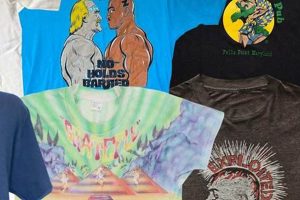
Apparel from live music events during a specific decade holds significant collector value. These items, typically cotton-based and featuring band logos, tour dates, or album artwork, represent a tangible connection to a pivotal era in music history. An example would be a faded black shirt commemorating a 1985 stadium tour.
The enduring popularity of these garments stems from several factors. Nostalgia plays a significant role, as individuals seek to recapture personal memories or connect with a perceived golden age of music. Furthermore, scarcity and the unique designs specific to that period contribute to their desirability among collectors and fashion enthusiasts. They are viewed as both wearable art and historical artifacts, representing a time before mass production and digital music distribution.
The following sections will delve into the factors driving the market for these items, the key bands and genres that are highly sought after, and tips for identifying genuine articles versus reproductions. This exploration will provide a clearer understanding of the forces at play in this niche collecting area.
Authentication and Preservation
Acquiring authentic memorabilia from the era necessitates careful scrutiny. Several factors can assist in determining genuineness and ensuring the longevity of these artifacts.
Tip 1: Examine the Fabric. Original shirts were typically constructed from single-stitch cotton. The presence of double-stitched seams is often indicative of a later reproduction.
Tip 2: Verify the Tag. Original tags from the decade contain specific brand markings and sizing conventions. Researching common manufacturers from that era is advisable.
Tip 3: Assess the Print Quality. Screen-printing techniques of the time differed from modern methods. Authentic prints frequently exhibit slight imperfections or fading, adding to their character.
Tip 4: Scrutinize the Design. Familiarize yourself with the band’s artwork and tour designs from the specific period. Inconsistencies or inaccuracies are red flags.
Tip 5: Consider the Condition. While pristine examples command higher prices, slight wear and tear is expected in garments of this age. However, excessive damage may detract from value.
Tip 6: Check for Licensing. Officially licensed merchandise often bears copyright notices. The absence of such markings does not automatically indicate a fake, but warrants further investigation.
Tip 7: Consult Expert Opinions. When in doubt, seek the advice of experienced collectors or appraisers. Their expertise can prove invaluable in assessing authenticity.
By employing these techniques, potential buyers can mitigate the risk of acquiring counterfeit items and ensure the preservation of genuine pieces of music history.
The subsequent section will explore the current market value and factors influencing pricing of these vintage collectibles.
1. Band Identity
The emblem of a musical act imprinted upon apparel of the 1980s serves as a potent marker of cultural affiliation and historical context. The recognition of a specific group is paramount in establishing value and significance within the realm of collectible garments.
- Genre Affiliation
The association with a particular musical genre significantly impacts desirability. For instance, items associated with the hard rock or heavy metal bands of the era, such as Metallica or Iron Maiden, often command higher premiums compared to those of lesser-known or less influential artists. The perceived cultural impact and enduring legacy of the genre contribute to this valuation.
- Commercial Success
The level of mainstream recognition and commercial success achieved by a band during the decade directly correlates with the demand for their associated merchandise. Bands with multiple platinum albums and widespread radio airplay are more likely to have produced apparel that resonates with a larger collector base. Memorabilia from these acts benefits from broader brand recognition.
- Iconic Imagery
The visual representation of a band, whether through logos, album artwork, or distinctive stage personas, plays a crucial role in the appeal of related attire. Shirts featuring memorable graphics or designs that are closely associated with a band’s identity become highly sought-after artifacts. The visual elements contribute to the garment’s collectible status.
- Rarity of the Design
Even for well-known bands, certain designs or tour-specific shirts may be rarer than others, due to limited production runs or regional exclusivity. These scarce items hold increased value because of their limited availability, making them prime targets for collectors seeking unique pieces of musical history.
The aforementioned facets of band recognition intertwine to determine the market value and desirability of apparel from live music events during the specific era. Understanding these connections is essential for both buyers and sellers navigating the market for these vintage collectibles.
2. Tour Specificity

Within the realm of apparel commemorating live music events of the 1980s, the attribute of tour specificity carries substantial weight in determining collectible value and historical significance. Identifying the exact tour associated with a particular garment adds a layer of authenticity and context that is highly prized by collectors.
- Tour Dates and Locations
The inclusion of specific dates and locations on a shirt provides verifiable evidence of its origin. A shirt displaying a complete list of tour stops, for example, offers a concrete link to a defined period and geographical area. This demonstrable connection to a documented tour significantly enhances its appeal.
- Limited Edition Designs
Some tours featured unique or limited-edition designs that were only available at specific venues or during a particular leg of the tour. These exclusive designs, often tied to specific promotional campaigns or sponsorships, contribute to scarcity and increased collector interest. The limited availability directly impacts market value.
- Supporting Acts
Apparel that includes the names of supporting acts alongside the headlining band provides additional historical context. This information helps to place the shirt within a specific concert setting and offers insights into the broader music scene of the time. The presence of supporting act information adds to the narrative value.
- Promotional Tie-Ins
Certain tours were associated with specific product endorsements or promotional campaigns. Merchandise featuring these promotional tie-ins can be particularly desirable, as they represent a convergence of music, marketing, and popular culture. The association with a well-known brand or product can enhance the shirt’s historical and collectible appeal.
The level of tour specificity embedded within the design and information on a garment from the era significantly impacts its desirability and value. Collectors prioritize items that offer verifiable connections to specific concert events, contributing to a deeper appreciation of the shirt as a tangible artifact of music history.
3. Fabric Quality
The quality of the fabric employed in garments from live music events of the 1980s is a significant determinant of both their authenticity and longevity. Cotton was the predominant material, and variations in weave, weight, and fiber content directly impact the shirt’s durability and overall feel. Garments constructed from heavier-weight cotton, for example, tend to resist wear and tear more effectively than those made from thinner, less robust materials. A tangible example is the difference between a shirt made from a tightly woven ring-spun cotton versus one using a looser, open-end yarn; the former is likely to withstand repeated washing and wearing with minimal degradation. This inherent durability directly affects its survivability and eventual status as a vintage collectible.
Fabric quality also serves as an indicator of manufacturing practices prevalent at the time. Single-stitch construction, frequently observed in items from this era, often correlates with the use of specific cotton blends and weaving techniques. While not universally indicative of superior quality, the presence of single-stitch seams, combined with a specific type of cotton (e.g., a blend with a higher thread count), can suggest a particular manufacturer or production period. Examining the fabric’s texture, drape, and resistance to stretching provides further clues about its composition and origin. These material characteristics become crucial when distinguishing between original garments and modern reproductions, which frequently utilize different fabrics and manufacturing processes.
In summary, fabric quality is not merely an aesthetic consideration but a critical factor in assessing the authenticity, durability, and overall value of apparel from live music events of the 1980s. Variations in cotton composition, weave, and weight directly influence the shirt’s lifespan and its potential to become a sought-after vintage item. Collectors and enthusiasts must meticulously examine these material characteristics to ensure they are acquiring genuine articles and understanding the historical context of these wearable artifacts. Furthermore, understanding fabric care and proper storage techniques for these specific materials extends garment life and maintains collectible condition.
4. Print Style
The visual aesthetic of screen-printed designs on apparel from live music events during the 1980s serves as a key indicator of authenticity and era-specific manufacturing techniques. Variations in ink composition, layering methods, and graphic design trends distinguish genuine articles from modern reproductions.
- Ink Composition and Texture
Inks used in the decade often possessed a distinct tactile quality and chemical composition compared to contemporary alternatives. Plastisol inks, known for their durability and vibrant colors, were widely employed, resulting in prints that often exhibit a slightly raised texture. The aging process affects these inks differently, leading to unique cracking or fading patterns that are difficult to replicate accurately. The presence of specific ink types and their associated aging characteristics are valuable authentication markers.
- Layering and Registration
Screen-printing processes of the time often involved manual layering of colors, leading to minor misalignments or registration errors in the final design. These imperfections, while technically flaws, are characteristic of the era and contribute to the garment’s vintage charm. The absence of such imperfections in a purported shirt from the 1980s should raise concerns about its authenticity. Careful examination of color boundaries and layering techniques is essential.
- Graphic Design Trends
The visual motifs and design conventions prevalent during the decade significantly influence the style of the graphics. Bold typography, airbrush effects, and new wave-inspired imagery are common hallmarks of the period. Recognizing these era-specific design trends allows for a more informed assessment of a shirt’s origin. Designs that incorporate anachronistic fonts or visual elements are likely to be modern reproductions.
- Licensing and Copyright Marks
The presence and style of licensing and copyright notices provide additional clues about the shirt’s authenticity. Original garments often feature specific copyright symbols and licensing information that reflect the legal practices of the time. Comparing these marks to known examples from the era can help verify the shirt’s origin. Discrepancies in copyright information or the absence of such marks warrant further investigation.
The interplay of ink composition, layering techniques, graphic design trends, and licensing marks provides a comprehensive framework for evaluating the print style of garments from live music events of the 1980s. A thorough understanding of these elements is crucial for collectors and enthusiasts seeking to acquire genuine artifacts of music history.
5. Tag Markings

Tag markings found on apparel from live music events during the 1980s provide crucial insights into the garment’s origin, manufacturer, and potential authenticity. These small details, often overlooked, serve as valuable checkpoints for collectors and enthusiasts seeking to verify the provenance of vintage items.
- Manufacturer Identification
Tags typically display the name or logo of the apparel manufacturer. Common manufacturers from the decade, such as Hanes, Screen Stars, and Velva Sheen, employed specific tag designs and branding elements. Familiarity with these manufacturer-specific markings is essential for identifying potentially genuine articles. For example, a shirt claiming to be from 1985 but featuring a tag from a manufacturer that did not exist until the 1990s would be immediately suspect.
- Fabric Composition and Care Instructions
Tags frequently include information about the fabric composition (e.g., 100% cotton, 50/50 blend) and care instructions. The types of fabrics and printing techniques used during the 1980s differed from modern standards, making these details valuable indicators of the garment’s age. A shirt labeled as “100% polyester” would be unlikely to originate from this era, as cotton and cotton blends were far more prevalent.
- Sizing Conventions
Sizing conventions have evolved over time. Tag markings from the 1980s often reflect different sizing standards compared to contemporary apparel. Examining the size designations and comparing them to known sizing charts from the period can provide further clues about the shirt’s authenticity. For instance, a modern “Large” might correspond to an “X-Large” on a shirt from the 1980s.
- Country of Origin
Tags also indicate the country of origin, revealing where the garment was manufactured. The prevalence of domestic manufacturing in the United States during the 1980s means that many authentic shirts will bear a “Made in USA” label. The presence of a different country of origin does not automatically disqualify a shirt, but it warrants further investigation into the brand’s manufacturing practices at the time.
These facets of tag markings, when considered collectively, provide a robust framework for assessing the authenticity of apparel from live music events of the 1980s. Diligent examination of these details can significantly reduce the risk of acquiring counterfeit items and ensure the preservation of genuine artifacts from this pivotal decade in music history. Consulting resources such as vintage clothing databases and collector forums can further enhance one’s ability to interpret and utilize tag markings effectively.
6. Wear Patterns

The condition of apparel from live music events during the 1980s provides essential clues regarding its history and authenticity. Wear patterns, encompassing fading, cracking of printed designs, and fabric degradation, represent physical manifestations of time and usage. These indicators, when interpreted accurately, contribute significantly to the valuation and authentication process. For instance, consistent fading across the shoulders and collar suggests regular wear and exposure to sunlight, aligning with the expected condition of a garment worn frequently over several decades. Conversely, pristine condition in a shirt purporting to be from the 1980s raises concerns about its genuineness.
Specific types of wear are associated with particular fabrics and printing techniques common during the era. Plastisol inks, widely used for screen printing, often exhibit characteristic cracking patterns as they age and flex. The presence of such cracking, particularly in areas subjected to stress like the chest and back, supports the claim of age and authenticity. Similarly, single-stitch construction, prevalent in many items from this decade, is prone to seam separation and fraying after repeated washing and wearing. The nature and location of these wear patterns offer valuable insights into the garment’s likely usage and storage history. A shirt stored in a humid environment, for example, may exhibit mildew staining or fabric disintegration not seen in those stored properly. These nuanced signs of aging are difficult to replicate convincingly in counterfeit items.
In summary, wear patterns provide a tangible link to the past, offering verifiable evidence of a garment’s age and usage history. While the absence of wear does not necessarily invalidate a shirt’s authenticity, the presence of consistent and era-appropriate wear patterns significantly strengthens its credibility. Collectors and enthusiasts must carefully examine these physical manifestations of time to make informed purchasing decisions and appreciate the historical significance of these wearable artifacts. Recognizing wear patterns in their historical context promotes responsible collecting practices and the preservation of musical memorabilia.
7. Copyright Notices
The presence, absence, and specific format of copyright notices on apparel commemorating live music events of the 1980s serve as crucial indicators of authenticity and licensing legitimacy. The legal framework surrounding intellectual property during that era shaped the way such notices were displayed, making them valuable markers for collectors and enthusiasts.
- Licensing Agreements and Trademark Protection
Apparel featuring band logos, album artwork, and tour imagery typically required licensing agreements between the band (or their management) and the manufacturer. The copyright notice served as a declaration of ownership and a deterrent against unauthorized reproduction. Examining the wording and format of the notice allows for verification against standard licensing practices of the time. For example, shirts produced and sold without a visible copyright notice may be indicative of bootleg or unlicensed merchandise.
- Copyright Symbol Placement and Content
The location and content of the copyright symbol () and accompanying text varied depending on the manufacturer and the specific licensing agreement. The notice typically included the year of copyright, the name of the copyright holder (e.g., the band’s name or their record label), and a statement asserting the rights reserved. The absence of a properly formatted and positioned copyright notice raises concerns about the shirt’s authenticity. Furthermore, inconsistencies in the copyright holder’s name or the year of publication are red flags for potential forgeries.
- Variations in Bootleg Merchandise
Unofficial or bootleg shirts often lacked proper copyright notices or featured altered or incomplete information. These variations provide a key point of differentiation between legitimate merchandise and unauthorized copies. Bootleg manufacturers might omit the copyright symbol altogether, use generic wording, or misspell the band’s name. Recognizing these discrepancies requires familiarity with the standard copyright conventions and legal practices of the era.
- Evolving Legal Standards
Copyright laws and their enforcement have evolved over time. The specific language and scope of copyright notices on apparel from the 1980s reflect the legal standards and practices of that period. Understanding these historical legal contexts is essential for accurately interpreting the significance of copyright notices on vintage garments. Changes in copyright law may also impact the value and collectibility of certain shirts, as legal ownership and usage rights continue to be debated.
The presence, format, and content of copyright notices offer a critical layer of authentication for apparel from live music events of the 1980s. These legal markings, when examined in conjunction with other factors such as fabric quality, printing techniques, and tag markings, provide a comprehensive framework for assessing the genuineness and historical significance of these collectible items. A shirt with a meticulously correct copyright notice significantly enhances its value and desirability among discerning collectors.
Frequently Asked Questions
The following questions address common inquiries regarding the authentication, valuation, and preservation of these collectible garments.
Question 1: What constitutes an authentic shirt from live music events of the 1980s?
Authenticity is determined by a combination of factors, including fabric composition (typically single-stitch cotton), era-appropriate tag markings, print style (screen-printed with potentially minor imperfections), and verifiable association with a specific band and tour.
Question 2: How does fabric composition aid in authentication?
Garments constructed from single-stitch cotton, a common material during the decade, offer a primary indication. Modern reproductions often utilize double-stitched seams and different fabric blends.
Question 3: What role do tag markings play in verifying authenticity?
Tag markings reveal the manufacturer, fabric composition, and sizing information. Familiarity with common manufacturers and their tag designs from the 1980s is crucial for authentication.
Question 4: How does print style contribute to the assessment of authenticity?
Original screen prints from the 1980s often exhibit slight imperfections, such as misalignments or cracking, due to the manual printing processes of the time. Modern printing techniques tend to produce more uniform results.
Question 5: What impact does condition have on the value of these collectibles?
While pristine condition commands higher prices, slight wear and tear is expected in garments of this age. Excessive damage, however, can detract from value.
Question 6: How can the risk of acquiring counterfeit items be mitigated?
Potential buyers should scrutinize all of the aforementioned factors and, when in doubt, seek the advice of experienced collectors or appraisers. Thorough research and due diligence are essential.
In summary, authenticating garments from live music events of the 1980s requires a comprehensive evaluation of multiple factors, including fabric composition, tag markings, print style, and condition.
The subsequent section will explore best practices for the storage and preservation of these vintage collectibles.
Conclusion
The preceding exploration has outlined the multifaceted aspects of garments that served as promotional materials for live musical performances during a specific decade. The authentication, valuation, and preservation of these items require careful consideration of fabric composition, tag markings, print styles, wear patterns, and copyright notices. Each of these elements contributes to the determination of an item’s genuineness and its place within the broader context of musical history.
The ongoing interest in these garments underscores their enduring cultural significance. Collectors and enthusiasts are encouraged to approach the acquisition and preservation of these items with diligence and respect, ensuring their continued availability for future generations. Further research and the sharing of knowledge within the collecting community are essential for maintaining the integrity and historical value of this niche area.