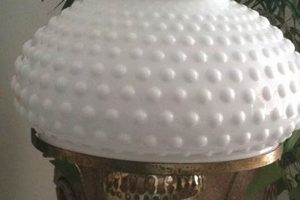
Illuminating spaces with a blend of classic design and functional elegance, these lighting fixtures typically feature a slender, often ornate, stem rising from a substantial foundation crafted from metamorphic rock. These freestanding lights provide ambient or task lighting while simultaneously serving as decorative objects within a room. Examples include mid-century modern designs with sleek lines and minimalist shades, as well as ornate, Art Deco pieces featuring intricate metalwork and substantial, heavily veined stone.
The enduring appeal of these items stems from their ability to add a touch of sophistication and historical character to interior decor. The weighty base provides stability and prevents tipping, while the diverse range of styles available allows for integration into various design aesthetics. Historically, these lamps represent a departure from purely functional lighting, emphasizing the importance of aesthetic design in everyday objects and reflecting the stylistic trends of their respective eras.
The following sections will delve deeper into the key aspects of these desirable home furnishings, examining their construction, identifying notable design periods, and offering guidance on selecting and maintaining these timeless pieces.
The acquisition and long-term preservation of these fixtures necessitate careful consideration to ensure both aesthetic appreciation and structural integrity.
Tip 1: Assess the Marble Base for Imperfections: Thoroughly examine the stone for cracks, chips, or staining prior to purchase. Minor surface blemishes may be acceptable, but structural damage can compromise stability and value.
Tip 2: Verify the Lamp’s Stability: Ensure the base is sufficiently heavy and properly proportioned to prevent the lamp from tipping. Test its stability on various floor surfaces.
Tip 3: Evaluate the Wiring and Electrical Components: Inspect the wiring for fraying, cracking, or damage. Confirm that the lamp is equipped with a grounded plug and that all electrical components meet safety standards. Consider professional rewiring for older models.
Tip 4: Research the Lamp’s Provenance and Design Period: Understanding the lamp’s origin and stylistic context can enhance its value and inform appropriate restoration techniques. Consult reputable resources for accurate identification.
Tip 5: Employ Gentle Cleaning Methods: Clean the stone base with a soft cloth and a pH-neutral cleaner specifically designed for marble. Avoid abrasive cleaners or excessive moisture, which can damage the surface.
Tip 6: Protect the Base from Scratches: Utilize felt pads or coasters beneath the base to prevent scratching of floors or furniture. Avoid dragging the lamp across surfaces.
Tip 7: Store in a Climate-Controlled Environment: When not in use, store the lamp in a dry, climate-controlled environment to prevent moisture damage or deterioration of the marble.
Adhering to these guidelines will help ensure the acquisition of a suitable piece, as well as its longevity and continued aesthetic contribution to its environment.
The following sections will delve into the aesthetics of vintage floor lamps with marble bases.
1. Material Quality

Material quality is paramount when evaluating these freestanding light sources. The characteristics of the metamorphic rock used for the base directly influence the fixture’s aesthetic appeal, structural integrity, and overall value. The sourcing, processing, and finishing of the stone are critical determinants of its lasting quality.
- Marble Veining and Coloration
The presence, pattern, and intensity of veining within the marble significantly impact its visual appeal. Rare or unique veining patterns increase desirability. The coloration of the stone, ranging from pure white to rich, saturated hues, must be consistent and free from discoloration. Natural variations are expected, but excessive imperfections detract from the overall quality.
- Stone Density and Porosity
High-density marble is less porous, making it more resistant to staining and damage from moisture. Porous stone is more susceptible to absorbing liquids, leading to discoloration and degradation over time. The density of the stone can be assessed through its weight and visual inspection of the surface texture.
- Surface Finish and Polish
The quality of the surface finish, whether polished, honed, or textured, directly affects the tactile experience and visual appearance. A well-executed polish enhances the natural veining and color of the marble, while a honed finish provides a more matte and understated look. The finish should be uniform and free from scratches, chips, or imperfections.
- Absence of Structural Defects
The marble base should be free from structural defects such as cracks, fissures, or significant inclusions. These defects can compromise the stone’s integrity and increase the risk of breakage. Careful inspection of the base is necessary to identify any potential weaknesses.
The selection of high-quality marble ensures that these lighting fixtures serve not only as functional light sources but also as enduring pieces of decorative art. The material’s inherent beauty, durability, and resistance to wear make it an ideal choice for creating a statement piece that will last for generations.
2. Design Era

The design era profoundly influences the aesthetic characteristics, material choices, and overall value of vintage floor lamps featuring marble bases. The era of creation dictates the form and ornamentation of the lamp, reflecting the prevailing artistic and design philosophies of the time. Understanding the design era is crucial for accurately identifying, valuing, and preserving these lighting fixtures. For instance, an Art Deco floor lamp from the 1920s may exhibit geometric patterns, stepped marble bases, and stylized metalwork, whereas a Mid-Century Modern example from the 1950s could feature simpler lines, a more streamlined marble base, and a focus on functionality. The design era thus provides a framework for interpreting the lamp’s stylistic intent and historical context.
Different design eras utilized marble in distinct ways. Art Deco designs often incorporated highly polished and intricately carved marble, serving as a luxurious counterpoint to the metal components. Conversely, minimalist designs favored honed or raw marble finishes, emphasizing the material’s natural texture and color variations. Identifying the design era also aids in determining the appropriate restoration techniques. An overzealous polishing of a Mid-Century Modern marble base, intended to replicate an Art Deco shine, would be historically inaccurate and could diminish the lamp’s value. Similarly, using modern replacement parts on a historically significant fixture could compromise its authenticity.
In conclusion, the design era is an indispensable component of understanding these vintage floor lamps. It provides the historical, stylistic, and material context necessary for appreciating their aesthetic qualities and ensuring their proper preservation. Recognizing the design era allows for informed decisions regarding acquisition, restoration, and placement within a broader interior design scheme, ensuring the continued appreciation of these enduring objects.
3. Structural Integrity

Structural integrity is paramount in vintage floor lamps with marble bases, ensuring both the safety and longevity of these often substantial and valuable pieces. The combination of a heavy marble base with an upright lamp structure necessitates careful attention to the mechanical stability and material soundness of all components.
- Base Stability and Weight Distribution
The marble base provides the primary support for the entire lamp. Its weight must be sufficient to counteract the top-heaviness of the lamp stem and shade, preventing tipping. Uneven weight distribution within the base itself can lead to instability, particularly on uneven surfaces. A structurally sound base will distribute weight evenly and resist deformation under load.
- Stem Connection and Material Fatigue
The connection between the stem and the marble base is a critical stress point. Over time, repeated movement or vibrations can cause material fatigue at this junction, potentially leading to loosening or breakage. The materials used for the stem and connecting hardware must be capable of withstanding these stresses. Regular inspection of this area is advisable to identify any signs of weakening or corrosion.
- Wiring Integrity and Insulation
While not strictly a structural component, the condition of the wiring is intrinsically linked to the safe operation of the lamp. Deteriorated insulation or damaged wiring can create a fire hazard, especially in vintage lamps where the original materials may be prone to degradation. A thorough assessment of the wiring is an essential aspect of evaluating the overall structural integrity of the lamp.
- Marble Base Condition and Fracture Risk
Marble, while durable, is susceptible to cracking or chipping, especially under stress or impact. Existing fractures can weaken the base, increasing the risk of complete failure. The presence of hairline cracks, chips around the edges, or signs of previous repairs should be carefully evaluated to determine the base’s structural soundness. A compromised base may require professional repair or replacement.
The structural integrity of vintage floor lamps with marble bases is a multifaceted consideration encompassing material quality, design, and maintenance. Addressing these aspects ensures the continued safe and aesthetic enjoyment of these enduring lighting fixtures. Neglecting these factors can compromise the lamp’s stability and, potentially, create safety hazards within the environment.
4. Rarity Factor
The rarity factor significantly influences the desirability and valuation of floor lamps dating from previous historical periods that are constructed with stone foundations. The limited availability of specific designs, materials, or manufacturing techniques contributes directly to increased value. Factors contributing to this scarcity include limited production runs, the use of short-lived or experimental materials, and the destruction or loss of lamps over time. The inherent cause is the confluence of market dynamics, historical events, and artistic trends that resulted in restricted supply. An understanding of these contributing factors enhances the ability to identify and assess the value of such pieces. For instance, a floor lamp designed by a prominent artist during the Art Deco movement, produced in a limited series using a specific type of marble sourced from a quarry that no longer exists, inherently possesses a higher rarity factor than a mass-produced lamp from the same era using common materials. The effect is a premium placed on the item due to its limited availability and historical significance.
Several real-world examples illustrate the practical significance of understanding the rarity factor. Lamps manufactured during wartime, when resources were scarce and production was often diverted to military needs, are often rare due to limited manufacturing capacity and material shortages. Floor lamps featuring unique or experimental designs that were not commercially successful upon initial release may be considered rare due to their limited production volume. Furthermore, lamps that have survived intact for many decades, escaping damage or destruction, are inherently more valuable than those that have been altered or heavily restored. Knowledge of these factors enables collectors and appraisers to accurately assess the value of these antiques.
In summary, the rarity factor is a critical determinant of the value and desirability of antique floor lamps with marble bases. Its influence stems from a complex interplay of historical circumstances, artistic expression, and market dynamics. Understanding the causes and effects related to scarcity enables accurate identification, valuation, and appreciation of these enduring fixtures, while acknowledging challenges such as imperfect historical records and subjective aesthetic preferences. The recognition of this factor remains essential for collectors, dealers, and anyone seeking to understand the broader historical and cultural significance of these antique decorative objects.
5. Aesthetic Harmony
Aesthetic harmony, in the context of lighting fixtures from previous eras incorporating stone foundations, represents the cohesive and visually pleasing integration of all component elements. This includes the marble base, the lamp stem, the shade, and any decorative embellishments. The attainment of aesthetic harmony is not merely a matter of subjective taste; it is an objective assessment of how well these elements interact to create a unified and visually satisfying whole. The marble base serves as the foundational element, influencing the selection of complementary materials, shapes, and finishes for the remainder of the lamp. A mismatch in style, scale, or material between the base and other components disrupts the overall aesthetic, diminishing the lamp’s visual appeal and value. Cause-and-effect relationships are evident: a well-chosen shade enhances the inherent beauty of the marble, while a poorly chosen shade detracts from it.
Several real-world examples illustrate the importance of aesthetic harmony. Consider an Art Deco floor lamp with a geometric marble base. A shade with clean lines and a metallic finish would complement the base’s angular design, creating a cohesive and elegant appearance. Conversely, a frilly, Victorian-style shade would clash with the base’s geometric form, resulting in a visually jarring and disharmonious effect. Another example is a Mid-Century Modern floor lamp with a simple, organic marble base. A minimalist shade made from natural materials, such as linen or wood, would enhance the base’s understated beauty. However, a brightly colored, plastic shade would detract from the base’s natural appeal, disrupting the lamp’s overall aesthetic harmony. The practical significance of understanding aesthetic harmony lies in the ability to make informed decisions regarding the selection, restoration, and placement of these lamps within a given environment. For instance, careful consideration must be given to the lamp’s scale, color palette, and overall style to ensure it complements the existing interior design. Ignoring these considerations can result in a discordant and visually unappealing space.
In conclusion, aesthetic harmony is an essential component of these types of vintage lamps, playing a crucial role in their overall value and appeal. The interplay between the marble base, stem, shade, and other decorative elements must be carefully considered to achieve a cohesive and visually satisfying result. The practical significance of this understanding lies in the ability to make informed decisions regarding the selection, restoration, and placement of these lamps, ensuring their continued aesthetic contribution to their surroundings. However, the achievement of aesthetic harmony can be challenging due to subjective preferences and the wide range of styles and materials available. Despite these challenges, the pursuit of aesthetic harmony remains a fundamental principle for anyone seeking to appreciate and preserve these enduring decorative objects, while linking back to the overall theme: vintage floor lamps with marble base.
Frequently Asked Questions
The following addresses common inquiries and misconceptions regarding these specific types of lighting fixtures.
Question 1: What factors contribute to the value of a floor lamp from a previous era with a stone foundation?
The value is determined by several factors, including the quality and type of stone used, the design era (e.g., Art Deco, Mid-Century Modern), the lamp’s condition and originality, its rarity, and the presence of any designer or manufacturer marks.
Question 2: How can the authenticity of a vintage floor lamp with a marble base be verified?
Authenticity can be assessed by examining the lamp for identifying marks or labels, researching the design and manufacturing period, comparing the lamp to known examples from reputable sources, and consulting with experts in vintage lighting. Discrepancies in materials, construction techniques, or design details may indicate a reproduction.
Question 3: What are the common issues encountered with these types of lamps, and how can they be addressed?
Common issues include damaged or cracked marble, frayed or deteriorated wiring, unstable bases, and non-original replacement parts. Solutions involve professional repair or restoration of the stone, rewiring with appropriate electrical components, stabilization of the base, and sourcing authentic replacement parts when possible.
Question 4: How should a floor lamp from a previous historical period with stone foundation be properly cleaned and maintained?
Cleaning should be performed using a soft, damp cloth and a pH-neutral cleaner specifically designed for stone. Harsh chemicals or abrasive cleaners should be avoided, as they can damage the marble. Regular dusting and inspection for damage are essential maintenance practices.
Question 5: What are the safety considerations when using a floor lamp with a marble base?
Safety considerations include ensuring the lamp is properly grounded, using bulbs of the correct wattage, inspecting the wiring regularly for damage, and positioning the lamp on a stable surface to prevent tipping. Older lamps may require rewiring to meet modern safety standards.
Question 6: How can the style of a floor lamp with a marble base be matched to a specific interior design aesthetic?
The style should be matched by considering the lamp’s design era, materials, and overall form. For example, an Art Deco lamp would complement a room with geometric patterns and metallic accents, while a Mid-Century Modern lamp would suit a space with clean lines and natural materials. The lamp’s scale and proportion should also be considered to ensure it fits appropriately within the room.
These FAQs provide a starting point for understanding the complexities involved in appreciating and maintaining these lighting fixtures. Professional consultation is recommended for specific concerns.
The subsequent section provides a summary.
Conclusion
The preceding exploration has illuminated the multifaceted nature of vintage floor lamps with marble bases, detailing their aesthetic qualities, historical significance, and material considerations. From understanding the nuances of marble veining to appreciating the stylistic variations across design eras, the information presented underscores the importance of informed selection, maintenance, and preservation of these objects.
The continued appreciation of these lighting fixtures relies on a commitment to understanding their historical context and material properties. Further research and consultation with experts are encouraged to ensure the longevity and aesthetic contribution of these enduring pieces. The preservation of these items not only enhances individual spaces but also contributes to the broader understanding of design history and material culture.