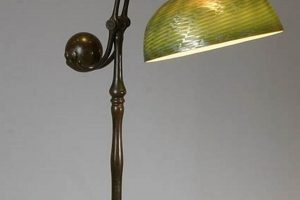
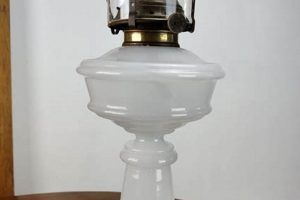
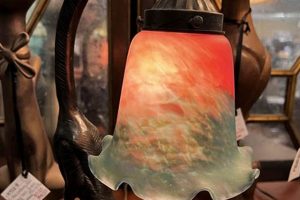
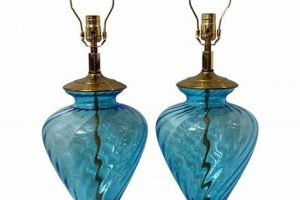
An antique lighting fixture crafted from jadeite glass, a type of opaque green glassware, is a collectible item sought after for its distinctive color and retro aesthetic. These fixtures, produced primarily from the 1930s through the 1970s, include table models, floor standing designs, and hanging varieties. Their presence within a space offers both illumination and a decorative element reminiscent of a specific era.
The value of such a light source stems from its scarcity, condition, and the maker’s reputation. They represent a tangible connection to the past and evoke a sense of nostalgia. Furthermore, their soft, diffused light creates a comforting ambiance. Historically, this type of glassware gained popularity as an affordable alternative to more expensive materials during the Depression era, contributing to its enduring appeal.
The following sections will delve deeper into the factors influencing the valuation of these objects, explore methods for identifying authentic pieces, and offer guidance on their proper care and preservation. This detailed examination will provide a comprehensive understanding of these iconic pieces of lighting history.
Guidance Regarding Antique Green Glass Lighting Fixtures
This section outlines crucial considerations for those interested in acquiring, maintaining, or authenticating antique green glass lighting fixtures. Adherence to these guidelines can mitigate potential risks and enhance the appreciation of these unique items.
Tip 1: Verify Authenticity Through Markings: Examine the fixture for maker’s marks or identifying stamps. Many manufacturers included subtle marks on the glass or metal components. Research these markings to confirm the piece’s origin and era. Absence of a mark does not necessarily indicate a reproduction, but warrants further investigation.
Tip 2: Scrutinize the Glass for Imperfections: Authentic Depression-era glass often exhibits minor imperfections such as bubbles or swirl marks. These characteristics are a result of the manufacturing processes of the time and can serve as indicators of age. Perfectly flawless glass may suggest a more recent origin.
Tip 3: Assess the Metal Components for Patina: Examine the metal hardware for signs of age-appropriate wear and patina. Rust, tarnish, and subtle discoloration can be indicative of age, though excessive corrosion may negatively impact value. Be wary of pristine metal components on otherwise antique fixtures.
Tip 4: Evaluate the Wiring for Originality: Older fixtures may retain their original wiring. However, for safety, it is highly recommended to have the wiring inspected and replaced by a qualified electrician. Original wiring, while interesting, should not be relied upon for safe operation.
Tip 5: Research Pricing Trends: Consult reputable antique guides, auction records, and online marketplaces to establish a fair market value for the fixture in question. Prices can vary significantly based on condition, rarity, and provenance. Avoid overpaying by conducting thorough research beforehand.
Tip 6: Handle with Care: Due to the delicate nature of glass, handle the fixture with extreme care during inspection, cleaning, and transportation. Use appropriate cleaning solutions specifically designed for vintage glassware. Avoid abrasive cleaners that could damage the surface.
Tip 7: Preserve Originality: While restoration may be tempting, preserving the original condition of these fixtures is often preferred by collectors. Avoid replacing original parts unless absolutely necessary for safety or functionality. Document any replacements or repairs made.
By adhering to these guidelines, enthusiasts can navigate the world of antique green glass lighting with greater confidence, ensuring the acquisition of authentic pieces and their long-term preservation.
The subsequent sections will explore the historical context of these items, focusing on the major manufacturers and design trends that defined their era.
1. Authenticity

The authenticity of a green glass lighting fixture directly dictates its value, historical significance, and collectibility. The presence of genuine manufacturing marks, coupled with period-correct glass composition and hardware, confirms its origin and era. Conversely, reproductions or forgeries, lacking these attributes, hold significantly less value and distort the market. For example, a lamp bearing a clear Fenton mark, verified against historical records, demonstrably proves its origin, thereby validating its authenticity and increasing its market worth.
The understanding of authenticity extends beyond mere financial considerations. It represents a connection to a specific historical period and manufacturing process. Characteristics such as minor imperfections in the glass, specific to the production techniques of the early to mid-20th century, can serve as further authentication markers. Collectors often seek such “flaws” as evidence of a genuine piece. Without verifying the lamp as authentic, the consumer runs the risk of purchasing a replica, in the lamp will hold significantly less market value than an original.
Determining the authenticity of green glass lighting, therefore, involves a detailed examination of its material composition, markings, and manufacturing characteristics. Challenges arise from the increasing sophistication of reproduction techniques, necessitating expert consultation or specialized knowledge for accurate identification. Ensuring authenticity safeguards the lamp’s intrinsic value and contributes to the preservation of historical artifacts for future generations. Furthermore, verifying authenticity is critical to avoid potentially misleading or fraudulent sale practices.
2. Condition

The physical state of a green glass lighting fixture is a primary determinant of its value and desirability among collectors. The presence of damage, repairs, or alterations significantly impacts its aesthetic appeal and historical integrity. Assessing condition requires a thorough examination of both the glass and the associated hardware.
- Glass Integrity
Cracks, chips, or significant scratches to the glass component substantially diminish the value of the fixture. Minor imperfections, such as air bubbles or straw marks resulting from the manufacturing process, are generally acceptable and may even serve as indicators of authenticity. However, any damage that compromises the structural integrity or visual appeal negatively impacts the fixture’s overall condition. For example, a large crack running across the shade of a lamp would reduce its value considerably compared to a similar lamp with only minor surface scratches.
- Hardware and Finish
The condition of the metal components, including the base, stem, and wiring, also plays a crucial role. Rust, corrosion, or missing parts detract from the fixture’s aesthetic and functional value. Original finishes, even with some wear, are often preferred over poorly executed refinishing. The state of the wiring is of particular importance for safety; deteriorated wiring must be replaced, potentially affecting the fixture’s originality, but ensuring safe operation.
- Repairs and Alterations
Evidence of past repairs, especially those performed poorly or with non-original materials, can significantly lower the value of the fixture. While professional restoration can improve the appearance of a damaged item, it is essential to disclose any repairs to potential buyers. Alterations to the original design, such as replacing the shade or adding non-period-correct components, also negatively impact its authenticity and value.
- Originality of Components
The presence of all original components, including the shade, hardware, and wiring (though the wiring should be replaced for safety), greatly enhances the fixture’s value. Matching shades are especially prized, as they are often lost or damaged over time. The more complete and unaltered the fixture, the greater its appeal to collectors seeking authentic examples of this type of lighting.
The overall condition of a green glass lamp represents a complex interplay of factors affecting its aesthetic appeal, historical integrity, and functional viability. Thorough assessment and careful preservation are critical for maintaining its value and ensuring its continued appreciation by collectors and enthusiasts. The assessment should consider aspects from glass integrity to originality of components.
3. Manufacturer
The manufacturer of a green glass lighting fixture is a critical determinant of its value, collectibility, and historical significance. Certain manufacturers, renowned for their quality materials, innovative designs, and prolific production during the period of popularity for these items, command higher prices and greater collector interest. Identifying the maker provides insight into the lamp’s origins, production techniques, and potential scarcity. For instance, a green glass lamp marked “McKee” indicates production by the McKee Glass Company, a prominent manufacturer of Depression-era glassware. This attribution significantly impacts its perceived value compared to an unmarked or lesser-known maker.
The manufacturer’s mark, when present and verifiable, serves as a primary authentication tool. Marks can appear in various forms, including molded stamps, etched signatures, or paper labels. Researching these marks allows collectors to determine the period of production, materials used, and design variations associated with a particular manufacturer. Furthermore, understanding the manufacturer’s historical context within the broader glassmaking industry can illuminate the socio-economic factors influencing production and design trends. For example, the availability of specific raw materials or technological advancements employed by a manufacturer directly influenced the aesthetic and functional characteristics of their products.
In conclusion, knowledge of the manufacturer provides a foundational element for understanding a green glass lighting fixture. It directly influences value, aids in authentication, and enriches appreciation of the historical and cultural context. The challenge lies in accurately identifying makers, especially when marks are absent or obscured. However, diligent research and expert consultation can often overcome these obstacles, ensuring informed decisions when acquiring or evaluating these collectible items.
4. Rarity

The scarcity of a specific green glass lighting fixture significantly impacts its value and desirability within the collecting community. This attribute stems from several interconnected factors that limit the availability of particular designs or variations.
- Limited Production Runs
Certain manufacturers produced specific designs in restricted quantities, either due to experimental runs, short-lived popularity, or limitations in production capacity. These limited production runs inherently increase the rarity of the lamps. An example would be a specialized lamp manufactured for one year only. These lamps are more highly sought after.
- Design Variations
Subtle variations in color, mold design, or applied decoration contribute to the rarity of specific green glass lighting fixtures. Errors in the manufacturing process, while often considered flaws, can also create unique and highly sought-after variations. For instance, a specific shade color, or a limited edition design in the glass will increase the worth.
- Survival Rate
The passage of time and the fragility of glass inevitably reduce the number of surviving green glass lighting fixtures. Damage, loss, or disposal contribute to a decrease in availability, making well-preserved examples increasingly scarce. Climate, and general breakage and disposal are some reasons for the low survival rate.
- Regional Availability
Distribution patterns and regional preferences influenced the availability of specific designs in different geographic areas. A lamp that was commonly found in one region may be considerably rarer in another, increasing its desirability among collectors in those areas. These lamps were often available mostly in urban areas or certain states, and will increase the value.
The interplay of these facets creates a complex landscape of rarity within the world of green glass lighting. Understanding these factors allows collectors to assess the potential value of a given fixture and appreciate the unique characteristics that contribute to its scarcity and desirability. The intersection of the number of items manufactured, the number still around, and the locations where the items were available are all determining factors.
5. Style

The “style” of a green glass lighting fixture is a crucial determinant of its appeal, historical significance, and market value. Style encapsulates the design characteristics, artistic influences, and period-specific trends reflected in the lamp’s form, materials, and decorative elements. A lamp’s style directly influences its aesthetic compatibility with different interior design schemes and its representation of a specific era’s artistic sensibilities. Style is a result of the time in which it was created.
Different styles prevalent during the production of green glass lighting include Art Deco, Streamline Moderne, and Mid-Century Modern. Art Deco lamps, typically produced in the 1920s and 1930s, feature geometric shapes, bold lines, and luxurious materials, often incorporating chrome or Bakelite accents. Streamline Moderne lamps, popular in the 1930s and 1940s, showcase aerodynamic forms, rounded edges, and a sense of speed and motion. Mid-Century Modern lamps, prevalent from the 1940s to the 1960s, exhibit clean lines, organic shapes, and a focus on functionality and minimalist aesthetics. Recognition of these styles enables collectors and enthusiasts to categorize and appreciate lamps within their historical context. The stylistic cues reflect the time that the item was manufactured.
Understanding the style of a green glass lamp facilitates accurate dating, authentication, and valuation. Knowledge of period-specific design trends helps distinguish genuine vintage pieces from reproductions or stylistic pastiches. Furthermore, appreciating the lamp’s stylistic attributes enhances its decorative potential within a variety of interior design settings. A well-preserved Art Deco lamp, for example, can serve as a focal point in a vintage-inspired living room, while a Mid-Century Modern lamp complements a minimalist or contemporary space. Identifying the style enhances the lamp’s versatility in design settings.
6. Glass Composition

The specific blend of materials used to create a “vintage jadeite lamp” fundamentally determines its color, translucency, and overall durability. The distinctive green hue, characteristic of jadeite glass, is primarily achieved through the addition of iron oxide to the silica-based glass mixture. The concentration of iron oxide directly affects the intensity of the green, ranging from pale celadon to a deeper, more saturated shade. Variations in other ingredients, such as manganese or selenium, can further influence the glass’s color and clarity. For instance, some manufacturers employed uranium oxide to create a fluorescent effect under ultraviolet light, a feature now often sought after by collectors as an indicator of authenticity. The quality and formulation of the glass directly contributes to the vintage aspect.
The composition also dictates the glass’s resistance to thermal shock and physical impacts. Vintage glassware, produced with less advanced techniques than modern formulations, is generally more susceptible to cracking or chipping. This inherent fragility underscores the importance of careful handling and storage to preserve these objects. The presence of certain additives, such as lead, can increase the glass’s refractive index, resulting in a greater brilliance and sparkle. However, the use of leaded glass also raises environmental concerns and requires responsible disposal. Understanding this helps collectors better understand their items, and helps with longevity of ownership.
In summary, the composition of glass in a “vintage jadeite lamp” is not merely a technical detail but an integral aspect of its historical and aesthetic value. It determines the lamp’s distinctive color, influences its durability, and can provide clues to its authenticity and origin. The chemical makeup of these fixtures serves as a fingerprint of their time, reflecting both the available materials and the technological capabilities of the era. The understanding of glass composition is essential for collectors to acquire genuine articles and properly care for their treasured pieces.
Frequently Asked Questions
This section addresses common inquiries regarding vintage lighting fixtures made from jadeite glass, offering factual information to guide collectors and enthusiasts.
Question 1: How is the authenticity of a vintage jadeite lamp verified?
Authenticity verification involves examining the fixture for maker’s marks, scrutinizing the glass for age-appropriate imperfections (e.g., bubbles, swirl marks), and assessing the hardware for signs of patina. Cross-referencing markings with historical manufacturer records is crucial. Professional authentication may be necessary for ambiguous cases.
Question 2: What factors influence the valuation of a vintage jadeite lamp?
Valuation is based on a combination of factors, including the manufacturer (e.g., McKee, Fenton), the lamp’s condition (presence of cracks, chips, or repairs), its rarity (limited production runs or design variations), its style (e.g., Art Deco, Mid-Century Modern), and its provenance (documented history of ownership).
Question 3: Are reproductions of vintage jadeite lamps common?
Yes, reproductions are prevalent, particularly of popular designs. These reproductions often lack the subtle imperfections and material characteristics of genuine vintage pieces. Careful examination of markings, glass quality, and construction details is essential to differentiate between authentic lamps and reproductions.
Question 4: How should a vintage jadeite lamp be cleaned and maintained?
Cleaning should be performed using gentle, non-abrasive cleaning solutions specifically formulated for vintage glassware. Avoid harsh chemicals or abrasive scrubbers that could damage the surface. Regular dusting and careful handling are essential to prevent scratches or chips.
Question 5: Is it safe to use the original wiring in a vintage jadeite lamp?
No, using original wiring is strongly discouraged due to potential safety hazards. Over time, the insulation on vintage wiring can deteriorate, posing a risk of electrical shock or fire. A qualified electrician should inspect and replace the wiring before the lamp is used.
Question 6: Where can authentic vintage jadeite lamps be purchased?
Authentic vintage jadeite lamps can be found at reputable antique stores, vintage lighting dealers, online auction sites (with careful scrutiny of seller credentials and item descriptions), and estate sales. Thorough research and careful inspection are crucial to ensure authenticity and fair pricing.
The information provided offers a foundational understanding of key considerations when engaging with vintage jadeite lighting. Further research and consultation with experts may be beneficial for specific inquiries.
The next section will provide information on where to purchase vintage jadeite lamps.
Conclusion
The preceding analysis has illuminated the multifaceted considerations surrounding the acquisition, authentication, and preservation of the green glass lighting fixture. Key aspects, ranging from manufacturer identification and condition assessment to style recognition and glass composition analysis, collectively determine its value and historical significance. The information presented provides a framework for understanding the nuances of these collectible items.
Possession of a “vintage jadeite lamp” represents more than mere ownership; it signifies stewardship of a tangible artifact from a bygone era. Continued research, coupled with diligent care and ethical acquisition practices, will ensure the preservation of these iconic pieces of lighting history for future generations. Preservation of these historical artifacts provides benefits for generations.