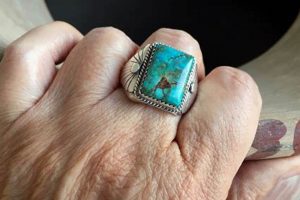
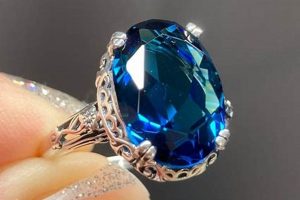
These handcrafted adornments, often made with silver and distinctive blue-green stones, represent a significant aspect of Southwestern artistry and heritage. Characterized by their age, materials, and construction techniques, these pieces offer a tangible connection to the past.
The value of these items lies not only in their aesthetic appeal but also in their cultural significance. They provide insight into the skills, beliefs, and traditions of various tribes, representing a lasting legacy passed down through generations. Furthermore, acquiring them supports the preservation of these artistic traditions, ensuring their continuity for future generations.
The following sections will delve deeper into the specific aspects of identifying, authenticating, and caring for these beautiful expressions of Native American artistry.
Consider these guidelines when evaluating pieces featuring the distinctive blue-green stone and traditional craftsmanship of Native American artisans.
Tip 1: Investigate Hallmarks: Examine the piece for maker’s marks or hallmarks. Authentic items frequently bear the signatures or symbols of the artisan or tribe, providing valuable clues to their origin and era.
Tip 2: Analyze Stone Characteristics: Assess the turquoise itself. Natural, untreated turquoise exhibits variations in color and matrix patterns. Uniformity may indicate stabilization or synthetic materials.
Tip 3: Scrutinize Silverwork: Evaluate the quality and style of the silverwork. Traditional methods involve hand-stamping, filing, and soldering, which often leave subtle irregularities indicative of handcrafted construction.
Tip 4: Assess Construction Techniques: Observe the joinery and setting methods. Vintage pieces often exhibit construction techniques specific to particular tribes or periods, such as the use of hand-cut bezels or specific types of solder.
Tip 5: Consider Patina: Examine the surface patina. Age and wear typically result in a natural darkening or oxidation of the silver, which can be a sign of authenticity, though this can also be faked.
Tip 6: Seek Expert Appraisal: Consult with a qualified appraiser specializing in Native American jewelry. A professional evaluation can provide insights into the piece’s provenance, age, and market value.
Tip 7: Research Tribal Styles: Familiarize yourself with the distinctive design elements and techniques associated with different tribes, such as Navajo, Zuni, Hopi, and Santo Domingo. This knowledge aids in identifying the potential origin and authenticity of the piece.
These considerations, when carefully applied, assist in the informed appreciation and evaluation of these handcrafted adornments. They provide a means to discern authenticity and understand the rich cultural heritage embedded within each piece.
The following sections will provide a comprehensive guide to caring for and preserving these valuable artifacts.
1. Authenticity Indicators

The authentication process for these artifacts involves a meticulous examination of various attributes inherent in the piece itself. These indicators, when considered collectively, provide a strong basis for determining the piece’s origin, age, and overall legitimacy.
- Hallmarks and Maker’s Marks
Genuine artifacts often bear hallmarks or maker’s marks that serve as signatures of the artisan or the tribe responsible for the creation. These marks, which may be stamped, etched, or applied in other ways, can be researched to verify their association with known Native American silversmiths and workshops. The absence of a mark does not automatically invalidate a piece, but its presence provides a valuable clue.
- Construction Techniques and Materials
Traditional methods of silverwork, stone setting, and design are characteristic of specific tribes and eras. Hand-fabricated elements, such as hand-cut bezels or intricate silverwork patterns created using traditional stamping techniques, are indicative of older, handcrafted pieces. The materials used, including the type of silver (e.g., coin silver, sterling silver) and the source of the turquoise, also contribute to authentication.
- Turquoise Characteristics
The turquoise itself exhibits telltale signs of authenticity. Natural, untreated turquoise typically features variations in color, matrix (the pattern of veins and inclusions within the stone), and texture. Consistent color and a lack of natural imperfections may suggest stabilization, treatment, or the use of synthetic materials. Specific mines, such as Bisbee or Sleeping Beauty, are known for producing turquoise with distinct characteristics.
- Patina and Wear Patterns
Age and use result in the development of a natural patina on the silver and wear patterns on both the silver and the turquoise. This patina, a subtle darkening or oxidation of the silver surface, is often difficult to replicate convincingly. Wear patterns, such as slight rounding of edges or smoothing of surfaces in areas of contact, can provide further evidence of the piece’s age and authenticity.
By carefully analyzing these indicators, a comprehensive assessment of the item can be achieved. This systematic approach is critical to distinguishing authentic historical artifacts from contemporary reproductions or imitations. The integration of these indicators allows for a deep dive into the world of vintage native american turquoise rings by carefully inspecting all details that determine if these artifacts are authentic, and a piece of history.
2. Tribal Affiliations

The tribal affiliation of a piece significantly influences its design, materials, and overall aesthetic, making it a crucial factor in identifying and appreciating antique Southwestern jewelry. The distinct traditions and techniques of various tribes are reflected in their handcrafted creations, providing valuable clues to a ring’s origin and historical context.
- Navajo Silversmithing Techniques
Navajo artisans are renowned for their use of heavy gauge silver and bold designs. Often featuring larger stones and intricate stamp work, rings crafted by Navajo silversmiths exhibit a distinctive ruggedness and substantial feel. The use of ingot silver in older pieces is a hallmark of this style. Examples include rings with large central turquoise stones surrounded by elaborate silver settings, reflecting the Navajo aesthetic.
- Zuni Lapidary Work
In contrast to the Navajo style, Zuni rings are characterized by their intricate lapidary work. Cluster work, needlepoint, and petit point designs, where numerous small turquoise stones are meticulously set in close proximity, are common. This meticulous attention to detail reflects the Zuni’s expertise in stone cutting and setting. Rings featuring rows of precisely matched turquoise stones, or those depicting symbolic figures crafted from inlaid stones, exemplify Zuni craftsmanship.
- Hopi Overlay Technique
Hopi silversmiths are distinguished by their overlay technique, where two layers of silver are fused together, with the top layer being cut away to reveal a design against the darkened background of the lower layer. This results in rings with clean lines, geometric patterns, and a strong emphasis on symbolism. Rings featuring stylized depictions of Katsinas or other Hopi motifs rendered through the overlay technique are characteristic of this style.
- Santo Domingo Beadwork and Stone Inlay
The Santo Domingo tribe, now known as the Kewa Pueblo, is known for its expertise in beadwork and stone inlay. Rings crafted by Santo Domingo artisans often feature mosaic designs created from carefully shaped pieces of turquoise, shell, and other materials. These intricate inlaid patterns reflect a deep connection to the natural world and a mastery of lapidary techniques. Rings with geometric or representational designs created through stone inlay are representative of Santo Domingo craftsmanship.
Understanding the nuances of these tribal styles is essential for collectors and enthusiasts seeking to appreciate the rich artistic heritage embedded within this jewelry. By recognizing the distinct characteristics associated with each tribe, one can gain a deeper appreciation for the cultural significance and artistry of Southwestern Native American jewelry.
3. Silver Quality
The value and authenticity of handmade adornments are intrinsically linked to the quality of the silver used in their creation. Silver, serving as the primary metal component in many of these pieces, not only contributes to the aesthetic appeal but also serves as a crucial indicator of age, origin, and overall craftsmanship. The type and purity of the silver employed by Native American artisans have evolved over time, reflecting changing economic conditions, access to materials, and stylistic preferences. Early examples frequently incorporate coin silver, derived from melted-down silver coins, which exhibits a lower silver content and a distinctive appearance. The transition to sterling silver, with a higher purity of 92.5% silver, marks a significant shift in materials and often signifies a later period of production. Consequently, analyzing the silver content and composition is paramount when evaluating and authenticating these antique pieces.
Variations in silver quality directly influence the durability, appearance, and collectibility of these handmade artifacts. Sterling silver, due to its higher purity, offers greater resistance to tarnish and maintains its luster for a longer duration. The presence of intricate silverwork, such as detailed stamp work or delicate filigree, is often indicative of skilled craftsmanship and can enhance the value of the piece. The way in which the silver is worked the texture, the evenness of the stamping, the precision of the soldering speaks to the artisan’s skill and the time invested. For instance, a vintage Navajo ring featuring heavy gauge sterling silver with deep, well-defined stamp work is likely to be more valuable than a similar piece crafted from a lower-grade silver alloy with less detailed ornamentation. Similarly, the condition of the silver, including the presence of patina and the absence of significant damage, also contributes to its overall desirability.
In summary, the quality of the silver used in its construction is a critical factor in determining its value, authenticity, and aesthetic appeal. Recognizing the different types of silver and their associated characteristics enables collectors and enthusiasts to make informed decisions when acquiring and appreciating these artistic treasures. Furthermore, understanding the historical context surrounding silver production and usage within Native American communities provides valuable insights into the cultural and economic factors that shaped the creation of these lasting works of art.
4. Turquoise Source

The origin of the turquoise within vintage Native American handcrafted adornments exerts a profound influence on its value, aesthetic character, and historical significance. Different mines yield stones with distinct color variations, matrix patterns, and degrees of hardness, imbuing each piece with a unique fingerprint traceable to its geological source. For instance, turquoise from the Bisbee mine, known for its deep blue hue and distinctive chocolate-brown matrix, commands a premium among collectors. Similarly, the vibrant blue turquoise from the Sleeping Beauty mine has become iconic in Native American jewelry. The identification of the turquoise source, therefore, is essential in accurately appraising and authenticating vintage pieces, as it provides insights into the period in which the ring was crafted and the availability of specific turquoise varieties at that time.
The specific mine location also provides insight into trading relationships and access to resources. Certain tribes may have had preferential access to particular turquoise mines, either through direct control or established trade networks. Understanding these historical connections can shed light on the cultural exchanges and economic factors that shaped the creation of these artistic treasures. The presence of turquoise from a specific mine may even indicate the tribal affiliation of the artisan, further aiding in the authentication process. Moreover, the depletion of certain turquoise mines over time has increased the rarity and value of pieces containing stones from those sources. Rings featuring turquoise from now-closed mines, such as Lander Blue or Number Eight, are highly sought after by collectors due to their limited availability and unique beauty.
In conclusion, the turquoise source serves as a critical determinant of value and authenticity, impacting the appreciation and long-term preservation of these handcrafted artifacts. Recognizing the nuances associated with different turquoise origins equips enthusiasts and collectors with the knowledge necessary to make informed decisions, ensuring the continued appreciation and protection of this artistic heritage. The careful study of turquoise sources not only informs appraisal, but deepens our appreciation for the natural materials and the human artistry found in the vintage pieces.
5. Historical Period

The historical period significantly influences the materials, techniques, and designs observed in handcrafted adornments. Early pieces, pre-dating widespread access to commercially refined silver, often feature coin silver, hammered from melted-down U.S. or Mexican coins. This early silver displays a lower purity and a distinctive texture compared to later sterling silver examples. The turquoise available during these periods was typically untreated and exhibited a wider range of natural variations in color and matrix, reflecting the specific mines in operation at the time. The techniques employed, such as hand-stamping and simple bezel settings, showcase the limitations and resourcefulness of early artisans. As an example, early Navajo rings from the late 19th and early 20th centuries frequently display these characteristics, utilizing coin silver and relatively large, untreated turquoise stones set in simple, handcrafted settings.
The mid-20th century witnessed increased access to commercially produced sterling silver and the development of more sophisticated lapidary techniques. This era saw a rise in the use of cluster work and other intricate stone-setting designs, particularly among Zuni artisans. Turquoise stabilization processes also became more prevalent, resulting in stones with more consistent color and durability. Additionally, the rise of tourism and the commercialization of Native American art led to a diversification of designs, catering to a wider audience. Consider the shift from primarily personal adornment to items designed for sale in trading posts and curio shops; this transition necessitated changes in production methods and design aesthetics. The increased demand led to faster and less complex production methods for some artisans.
Understanding the historical period is therefore crucial for assessing the authenticity and value of Southwestern jewelry. The materials, techniques, and designs employed during different eras provide valuable clues to a piece’s origin and age. Recognizing the transition from coin silver to sterling, the evolution of lapidary techniques, and the influence of commercialization allows collectors and enthusiasts to make informed decisions and appreciate the rich cultural heritage embedded within these enduring works of art. Challenges remain in accurately dating unmarked pieces, and the impact of specific historical events, such as wars or economic depressions, can further complicate the analysis. However, careful attention to historical context remains essential for responsible collecting and preservation.
Frequently Asked Questions
This section addresses common inquiries regarding the identification, authentication, and care of handcrafted Southwestern adornments, providing authoritative guidance for collectors and enthusiasts.
Question 1: How does one differentiate between genuine and imitation turquoise in a vintage piece?
Authentic turquoise typically exhibits variations in color, matrix, and texture. Uniformity may indicate stabilization, treatment, or the use of synthetic materials. Microscopic examination can reveal the presence of polymer impregnation or other artificial enhancements.
Question 2: What are the key indicators of age in rings?
Indicators include the type of silver used (e.g., coin silver versus sterling), the presence of a natural patina, and construction techniques characteristic of specific historical periods. Documentation, such as provenance records or receipts, can further substantiate age.
Question 3: How should vintage rings be properly stored to prevent damage?
Rings should be stored in a cool, dry place, away from direct sunlight and humidity. Individual storage in soft pouches or lined jewelry boxes is recommended to prevent scratching and tarnishing. Avoid storing in airtight containers, as this can accelerate the tarnishing process.
Question 4: What cleaning methods are appropriate for cleaning artifacts?
Gentle cleaning with a soft, dry cloth is generally sufficient. Avoid harsh chemicals, abrasive cleaners, and ultrasonic cleaning devices. For more stubborn dirt or tarnish, consult with a professional jeweler specializing in antique jewelry cleaning.
Question 5: How does tribal affiliation affect the value and authenticity of rings?
Tribal affiliation significantly influences design, materials, and construction techniques. Familiarity with the distinct styles of various tribes, such as Navajo, Zuni, Hopi, and Santo Domingo, is crucial for identifying the origin and authenticity of rings. Rings crafted by renowned artisans or featuring rare design elements may command higher prices.
Question 6: How can one ascertain the provenance of a ring and its impact on value?
Provenance refers to the documented history of ownership and origin of a ring. A clear and verifiable provenance, linking the ring to a specific artisan, tribe, or historical event, can significantly enhance its value and desirability. Documentation may include certificates of authenticity, historical photographs, or written accounts from previous owners.
In summary, careful observation, informed research, and professional consultation are essential for the proper identification, care, and valuation of handcrafted adornments.
The following section will delve into the legal considerations surrounding the acquisition and sale of these cultural artifacts.
Conclusion
The exploration of these adornments reveals a complex intersection of artistry, cultural heritage, and historical context. Examining silver quality, turquoise source, tribal affiliation, historical period, and authenticity indicators provides a framework for responsible collecting and appreciation. Thorough analysis informs ethical acquisition and preservation practices.
Continued research and education are vital to safeguarding these artifacts and ensuring their enduring legacy. Recognizing the cultural significance and respecting the provenance of each piece remains paramount. Diligence in authentication protects both cultural heritage and the integrity of the market.