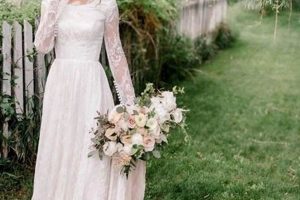
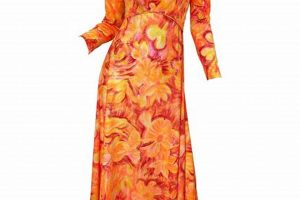
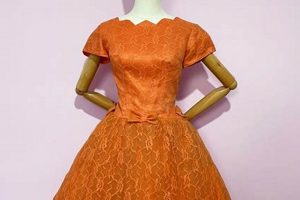
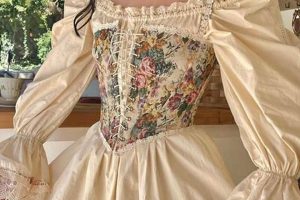
A garment style characterized by a neckline that sits below the shoulders, exposing the collarbone and upper chest area. Typically features a design from a previous era, often spanning the 1950s through the 1980s, embodying distinct stylistic elements of those periods. For example, a 1960s cocktail number with a dropped neckline and A-line silhouette exemplifies this aesthetic.
This particular garment type holds appeal due to its ability to blend classic design with a contemporary sense of allure. The exposed shoulders create a flattering line, while the vintage construction often indicates higher-quality materials and craftsmanship. Historically, this neckline experienced surges in popularity driven by iconic figures and evolving fashion trends, solidifying its place as a timeless option for formal and semi-formal occasions.
The following sections will delve into specific aspects of sourcing, styling, and preserving this specific garment type, providing practical guidance for acquiring and maintaining these unique pieces. Considerations of fabric, construction, and era will be examined to facilitate informed purchasing decisions and ensure the longevity of treasured vintage finds.
Acquiring and Caring for a Vintage Off the Shoulder Dress
The following guidelines offer practical advice for individuals seeking to acquire and maintain a dropped neckline garment from a past era.
Tip 1: Authenticate the Era. Examine construction techniques, fabric composition, and labeling. Seek garments reflective of the intended period; verify zippers, seams, and hems for age-appropriate characteristics.
Tip 2: Assess Fabric Integrity. Carefully scrutinize fabrics for signs of age, including discoloration, staining, or weakening. Delicate materials like silk and chiffon are particularly susceptible to damage.
Tip 3: Evaluate Structural Condition. Pay close attention to seams, closures, and embellishments. Weakened seams and damaged zippers can compromise the garment’s overall wearability.
Tip 4: Consider Alterations Carefully. While alterations are sometimes necessary, understand that significant modifications can detract from the garment’s historical value. Prioritize preservation whenever possible.
Tip 5: Utilize Proper Storage Techniques. Store the garment flat or hung on a padded hanger to prevent stretching or distortion. Employ acid-free tissue paper to cushion folds and protect against abrasion.
Tip 6: Implement Gentle Cleaning Methods. Avoid harsh chemicals and abrasive cleaning agents. Consult a professional dry cleaner experienced in handling delicate vintage materials for optimal results.
Tip 7: Protect from Light and Moisture. Store the piece in a cool, dark, and dry environment to minimize fading, mildew growth, and fabric degradation.
Adherence to these guidelines will contribute to the preservation of the garment’s structural integrity and aesthetic appeal, extending its lifespan and ensuring its continued enjoyment. The subsequent section will address stylistic considerations related to this item.
1. Silhouette

Silhouette, in the context of this garment style, refers to the overall shape and form created by the item when worn. The silhouette is a defining characteristic, varying significantly across different decades and influencing the garment’s perceived style and formality.
- 1950s Full Skirt Silhouette
Characterized by a cinched waist and a voluminous, often circular, skirt, this silhouette emphasizes an hourglass figure. Examples include dresses with tulle underskirts for added volume. This style is associated with a more formal, celebratory aesthetic.
- 1960s A-Line Silhouette
A straighter shape, widening gradually from the shoulders to the hem, this offers a more streamlined and youthful appearance. Shorter hemlines were also common. This silhouette reflects a shift towards simpler, less structured designs.
- 1970s Empire Waist Silhouette
Featuring a high waistline just below the bust, this style creates a flowing, elongated look. Often paired with soft, draping fabrics. It reflects a bohemian and romantic aesthetic.
- 1980s Bodycon Silhouette
The item embraces the bodys curves. Form-fitting and often made with stretch fabrics, this silhouette reflects a more assertive and glamorous style.
These silhouettes collectively define the aesthetic landscape of this garment category. Variations in shape highlight how different eras interpreted and expressed femininity and style through dressmaking. Understanding these variations is crucial for identifying and appreciating the specific charm and historical context of a particular dress.
2. Fabric Era

The materials used in its construction offer critical insights into the period of its creation and its intended use. Textiles and manufacturing techniques evolved significantly across the mid-20th century and later, leaving distinct marks on garments from each era. The identification of fabrics provides valuable clues to a garment’s origin and its place within fashion history.
- Rayon and Acetate (1940s-1950s)
These early synthetic fabrics were popular for their affordability and drape. Rayon, often used as a silk substitute, appeared in many garments of this period. Acetate offered a lustrous finish and was favored for lining and evening wear. A dropped neckline dress from this era may exhibit rayon in its main construction or acetate as a lining.
- Dacron Polyester and Blends (1950s-1960s)
The introduction of Dacron polyester revolutionized clothing production due to its wrinkle resistance and durability. Polyester blends, often combined with cotton or wool, became increasingly common, offering ease of care and longevity. An off the shoulder garment from the 1960s might feature a polyester-cotton blend, reflecting the growing adoption of these materials for everyday wear.
- Double Knit Polyester (1970s)
Double knit polyester achieved popularity for its stretch, comfort, and versatility. It was frequently employed in casual and semi-formal attire, including garments featuring this neckline. The fabric’s characteristic texture and drape can help identify garments originating from this decade.
- Natural Fibers and Blends (1980s-Present)
A renewed appreciation for natural fibers like cotton, linen, silk, and wool emerged. These materials, often blended with synthetics for improved performance, became more prevalent in both high-end and mass-market clothing. Pieces from this period may showcase silk crepe, linen blends, or cotton voile, reflecting a shift towards more luxurious and breathable textiles.
The selection of materials is intrinsically linked to both the prevailing fashion trends and technological advancements of the period. By examining the fabric composition, it becomes possible to contextualize a garment within its historical timeframe and to better understand its design intentions and care requirements. These details provide additional value when acquiring an item, enabling a more informed and appreciative ownership experience.
3. Construction

The manner in which a dropped neckline garment from a past era is assembled reveals much about its origins, quality, and intended lifespan. Construction techniques varied significantly across different periods and production scales, impacting the garment’s fit, durability, and overall aesthetic.
- Seam Finishes
Vintage garments often exhibit a range of seam finishes, reflecting the available technology and the desired level of durability. Hand-finished seams, pinked edges, and bound seams were common in earlier eras, indicative of meticulous craftsmanship and a focus on preventing fraying. The presence of serged or overlocked seams may suggest a later period of mass production. Understanding these variations provides insights into the garment’s construction quality and manufacturing origins.
- Fasteners
The type and placement of fasteners, such as zippers, buttons, and snaps, can serve as indicators of age and construction methods. Metal zippers, often marked with brand names like Talon or Conmar, were prevalent in garments from the mid-20th century. Button closures might feature intricate detailing or unusual materials, adding to the garment’s unique character. Careful examination of fasteners can aid in determining the period of origin and assessing the level of detail incorporated into the garment’s design.
- Interfacing and Lining
The use of interfacing and lining materials provides structural support and enhances the garment’s drape and comfort. Vintage items often incorporate natural fibers like cotton or linen for interfacing, providing a more breathable and flexible structure. Lining materials might include silk, rayon, or acetate, chosen for their smooth texture and ability to conceal inner seams. Examining these inner layers reveals the designer’s attention to detail and commitment to creating a well-constructed garment.
- Handwork
The presence of hand-stitched details, such as hand-rolled hems, hand-picked zippers, and hand-applied embellishments, signifies a higher level of craftsmanship and attention to detail. Handwork was more common in earlier eras, reflecting a time when labor was less expensive and mass production was less prevalent. Identifying hand-stitched elements can enhance the garment’s value and provide insight into its origins.
These construction details collectively contribute to the unique character and value of a dropped neckline garment. By scrutinizing seam finishes, fasteners, interfacing, lining, and handwork, one can gain a deeper understanding of the garment’s history, quality, and craftsmanship. These observations enhance the appreciation for the garment’s design and its place within the broader context of fashion history.
4. Occasion

The intended occasion exerted a significant influence on the design and selection of a dropped neckline garment from previous eras. Formal events, such as galas and weddings, frequently prompted the creation of elaborate designs, often incorporating luxurious fabrics, intricate embellishments, and carefully tailored silhouettes. Conversely, more casual gatherings, like cocktail parties or summer soires, typically resulted in garments featuring simpler designs, lighter materials, and less formal silhouettes. The specific demands of the event thus dictated a range of design choices, from fabric selection to embellishment techniques, shaping the overall aesthetic and functionality of the garment. For instance, a 1950s cocktail dress intended for an evening event might showcase silk or taffeta, while a 1970s summer dress could feature cotton or linen.
Furthermore, societal norms and expectations surrounding dress codes played a crucial role in determining the suitability of this garment style for particular occasions. In certain periods, this particular style might have been deemed inappropriate for conservative settings, while in others it was readily embraced as a fashionable and acceptable choice. The interplay between evolving societal attitudes and the stylistic expression of this garment is evident in the variations observed across different decades. For example, a shorter, body-conscious item of this design from the 1980s, paired with bold accessories, may have been considered suitable for a nightclub, whereas a similar design from the 1960s, with a more demure A-line silhouette, would likely have been reserved for less overtly sensual occasions.
Understanding the intended purpose of this type of garment is crucial for both collectors and wearers. Considering the event for which the item was originally designed provides insight into its historical context, construction quality, and potential styling options. Recognizing the intended occasion allows for a more informed appreciation of the garment’s unique characteristics and ensures its appropriate and respectful use in contemporary settings. Challenges arise when attempting to adapt a vintage item designed for a specific purpose to modern contexts, requiring careful consideration of stylistic appropriateness and potential alterations to maintain the garment’s historical integrity. Preserving the essence of its original design while adapting it to contemporary use presents a unique challenge, linking back to the broader theme of honoring fashion history while making it relevant for modern lifestyles.
5. Embellishments

The embellishments adorning a “vintage off the shoulder dress” significantly dictate its aesthetic character and reflect the prevailing fashion sensibilities of its era. These decorative details, ranging from delicate beadwork to bold appliqus, serve as visual cues, providing valuable insights into the garment’s origins, intended purpose, and the societal values it embodies. The choice and execution of embellishments directly influence the garment’s perceived formality, target audience, and overall desirability.
For example, a 1950s gown with a dropped neckline might feature meticulously hand-sewn sequins and pearls, reflecting the era’s emphasis on femininity and glamour. The labor-intensive nature of this beadwork suggests a higher social status and a dedication to refined craftsmanship. Conversely, a 1970s number could showcase macram fringe or patchwork detailing, mirroring the decade’s bohemian spirit and embrace of handcrafted elements. Understanding the relationship between era-specific embellishments and design principles is paramount for collectors, historians, and anyone seeking to authenticate or appreciate such garments. Recognizing these embellishments informs preservation efforts and provides a rich understanding of its legacy.
Ultimately, the embellishments on a dropped neckline garment from a past era offer a tangible connection to history, illustrating the interplay between fashion, culture, and individual expression. While challenges arise in preserving these delicate details over time, the effort is worthwhile, ensuring that future generations can appreciate the artistry and cultural significance embedded within these ornamented textiles. The embellishments represent a crucial element in preserving the garment’s overall integrity and the narratives they convey.
6. Provenance
The provenance of a “vintage off the shoulder dress,” its documented history of ownership, significantly impacts its value, desirability, and historical significance. A verifiable ownership trail, connecting the garment to a notable individual or event, can dramatically increase its market value. For example, a dropped neckline dress once worn by a celebrated actress during a film premiere would command a premium compared to an otherwise identical garment lacking such a history. Establishing provenance involves meticulous research, examining labels, receipts, photographs, and other supporting documentation to authenticate the garment’s past. The absence of clear provenance diminishes the garment’s appeal, transforming it from a potential artifact into merely a second-hand item.
The garment’s origins influence its interpretation and contextualization within fashion history. If it was made by a specific designer or atelier, and if that information is verifiable, then it lends valuable insight to its construction techniques. The provenance of the fabric offers insight into how the dress was constructed. If it was made in one workshop and sold in one store, that changes the garment in how we view it.
Ultimately, determining the background of ownership and fabrication enhances the garment’s historical significance and market appeal. It is a critical aspect in its preservation and the dissemination of information about its history and fashion history. Though challenges may exist, research for the documentation of its history is extremely valuable.
7. Maintenance

The long-term preservation of a dropped neckline dress is directly contingent upon appropriate maintenance practices. Neglecting proper care will inevitably lead to deterioration of fabrics, weakening of seams, and loss of embellishments, diminishing its aesthetic appeal and historical value. For instance, failure to address a small tear in delicate silk can result in extensive damage over time, potentially rendering the garment irreparable. Likewise, improper storage can cause discoloration, mildew growth, and structural distortion, compromising the item’s integrity. The relationship between maintenance and the longevity of this garment style is thus one of direct cause and effect: diligent care extends its lifespan, while neglect accelerates its decline.
The practical significance of understanding appropriate care techniques is demonstrated by the contrasting conditions of well-maintained versus poorly-maintained examples of these vintage dresses. A garment stored in acid-free tissue paper, away from direct sunlight and moisture, and professionally cleaned as needed, will retain its original color, shape, and fabric integrity for decades. Conversely, a garment stored in a damp attic, exposed to sunlight, and subjected to harsh cleaning methods will exhibit fading, staining, and weakened fibers, significantly reducing its desirability and value. Therefore, mastering proper maintenance techniques is not merely a matter of preserving an individual item, but also of safeguarding a piece of fashion history for future generations.
While the specific maintenance requirements may vary depending on the fabric, construction, and embellishments of a particular dress, certain general principles apply. These include gentle cleaning methods, appropriate storage techniques, and prompt repair of any damage. Ultimately, the commitment to diligent maintenance ensures that a dropped neckline garment from a past era can continue to be appreciated and enjoyed, serving as a tangible link to the fashion, culture, and social values of its time. Recognizing the challenges associated with the delicate nature of vintage textiles underscores the need for specialized knowledge and care, reinforcing the garment’s status as a valuable and historically significant artifact.
Frequently Asked Questions
This section addresses common inquiries regarding the acquisition, care, and historical context of the aforementioned garment style. The information presented aims to clarify misconceptions and provide practical guidance.
Question 1: How can authenticity be verified when purchasing a vintage off the shoulder dress?
Authentication involves careful examination of construction techniques, fabric composition, and labeling practices typical of the suspected era. Researching historical fashion trends and consulting with experienced dealers can further aid in verifying a garment’s authenticity.
Question 2: What are the primary factors affecting the value of a vintage off the shoulder dress?
Value is influenced by factors such as rarity, condition, designer attribution (if applicable), provenance, and aesthetic appeal. Garments in excellent condition with verifiable provenance command higher prices.
Question 3: What are the most appropriate cleaning methods for a delicate vintage off the shoulder dress?
Professional dry cleaning by a specialist experienced in handling vintage textiles is generally recommended. Spot cleaning with gentle, pH-neutral detergents may be appropriate for minor stains, but testing on an inconspicuous area is crucial.
Question 4: How should a vintage off the shoulder dress be stored to prevent damage?
Storage should occur in a cool, dark, dry environment, away from direct sunlight and heat. The garment should be stored flat or hung on a padded hanger, utilizing acid-free tissue paper to cushion folds and prevent abrasion.
Question 5: Are alterations advisable for a vintage off the shoulder dress, and if so, what precautions should be taken?
Alterations should be approached with caution, as they can detract from the garment’s historical value. If alterations are necessary, they should be performed by a skilled tailor experienced in working with vintage fabrics and construction techniques.
Question 6: What are some common signs of damage or deterioration to look for when assessing a vintage off the shoulder dress?
Common signs of damage include discoloration, staining, fabric weakening, seam separation, and loss of embellishments. Careful inspection of the fabric and construction is essential prior to purchase or wear.
This FAQ provides a basic understanding of key considerations. Further research and consultation with experts are encouraged for more in-depth knowledge.
The following section will explore styling recommendations for this particular garment style.
Conclusion
This exploration of the “vintage off the shoulder dress” highlights its multifaceted appeal, encompassing historical context, design elements, and preservation challenges. Considerations of authenticity, fabric era, construction, occasion, embellishments, provenance, and maintenance collectively define this garment’s significance. Adherence to appropriate care guidelines and a thorough understanding of its unique characteristics are crucial for ensuring its longevity.
The enduring fascination with the “vintage off the shoulder dress” stems from its ability to evoke a sense of timeless elegance and personal expression. Continued appreciation and informed preservation efforts will ensure that these garments remain a tangible link to the past, enriching our understanding of fashion history and cultural evolution. Further research and expert consultation are encouraged to foster a deeper appreciation for this distinct and captivating article of clothing.