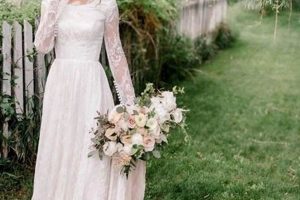
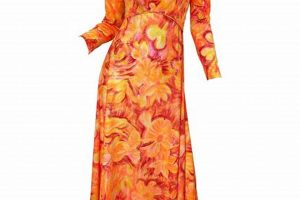
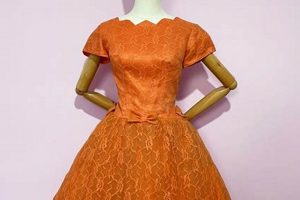
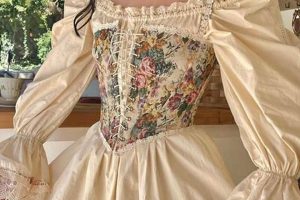
Garments echoing styles of past decades, typically from the 1920s to the 1970s, represent a significant segment within the apparel market. These articles of clothing often replicate or are inspired by designs originating from specific eras, characterized by unique silhouettes, fabrics, and embellishments. For example, a fit-and-flare silhouette reminiscent of the 1950s or a flowing maxi style popular in the 1970s fall under this classification.
The appeal of these garments stems from a variety of factors, including a desire for individuality, an appreciation for enduring aesthetics, and a connection to historical periods. These articles offer consumers a chance to express personal style through designs that diverge from current trends. Furthermore, these items frequently incorporate superior craftsmanship and unique detailing not commonly found in contemporary mass-produced clothing. The enduring popularity of these designs also reflects a cyclical nature within fashion, where past styles are continually reinterpreted and embraced by new generations.
Understanding the specific characteristics, historical significance, and enduring appeal of these garments is essential for those involved in fashion design, retail, and historical costume studies. The subsequent sections will delve into specific aspects of these sartorial choices, providing a more detailed examination of materials, construction techniques, and the sociocultural influences that shaped their design and adoption.
Selecting and maintaining garments evocative of past eras requires careful consideration. The following guidelines provide essential insights for those seeking to acquire or preserve these items.
Tip 1: Authenticity Assessment: Scrutinize labels, construction techniques, and fabric compositions to determine the age and originality of the garment. Discrepancies in these elements may indicate a reproduction or alteration.
Tip 2: Size and Fit Considerations: Vintage sizing often differs significantly from modern standards. Consult size charts specific to the era of the garment or, ideally, try the item on for accurate fit assessment.
Tip 3: Fabric Care and Preservation: Delicate fabrics common in older garments require specialized cleaning methods. Professional dry cleaning or gentle hand washing with appropriate detergents are recommended to prevent damage.
Tip 4: Damage Assessment and Repair: Thoroughly inspect the garment for signs of wear, such as tears, stains, or weakened seams. Address any damage promptly to prevent further deterioration. Skilled tailoring can often restore the item to its original condition.
Tip 5: Storage Best Practices: Store garments in a cool, dry environment away from direct sunlight. Use padded hangers or acid-free tissue paper to maintain shape and prevent creasing.
Tip 6: Understanding Historical Context: Researching the era from which the garment originates can enhance appreciation and inform styling choices. Consider the social and cultural influences that shaped the design and wear of the item.
Tip 7: Accessorizing Appropriately: Complement the garment with accessories that are consistent with its period. This attention to detail contributes to a more authentic and cohesive aesthetic.
Adhering to these guidelines promotes informed decision-making and responsible stewardship of these articles. Proper care ensures longevity and allows for continued appreciation of their historical and aesthetic value.
The subsequent sections will explore specific designers and notable examples within this category of clothing, providing a more in-depth understanding of its evolution and significance.
1. Era identification

Era identification serves as the foundational element in understanding items from past periods. The style, materials, and construction techniques employed in its creation directly reflect the prevailing trends, technological capabilities, and social norms of its time. Correctly identifying the era of an object allows for an informed assessment of its authenticity, value, and historical significance. An item inaccurately attributed to a particular period may be a reproduction or alteration, thereby diminishing its value to collectors and historians. For instance, a garment presented as dating from the 1930s but featuring synthetic fabrics developed in the 1950s would be immediately suspect.
Further, era identification informs the appropriate care and preservation methods. Fabrics and dyes used in earlier periods often require specialized handling to prevent damage. A silk dress from the Victorian era, for example, would necessitate different cleaning protocols compared to a polyester item from the 1970s. Knowledge of the era also influences how the garment is styled and displayed, ensuring historical accuracy and aesthetic coherence. Accessorizing a 1920s flapper with shoes and jewelry from the same period creates a historically authentic ensemble. Conversely, anachronistic pairings would detract from the overall presentation and diminish its educational value.
In summary, era identification provides a critical framework for analyzing and appreciating apparel from earlier periods. It affects authentication, preservation, styling, and overall understanding. Challenges arise when items have been altered or when stylistic trends overlap across different periods. However, a meticulous examination of materials, construction, and design details, coupled with historical research, remains essential for accurately establishing the era of an artifact and unlocking its full historical and aesthetic potential.
2. Fabric composition
The material composition of garments significantly dictates their aesthetic appeal, durability, and care requirements. In the context of apparel from previous decades, an understanding of fabric composition is paramount for authentication and preservation. The types of textiles employed during specific periods, such as the widespread use of rayon in the 1930s or the prevalence of synthetic blends in the 1970s, serve as indicators of age and origin. Furthermore, the inherent properties of these materials influence how the item has aged and how it should be maintained. For example, a silk item from the early 20th century will require more delicate cleaning methods compared to a polyester counterpart from the late 20th century. The deterioration patterns exhibited by different fibers also provide clues about the garment’s history and potential vulnerabilities.
The correlation between fabric composition and the styles typical of certain eras is also noteworthy. The structured silhouettes of the 1950s often relied on fabrics with inherent stiffness, such as cotton broadcloth or heavier wool blends. In contrast, the flowing, unstructured forms of the 1970s frequently incorporated lighter, more fluid materials like chiffon or jersey knit. Therefore, examining the fabric composition provides insights into the design intentions of the period and the types of silhouettes that were achievable with the available materials. Moreover, the presence of certain dyes or finishes, which were commonly used in specific decades, can further corroborate the item’s authenticity and historical context. The use of aniline dyes in the late 19th and early 20th centuries, for example, is a characteristic feature that can aid in identification.
In summary, fabric composition serves as a crucial lens through which to examine garments from previous decades. Its influence extends beyond mere aesthetics, impacting authentication, preservation, and the understanding of stylistic trends. The ability to identify and assess the materials used in the construction of these garments is essential for collectors, historians, and anyone seeking to appreciate their enduring legacy. While textile analysis can present challenges due to the degradation of fibers over time or the presence of mixed fiber contents, the information gleaned is invaluable for ensuring the responsible stewardship and continued enjoyment of these sartorial artifacts.
3. Silhouette variation

Silhouette variation constitutes a defining characteristic within the sphere of garments echoing styles of past eras. The form a garment takes, its outline as it appears on the body, is inextricably linked to the period of its origin. Distinct periods possessed favored shapes, dictating the prevailing aesthetic. For instance, the tubular shapes popular during the 1920s, exemplified by the ‘flapper’ style, stand in marked contrast to the cinched waists and full skirts emblematic of the 1950s ‘New Look.’ The specific silhouette, therefore, functions as a visual marker, immediately communicating the era of inspiration or creation. The understanding of such variations aids in the dating and authentication of these articles. A garment purporting to be from the 1960s, yet featuring a distinctly Victorian-era bustle, would raise immediate concerns regarding its accuracy.
The diversity in these shapes holds practical significance for both designers and consumers. For designers, the understanding of silhouettes allows for accurate reproduction or inspired reinterpretation of historic styles. By meticulously studying patterns and extant garments from specific periods, designers can faithfully recreate the aesthetic or incorporate elements of past styles into contemporary designs. For consumers, silhouette knowledge facilitates the selection of garments that best complement individual body types. The empire waistline, popularized during the Regency period, for example, can elongate the torso, while the A-line silhouette, characteristic of the 1960s, flatters a variety of figures. Awareness of these effects enables informed decisions, resulting in a more satisfying sartorial experience.
In conclusion, silhouette variation is an indispensable component in the examination and appreciation of clothing echoing styles of past eras. From establishing authenticity to informing design choices and facilitating flattering selections, the study of form provides valuable insights. Challenges remain in accurately interpreting variations when periods overlap or when garments have been altered. However, the ability to discern and analyze silhouette variations remains a crucial skill for anyone engaged with these articles, whether as a historian, designer, collector, or consumer.
4. Design details

The specific embellishments, closures, and stylistic choices applied to garments offer crucial insights into their origins and intended aesthetic. In the examination of apparel reminiscent of previous decades, these details function as identifiers, enabling accurate dating and providing a deeper understanding of the design ethos of the period. The presence or absence of certain elements, as well as their specific execution, significantly impacts the value and historical significance of such items.
- Embroidery and Embellishments
The type and style of embroidery, beading, and other embellishments are indicative of the period. For example, intricate beadwork and geometric patterns were common in the 1920s, while floral appliques and delicate lace were favored in the Victorian era. The materials used, such as glass beads versus plastic sequins, also provide clues about the garment’s age and quality. Variations in embellishment techniques reflect evolving craftsmanship and design sensibilities.
- Closure Mechanisms
The method of fastening garments, whether through buttons, zippers, snaps, or hooks and eyes, reveals information about the era in which they were made. The introduction and evolution of the zipper, for instance, offer a chronological marker. Early zippers were often bulky and exposed, while later iterations became smaller and more discreet. Similarly, the type of buttons used, from carved bone to molded plastic, corresponds to specific periods and manufacturing capabilities.
- Seam Finishes and Construction Techniques
The manner in which seams are finished and the overall construction techniques employed reflect the prevailing standards and technologies of the time. Hand-finished seams were common in earlier periods, while serged or overlocked edges became more prevalent with the advent of industrial sewing machines. Details like the use of bias tape, the style of darts, and the presence of lining fabrics offer insight into the quality and production methods used.
- Collar and Cuff Styles
Distinct collar and cuff styles are characteristic of different decades. The Peter Pan collar, for instance, was popular in the early 20th century, while the wide, pointed collars of the 1970s represent a contrasting aesthetic. The shape, size, and detailing of these elements contribute to the overall silhouette and provide further clues about the garment’s era and intended style.
Analyzing these design details allows for a more nuanced understanding of the specific influences and trends that shaped garments reminiscent of past eras. These seemingly minor elements, when considered collectively, offer invaluable insights into the garment’s provenance, authenticity, and aesthetic significance.
5. Construction quality

The durability, longevity, and aesthetic appeal of garments from prior eras are inextricably linked to construction quality. The methods employed in assembling a garment, including stitching techniques, seam finishes, and the application of reinforcements, directly impact its ability to withstand wear and tear over time. High construction quality, therefore, becomes a critical factor in the preservation and appreciation of pieces. For instance, a garment from the 1950s featuring meticulously hand-finished seams and a sturdy, reinforced bodice is more likely to survive in excellent condition compared to one produced with rushed or substandard techniques. The inherent value of such pieces often increases due to their remarkable preservation, reflecting the care and expertise invested in their creation.
Variations in construction quality across different decades reveal shifts in manufacturing processes, economic conditions, and prevailing fashion trends. During periods characterized by handcraftsmanship and bespoke tailoring, such as the early 20th century, garments frequently exhibit intricate detailing and superior structural integrity. Conversely, the rise of mass production in later decades sometimes resulted in a decline in construction quality, with shortcuts taken to reduce costs and increase output. For example, the use of serged edges instead of neatly bound seams became more common in the latter half of the 20th century, reflecting a trade-off between durability and production efficiency. Recognizing these historical shifts in construction quality allows for informed assessment of the authenticity and value of articles.
Ultimately, assessing construction quality is essential for both collectors and consumers seeking garments evocative of past eras. The durability and aesthetic integrity of these pieces depend heavily on the skill and care applied during their creation. While superficial details like fabric and style often capture initial attention, a thorough examination of construction techniques reveals the true character and lasting value. Challenges in evaluating construction quality arise from the alterations or repairs garments may undergo over time, as well as the presence of hidden structural elements. Nevertheless, a discerning eye and knowledge of historical construction methods facilitate informed decisions, ensuring the responsible stewardship and continued enjoyment of these sartorial artifacts.
6. Cultural influence

Garments evocative of past eras are not merely aesthetic artifacts; they function as potent reflections of societal values, norms, and historical events. The designs, materials, and construction techniques employed in these items are intrinsically linked to the cultural landscape of their time, serving as tangible expressions of prevailing ideologies, artistic movements, and technological advancements. An examination of these influences provides a deeper understanding of the historical context and enduring appeal of garments from previous decades.
- Societal Norms and Gender Roles
Apparel frequently embodies societal expectations regarding gender, class, and status. Garments from the Victorian era, for example, reflect the rigid social hierarchies and restrictive gender roles of the time, with elaborate corsetry and voluminous skirts symbolizing femininity and domesticity. Conversely, the more streamlined and practical styles of the 1940s, born out of wartime necessity, demonstrate a shift towards greater female independence and participation in the workforce. These sartorial choices illustrate how garments can serve as both reflections and reinforcements of cultural norms, embodying the evolving social landscape.
- Artistic Movements and Design Aesthetics
Artistic movements, such as Art Deco and Pop Art, exerted a profound influence on garment design. The geometric patterns, luxurious materials, and streamlined silhouettes of Art Deco were reflected in garments of the 1920s and 1930s, mirroring the era’s embrace of modernity and sophistication. Similarly, the bold colors, graphic prints, and playful designs of the 1960s were directly inspired by the Pop Art movement, reflecting a spirit of youthful rebellion and cultural experimentation. These artistic influences demonstrate how garments can serve as canvases for artistic expression, translating broader aesthetic trends into wearable forms.
- Technological Advancements and Material Innovation
Technological progress in textile production and manufacturing processes has consistently shaped garment design. The invention of synthetic fibers, such as nylon and polyester, in the mid-20th century revolutionized the apparel industry, enabling the creation of more durable, affordable, and easy-care garments. These new materials facilitated the mass production of clothing and contributed to the democratization of fashion. Similarly, advancements in sewing machine technology and pattern-making techniques streamlined garment construction, leading to greater efficiency and standardization. These technological innovations underscore how garments are not only reflections of cultural values but also products of technological capabilities.
- Historical Events and Political Climate
Significant historical events and political climates often leave an indelible mark on garment design. Wartime rationing and material shortages, for example, led to simpler, more utilitarian styles during the World War II era. The rise of counterculture movements in the 1960s and 1970s, characterized by a rejection of mainstream values, prompted the adoption of unconventional styles, such as tie-dye and denim, as symbols of rebellion and individuality. These examples illustrate how garments can serve as powerful statements of political and social allegiance, reflecting the anxieties and aspirations of a particular time.
The multifaceted interplay between cultural influence and clothing from previous decades underscores the importance of examining these articles as more than mere fashion items. They offer tangible connections to the past, providing valuable insights into the societal values, artistic movements, technological advancements, and historical events that shaped our world. Understanding these connections enriches appreciation and ensures their continued relevance as cultural artifacts.
Frequently Asked Questions about Vintage Retro Dresses
The following elucidates common inquiries regarding garments that echo styles of past eras, providing clarity and dispelling prevalent misconceptions.
Question 1: What distinguishes a truly “vintage” dress from a “retro” or “vintage-inspired” design?
A garment labeled “vintage” typically refers to an item that is at least 20 years old, originating from a specific era. “Retro” or “vintage-inspired” designs, conversely, are newly manufactured garments replicating or drawing inspiration from the styles of those eras. The differentiation lies in the age and originality of the article.
Question 2: How does one ascertain the authenticity of a purported piece?
Authenticity assessment involves careful scrutiny of labels, construction techniques, and fabric composition. Discrepancies in these elements may indicate a reproduction or alteration. Researching the design characteristics and manufacturing practices of the purported era is crucial.
Question 3: What are the primary considerations when sizing an item online or without prior fitting?
Sizing conventions varied considerably across different eras. Consulting era-specific size charts or obtaining precise measurements of the garment is essential. Comparing these measurements to the wearer’s own dimensions provides a more accurate estimate of fit.
Question 4: What are the recommended care procedures for garments from past decades?
Delicate fabrics commonly found in older garments necessitate specialized cleaning methods. Professional dry cleaning or gentle hand washing with appropriate detergents are often recommended to prevent damage. Avoid harsh chemicals, excessive heat, and prolonged exposure to sunlight.
Question 5: What are the ethical implications of purchasing garments from the past?
Purchasing items from the past can support sustainability by promoting the reuse and recycling of existing resources. However, it is important to ensure that the acquisition does not contribute to the exploitation of labor or the destruction of cultural heritage. Responsible sourcing practices are encouraged.
Question 6: How does one effectively incorporate garments from previous decades into a modern wardrobe?
Integration into a contemporary wardrobe involves strategic pairing with modern pieces to create a balanced and individualized style. Accessorizing appropriately, considering silhouette compatibility, and paying attention to color palettes contribute to a harmonious ensemble.
Understanding the nuances of authenticity, care, and ethical sourcing is paramount for those engaged with garments that echo styles of past eras. Informed decision-making ensures both the preservation and appreciation of these historical artifacts.
The subsequent section will delve into specific design elements and their evolution across different periods, providing a more detailed examination of the sartorial landscape.
Conclusion
The preceding exploration has underscored the multifaceted nature of garments echoing styles of past eras. From their intrinsic connection to historical contexts to their unique design elements and construction techniques, these articles represent more than mere clothing. They are tangible artifacts reflecting societal values, artistic movements, and technological advancements. Understanding these aspects is essential for informed acquisition, preservation, and appreciation.
Continued research and thoughtful engagement with these garments are vital for preserving their cultural significance. The sartorial heritage embodied within each piece serves as a reminder of the past and a source of inspiration for the future.