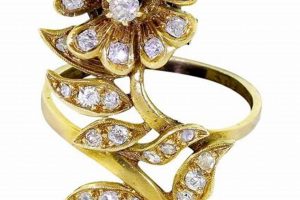
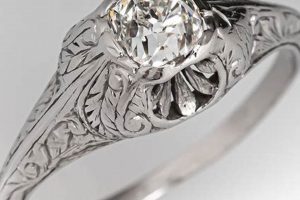
Jewelry mountings from past eras, often characterized by intricate designs and craftsmanship techniques no longer widely practiced, offer a distinctive aesthetic. These mountings, typically found in estate jewelry or reproduced using traditional methods, showcase styles such as Art Deco, Edwardian, and Victorian. For instance, a filigree mounting from the Edwardian period, featuring delicate metalwork and often incorporating milgrain detailing, exemplifies this category.
The enduring appeal of these historic designs stems from their unique character and the perceived romance associated with bygone times. They provide an opportunity to own a piece with historical significance and distinctive artistry. These settings can enhance the perceived value of a gemstone and offer a personalized alternative to contemporary designs. The craftsmanship involved often represents a level of detail rarely seen in mass-produced modern jewelry.
The subsequent sections will delve into the various styles of antique mountings, the factors to consider when selecting one, and the methods for ensuring its proper care and maintenance. Furthermore, information regarding sourcing reputable dealers and identifying authentic examples will be provided.
Considerations for Acquiring Antique Jewelry Mountings
The selection of antique jewelry mountings requires careful consideration of several factors to ensure satisfaction and preservation of the piece.
Tip 1: Evaluate the Structural Integrity: Inspect the mounting for signs of wear, damage, or previous repairs. Assess the prongs, bezel, and shank for stability and ensure the gemstone is securely held. Loose stones or weakened metal can lead to loss or further damage.
Tip 2: Authenticate the Period Style: Research the characteristics of different eras to verify the mounting’s purported age. Art Deco styles, for instance, exhibit geometric patterns, while Victorian designs often incorporate floral motifs and elaborate metalwork. Consult with a qualified appraiser for professional verification.
Tip 3: Assess Metal Type and Hallmarks: Identify the metal used in the mounting, such as gold, platinum, or silver. Examine the piece for hallmarks, which can provide information about the metal content, manufacturer, and origin. Reputable sellers should be able to provide detailed information about the metal composition.
Tip 4: Consider Gemstone Compatibility: Ensure that the mounting is suitable for the intended gemstone’s size, shape, and hardness. A delicate mounting may not be appropriate for a large or particularly hard stone. Consult with a jeweler to determine the compatibility of the mounting and gemstone.
Tip 5: Examine Detailing and Craftsmanship: Assess the quality of the detailing, such as filigree, engraving, or milgrain. Well-executed details indicate superior craftsmanship and contribute to the overall value and aesthetic appeal of the mounting. Examine the detailing under magnification if possible.
Tip 6: Research the Seller’s Reputation: Purchase from a reputable dealer or jeweler specializing in vintage jewelry. Check online reviews and ask for references to verify the seller’s experience and expertise. A reputable seller should offer a guarantee of authenticity and a return policy.
Tip 7: Review the Mounting’s History: If possible, obtain information about the mounting’s history, such as its provenance or previous ownership. This can add to the piece’s sentimental value and provide insights into its historical context. A detailed history can also assist with authentication and valuation.
By carefully evaluating these aspects, one can make an informed decision when acquiring antique jewelry mountings, ensuring the selection of a piece that is both aesthetically pleasing and structurally sound.
The subsequent section will focus on the proper care and maintenance of such jewelry mountings.
1. Era and Style

The era and stylistic characteristics of a jewelry mounting significantly influence its value, aesthetic appeal, and historical relevance. Understanding the nuances of different periods is essential when evaluating antique ring mountings, as it allows for accurate identification, authentication, and appreciation of the craftsmanship involved.
- Victorian Era (1837-1901)
Mountings from this era often feature elaborate designs, incorporating floral motifs, scrolls, and intricate metalwork. Yellow gold was a popular choice, along with gemstones such as pearls, garnets, and amethysts. Snake motifs, symbolizing eternal love, were also prevalent. For example, a gold band with a cluster of seed pearls surrounding a garnet would be characteristic of Victorian-era mountings. Inaccurate dating or misidentification of stylistic elements can affect the perceived value and historical accuracy of the piece.
- Edwardian Era (1901-1910)
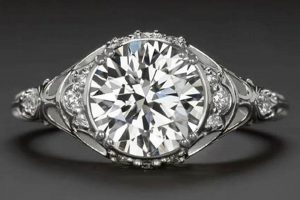
Characterized by lightness and elegance, Edwardian mountings frequently utilize platinum or white gold, emphasizing delicate filigree work, milgrain detailing, and openwork designs. Diamonds and pearls were commonly featured. A platinum mounting with a central diamond surrounded by delicate filigree and milgrain detailing exemplifies this style. The scarcity and sophistication of Edwardian pieces often command a premium in the market.
- Art Deco Era (1920s-1930s)
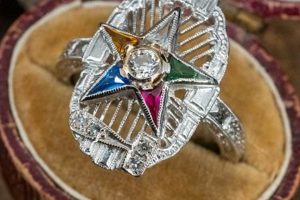
Geometric patterns, symmetry, and bold designs define Art Deco mountings. Platinum and white gold continued to be popular, often incorporating gemstones such as diamonds, emeralds, sapphires, and onyx. A rectangular platinum mounting with step-cut diamonds and geometric accents is representative of this period. The clean lines and distinct aesthetic of Art Deco jewelry make it highly sought after.
- Retro Era (1940s-1950s)
Due to wartime restrictions on platinum, yellow and rose gold experienced a resurgence during this period. Mountings from the Retro era often feature bold, sculptural designs, emphasizing volume and statement pieces. Gemstones such as rubies, sapphires, and aquamarines were frequently used. A large, stylized rose gold mounting with a prominent aquamarine exemplifies the aesthetic of this period. The distinct designs and use of color characterize this era and contribute to its collectability.
The careful evaluation of era-specific stylistic elements allows for accurate identification and authentication of vintage ring mountings. Understanding these distinct characteristics contributes to informed purchasing decisions and appreciation of the historical and artistic significance of each piece.
2. Metal Composition

The metal from which a vintage jewelry mounting is crafted is paramount in determining its value, durability, and overall aesthetic. Identification and understanding of the metal composition are crucial for accurate dating, authentication, and preservation of these settings.
- Gold Alloys and Karatage
Gold, in its pure form, is too soft for jewelry construction, necessitating alloying with other metals. The karatage system indicates the proportion of pure gold in the alloy (e.g., 18k gold contains 75% pure gold). Antique mountings may exhibit varying karatages, affecting their color, hardness, and resistance to wear. A lower karat gold alloy, while potentially more durable, may tarnish more readily. Understanding the karatage helps ascertain the metal’s purity and potential maintenance requirements in vintage ring settings.
- Platinum and its Properties
Platinum, a durable and hypoallergenic metal, became popular for jewelry mountings in the late 19th and early 20th centuries. Its strength and resistance to tarnish made it ideal for settings designed to showcase diamonds and other precious stones. Platinum mountings are often stamped with purity marks, such as “900 Plat” or “950 Plat,” indicating the platinum content. The presence of platinum can significantly increase the value of a vintage ring setting.
- Silver and its Alloys
Silver, a more affordable option than gold or platinum, was frequently used in antique jewelry mountings. Sterling silver (92.5% silver) is a common alloy, often stamped with “Sterling” or “925.” Silver mountings are prone to tarnishing and require regular polishing. The type of silver alloy used can impact its durability and resistance to corrosion, thereby affecting its suitability for long-term wear in vintage ring settings.
- Hallmarks and Metal Identification
Hallmarks, small stamped marks on jewelry, provide valuable information about the metal content, manufacturer, and country of origin. These marks can aid in identifying the metal type and verifying its authenticity. Researching hallmarks is essential for accurate dating and valuation of vintage ring settings. The absence of hallmarks does not necessarily indicate a lack of authenticity but warrants further investigation.
The metal composition of vintage jewelry mountings influences not only their inherent value but also their longevity and suitability for particular gemstones. Correct identification of the metal and its alloys is essential for both buyers and sellers to ensure fair pricing and proper care of these historic pieces.
3. Gemstone Security
The integrity of gemstone security within antique ring settings represents a critical factor in preserving both the aesthetic and monetary value of the piece. A compromised setting, exhibiting weakened prongs, eroded bezels, or structural instability, directly threatens the gemstone’s secure retention. The consequence of such a failure is potential loss of the gemstone, incurring significant replacement costs and diminished value of the antique mounting itself. For instance, an Edwardian filigree setting with severely worn prongs might allow a diamond to dislodge, rendering the intricate metalwork essentially worthless without its central stone. The correlation is direct: compromised gemstone security leads to tangible and irreversible damage.
Ensuring the stability of a gemstone within its antique setting necessitates meticulous inspection and, when required, professional restoration. Jewelers specializing in vintage jewelry possess the expertise to reinforce weakened areas, re-tip prongs, and repair bezels without compromising the original design’s integrity. Practical application involves routine examination of the setting for signs of wear, such as loose stones, bent prongs, or visible cracks in the metal. Failure to address these issues proactively can result in catastrophic gemstone loss. A common restoration technique involves laser welding, allowing for precise and localized repairs that minimize disruption to the surrounding metalwork. Prioritizing gemstone security is therefore not merely an aesthetic concern but a necessary safeguard for preserving the antique ring’s long-term value.
In summary, gemstone security is an indispensable component of antique ring settings, directly impacting their value and longevity. The challenge lies in balancing the preservation of the original setting with the need for structural reinforcement. Understanding the causes of setting failure, implementing routine inspections, and engaging skilled restoration professionals are crucial steps in ensuring the gemstone’s continued safety and the preservation of the antique ring’s historical and monetary worth. The broader theme emphasizes proactive maintenance as an integral aspect of responsible ownership of antique jewelry.
4. Detailing Quality
Detailing quality in antique jewelry mountings serves as a definitive indicator of craftsmanship, influencing aesthetic appeal and historical accuracy. The presence of well-executed details often distinguishes authentic pieces from reproductions or later modifications. Careful examination of these details provides insights into the period of origin, the skill of the artisan, and the overall value of the vintage ring setting.
- Filigree and Milgrain Work
Filigree, the delicate metalwork resembling fine threads, and milgrain, the tiny beaded detailing along edges, represent hallmarks of craftsmanship from the Edwardian and Art Deco eras. The precision and intricacy of these details indicate the level of skill employed in the mounting’s creation. Consistent and evenly spaced milgrain, for instance, signifies high-quality workmanship, while irregular or poorly executed filigree suggests a lower level of craftsmanship or potential repairs.
- Engraving and Chasing
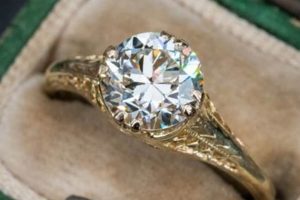
Engraving, the process of carving designs into the metal surface, and chasing, the technique of creating raised designs by hammering from the reverse side, were commonly used to embellish antique jewelry mountings. The sharpness and clarity of the engraved lines, as well as the depth and definition of the chased elements, reflect the artisan’s expertise. Well-executed engraving can depict intricate floral patterns, monograms, or geometric designs, adding to the setting’s visual appeal and historical significance.
- Stone Setting Techniques
The manner in which gemstones are set within a mounting provides clues about the period of origin and the quality of the craftsmanship. Bezel settings, prong settings, and channel settings each exhibit distinct characteristics and require specific skills to execute properly. Secure and even stone setting, where the gemstones are held firmly in place without gaps or unevenness, demonstrates attention to detail and ensures the stones’ long-term stability within the vintage ring setting.
- Tooling Marks and Finishing
Close examination of the metal surface may reveal tooling marks, subtle imperfections that indicate the methods used in the mounting’s creation. The presence of intentional tooling marks, such as those left by hand-held gravers, can authenticate the piece as hand-crafted. Conversely, the absence of any tooling marks or the presence of excessive polishing may suggest that the mounting has been altered or refinished, potentially diminishing its historical value.
Detailing quality serves as a crucial criterion for assessing antique ring settings, providing insights into craftsmanship, authenticity, and historical significance. The presence of well-executed filigree, precise engraving, secure stone setting, and intentional tooling marks all contribute to the overall value and appeal of these historical pieces. Recognizing and appreciating these details allows for a deeper understanding of the artistry and skill involved in creating these enduring treasures.
5. Historical Provenance

The documented history of ownership and origin significantly influences the value and desirability of vintage ring settings. Historical provenance provides a narrative context, connecting the piece to specific individuals, events, or periods, thereby enhancing its perceived authenticity and collectibility.
- Verification of Authenticity
Documented provenance assists in confirming the age and origin of the setting. Paperwork such as original sales receipts, estate inventories, or letters can support claims regarding the piece’s age and style. For example, a vintage Art Deco diamond ring accompanied by a receipt from a prominent jewelry store dating to the 1920s provides strong evidence of its authenticity. Absent such documentation, the setting’s authenticity relies solely on stylistic analysis and metal testing, increasing the risk of misidentification or fraud.
- Enhancement of Value
A well-documented history can substantially increase the market value of a vintage ring setting. Connection to a notable individual, a significant historical event, or a renowned jewelry designer elevates the setting beyond its intrinsic material worth. Consider a Victorian mourning ring with documented ownership by a member of the British aristocracy. Its value is heightened by its association with a specific social class and historical context, attracting collectors seeking pieces with demonstrable historical significance.
- Tracing Ownership and Lineage
Historical provenance facilitates tracing the ownership and lineage of the setting. Documenting the chain of ownership helps to establish a clear and unbroken history, reducing the risk of disputed claims or questions regarding the piece’s rightful ownership. A documented family heirloom, passed down through generations, not only carries sentimental value but also possesses a verifiable ownership trail, making it more attractive to potential buyers seeking assurance of its legal and ethical acquisition.
- Revealing Cultural and Artistic Context
Provenance research can uncover the cultural and artistic context in which the setting was created. Investigating the social customs, fashion trends, and artistic movements prevalent during the setting’s era sheds light on its design and purpose. A 1940s Retro-era ring with documentation linking it to a specific Hollywood actress provides insights into the fashion sensibilities of the time and the influence of celebrity culture on jewelry design. Such contextual understanding enriches the appreciation and understanding of the vintage ring setting as a cultural artifact.
Historical provenance, therefore, acts as a crucial element in authenticating, valuing, and contextualizing vintage ring settings. It transforms a mere object into a tangible piece of history, imbued with a narrative that resonates with collectors and enthusiasts alike. The absence of documented history does not necessarily diminish the setting’s intrinsic value, but it significantly reduces its potential as a collectable artifact.
Frequently Asked Questions
The following questions address common inquiries and misconceptions regarding antique jewelry mountings. The intent is to provide clarity and informed understanding of this specialized area.
Question 1: What distinguishes a vintage jewelry mounting from a modern reproduction?
Authentic mountings exhibit characteristics typical of their respective eras, including specific design motifs, metal compositions, and manufacturing techniques. Reproductions often lack the precision and patina of original pieces and may utilize modern casting methods not employed historically. Microscopic examination and metallurgical analysis can aid in differentiating between original and replicated settings.
Question 2: How does the condition of a vintage ring setting impact its value?
Condition is a significant determinant of value. Mountings in excellent condition, with minimal wear, intact detailing, and no significant repairs, command higher prices. Conversely, settings exhibiting substantial damage, missing components, or poorly executed repairs are valued less. Restoration, if performed, should be executed by skilled artisans specializing in vintage jewelry to preserve the mounting’s integrity.
Question 3: Are vintage jewelry mountings suitable for holding modern-cut gemstones?
Compatibility depends on the mounting’s design and the gemstone’s dimensions. Some antique settings can accommodate modern-cut stones, while others require modifications to ensure a secure fit. Consultation with a qualified jeweler is essential to assess compatibility and prevent damage to both the setting and the gemstone. Alterations to the original setting may affect its historical value.
Question 4: How can one verify the authenticity of hallmarks on antique jewelry?
Hallmarks provide crucial information regarding metal content, manufacturer, and country of origin. Reference books and online databases dedicated to hallmarks can assist in identification. However, counterfeit hallmarks exist, necessitating careful examination of the marks’ style, placement, and clarity. Consulting with a jewelry appraiser specializing in antique pieces is advisable for definitive authentication.
Question 5: What is the best method for cleaning and maintaining vintage ring settings?
Gentle cleaning with a soft brush and mild soap is generally recommended. Avoid abrasive cleaners, ultrasonic cleaners, and harsh chemicals, as these can damage delicate details and finishes. Professional cleaning by a jeweler experienced in handling antique jewelry is advisable for heavily soiled or tarnished mountings. Regular inspection for loose stones and prong wear is essential for preventative maintenance.
Question 6: Are there ethical considerations associated with purchasing vintage jewelry mountings?
Ethical considerations include ensuring the setting was acquired legally and ethically, without contributing to illicit trade or the exploitation of historical artifacts. Purchasing from reputable dealers who adhere to ethical sourcing practices helps to mitigate these risks. Investigating the setting’s provenance, when possible, can provide additional assurance of its legitimate origin.
Key takeaways emphasize the importance of careful inspection, authentication, and ethical sourcing when acquiring these settings. Consultation with knowledgeable professionals is crucial for informed decision-making.
The next section will address specific considerations when insuring vintage ring settings.
Conclusion
This exploration has underscored the multifaceted considerations inherent in acquiring, maintaining, and appreciating vintage ring settings. From deciphering era-specific stylistic nuances to scrutinizing metal compositions and verifying historical provenance, a comprehensive understanding of these factors is paramount. The enduring value of these settings resides not only in their material worth but also in their embodiment of historical artistry and cultural significance.
The responsible stewardship of vintage ring settings requires a commitment to informed acquisition, diligent maintenance, and ethical sourcing practices. As custodians of these tangible links to the past, stakeholders bear the responsibility of ensuring their preservation for future generations. Continuing research and collaboration among experts will further enhance the knowledge base surrounding these enduring artifacts.