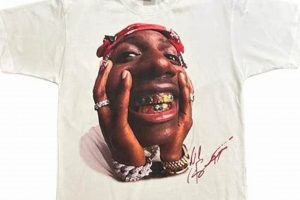
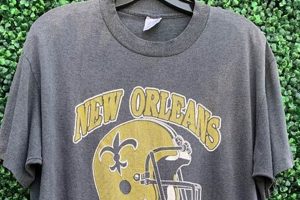
A pre-owned or older garment featuring the name, logo, or imagery of a rock music group serves as a tangible piece of music history. Often, these items represent a specific tour, album release, or era of the band’s career, becoming collectibles for enthusiasts and fashion aficionados alike. A faded concert tee from the 1970s promoting a specific act exemplifies this category.
The significance of such items lies in their representation of musical culture and the enduring appeal of rock music. These garments offer a connection to the past, embodying the spirit and aesthetics of a particular time. Owning one provides a unique statement of personal style and can serve as a conversation starter, demonstrating an appreciation for music and history. Furthermore, scarcity and condition often influence the monetary value of these collectibles, making them potentially valuable assets.
The subsequent sections will delve into the factors influencing the value of these items, guidance on authentication techniques, and an exploration of the market trends within this unique segment of vintage apparel.
Valuable Insight on Collectible Rock Music Apparel
The following guidelines offer insight into navigating the world of vintage music-related apparel. Understanding these points can assist in making informed decisions when acquiring or assessing such items.
Tip 1: Examine the Graphic’s Integrity: Original screen printing on vintage items often exhibits subtle imperfections. Variations in ink consistency or slight misalignments are common indicators of authenticity. Sharp, flawless prints are often indicative of reproductions.
Tip 2: Analyze the Fabric Composition: Vintage shirts frequently consist of single-stitch construction. Examine the seams along the sleeves and hem; a single line of stitching generally suggests an older garment. Modern shirts typically employ double-stitching for increased durability.
Tip 3: Investigate the Label Details: The label provides crucial information regarding the manufacturer, fabric content, and country of origin. Researching the brand and era associated with the label style can assist in verifying the garment’s age.
Tip 4: Assess Condition and Wear: While some wear and tear is expected in older garments, excessive damage significantly diminishes value. Evaluate for holes, stains, and fading. Minor imperfections may enhance character, but significant damage reduces collectibility.
Tip 5: Research Band and Tour Specifics: Identifying the specific tour, album, or event commemorated by the shirt’s design allows for accurate valuation. Understanding the context of the design increases the garment’s historical significance.
Tip 6: Compare with Online Resources: Utilize online databases and collector communities to compare the garment in question with known authentic examples. This comparative analysis can help identify inconsistencies or red flags.
Adhering to these recommendations allows for informed acquisition and assessment of rock music apparel, maximizing potential value and preserving historical integrity.
The subsequent sections will explore strategies for proper storage and preservation, ensuring the longevity of these valuable artifacts.
1. Authenticity

The determination of authenticity is paramount when evaluating pre-owned rock music apparel. Verification of its origin and production period directly impacts its collectible value and historical significance.
- Label Verification
The garment’s label provides crucial details regarding the manufacturer, fabric composition, and country of origin. Researching the label’s design and historical accuracy is essential. Discrepancies between the label and established manufacturing practices of the claimed era raise concerns about authenticity. For example, a modern tag sewn into what appears to be a vintage shirt immediately indicates inauthenticity.
- Stitching Analysis
Construction techniques, particularly stitching patterns, offer valuable clues. Single-stitch construction, common in older garments, contrasts with the double-stitching prevalent in modern production. Examining the seams along the sleeves and hem can reveal whether the shirt aligns with the construction methods of its purported era.
- Graphic Examination
The quality and printing style of the graphic are significant indicators. Original screen prints often exhibit subtle imperfections or variations in ink consistency. A graphic that appears too crisp or flawless may suggest a more recent reproduction. Furthermore, research into known variations of official band merchandise can aid in identifying unauthorized designs.
- Fabric Composition Testing
The fabric’s texture and composition can provide further verification. Older shirts often consist of specific cotton blends or materials that differ from contemporary fabrics. Conducting a burn test (with extreme caution and in a controlled environment) can help identify the fiber content and compare it to historical manufacturing standards. However, this method should only be used when other non-destructive methods are inconclusive.
The collective assessment of these facets provides a comprehensive approach to establishing the genuineness of music apparel. A verifiable history not only enhances its value but also ensures its place as a legitimate artifact of rock music culture.
2. Fabric Quality
The textile comprising an original rock music garment significantly influences its value and longevity. The type of material used in its manufacturing process dictates its ability to withstand wear, resist degradation over time, and maintain its structural integrity. Early items often featured thinner, single-knit cotton, resulting in a softer feel but greater susceptibility to damage compared to modern, heavier blends. The prevalence of specific weaves and fabric blends serves as a reliable indicator of the garment’s era, acting as a tool for authentication. For example, a 1970s concert tee constructed from a lightweight, loosely woven cotton distinguishes itself from a contemporary counterpart produced with a durable, preshrunk material.
Fabric quality directly impacts the graphic’s appearance and durability. A finely woven, high-quality fabric provides a smoother surface for printing, resulting in a sharper, more vibrant image. Conversely, a coarse or loosely woven material may cause the ink to bleed or fade more rapidly. Instances of well-preserved graphics on early textiles highlight the inherent value of superior fabric composition. Conversely, severely faded or cracked graphics on garments made from lower-quality materials demonstrate the detrimental effect of inferior fabric.
In conclusion, the fabric’s characteristicsits weight, weave, and compositionare vital considerations. Knowledge of the textiles commonly employed during specific eras of rock music memorabilia production allows for informed decisions regarding acquisition, preservation, and valuation. Understanding fabric quality serves not only to authenticate these artifacts but also to ensure their longevity, preserving a tangible link to music history.
3. Graphic Condition

The state of the graphic on a vintage rock music garment directly correlates to its desirability and market value. A clear, well-preserved graphic signifies a higher-quality item and careful maintenance over time. Conversely, significant fading, cracking, or graphic degradation diminishes its aesthetic appeal and collectibility. This condition serves as a visible record of the garment’s history, reflecting the level of care it received and the environmental factors it endured. A concert tee from the 1980s featuring a vibrant, intact design commands a premium over an identical shirt exhibiting severe graphic deterioration.
The condition of the graphic impacts its legibility and visual impact. A crisp, legible design allows for immediate recognition of the band, tour, or album represented, enhancing its historical significance. Alternatively, a heavily damaged graphic obscures the details, making identification difficult and diminishing its value as a historical artifact. The integrity of the graphic serves as a primary point of assessment for potential buyers, influencing their willingness to invest in the item. Moreover, restoration efforts, while possible, often carry significant costs and risks, rarely fully restoring the graphic to its original state. A pristine, unrestored graphic is always more desirable than a restored one.
In summary, the graphic condition acts as a crucial determinant of the garment’s worth, impacting both its aesthetic appeal and historical significance. Careful evaluation of the graphic’s integrity, legibility, and overall state is paramount for collectors and enthusiasts. Maintaining optimal graphic condition through proper storage and gentle handling is essential for preserving the item’s long-term value and historical relevance, contributing to the preservation of music history in tangible form.
4. Label Details
The information presented on the label of a pre-owned rock music garment serves as a crucial determinant of its authenticity and period of origin. The manufacturer’s logo, fabric composition, care instructions, and country of origin, all meticulously printed on the label, offer essential clues. Variations in label design, font styles, and manufacturing practices across different eras allow for comparative analysis. A period-incorrect label on what appears to be an older tee raises immediate concerns about its genuine vintage status. For example, a screen-printed label, commonly found on older tees, contrasts sharply with modern heat-transfer labels, a discrepancy revealing potential inconsistencies.
The importance of label details extends to assessing the garment’s potential value. Highly sought-after vintage tees often feature labels from specific manufacturers that were prominent during particular periods in rock music history. Research into label variations and their corresponding production dates enables accurate valuation. Furthermore, the presence of union labels or indications of domestic production can enhance collectibility, reflecting a specific cultural or economic context. The absence of a label, conversely, can significantly detract from the item’s value, raising questions about its origin and authenticity, even if other characteristics suggest age.
In summary, the label details constitute a critical component in evaluating rock music apparel. Scrutinizing these elements facilitates accurate authentication, informs valuation, and provides insights into the garment’s historical context. This rigorous assessment protects collectors from fraudulent items and ensures the preservation of genuine artifacts from rock music history, solidifying the label as an indispensable source of information.
5. Rarity
The concept of rarity significantly influences the value and desirability of a music-related garment. Infrequent production, limited distribution, or commemorative items tied to specific events contribute to scarcity. Consequently, increased rarity translates to elevated demand among collectors, driving up the garment’s market price. A pre-owned concert tee from a small venue, where the band performed only once, exemplifies this phenomenon. Its limited availability makes it highly sought after, setting it apart from mass-produced merchandise.
Variations in design or printing errors can inadvertently increase an item’s rarity. A manufacturing mistake, such as a misprinted logo or an incorrect color scheme, may result in a limited number of flawed garments entering circulation. Collectors often prize these items, viewing them as unique and valuable due to their distinct characteristics. A printing error tee from a tour that was quickly pulled from shelves becomes a desirable item.
Comprehending the factors that contribute to scarcity enables informed decision-making for both buyers and sellers. Recognizing the distinct attributes of a music tee enhances its collectible status, ensuring its preservation as a tangible piece of music history. These details underscore the influence of this factor in the market for these garments.
6. Historical Significance
The historical significance of a garment related to a rock music act imbues it with value far exceeding its material composition. These artifacts provide tangible links to specific periods, cultural movements, and iconic figures in music history, offering insight into the evolution of rock music and its enduring influence on society.
- Reflection of Musical Eras
These garments encapsulate the visual aesthetics, lyrical themes, and socio-political attitudes prevalent during specific musical eras. A faded tie-dye tee from the 1960s reflects the counterculture movement, while a stark, graphic tee from the 1970s punk scene embodies rebellion against societal norms. Each era’s garments serve as a visual document, reflecting the zeitgeist of its time.
- Commemoration of Iconic Events
Many garments commemorate specific tours, album releases, or landmark concerts, acting as tangible mementos of significant events in rock music history. A concert tee from a band’s breakthrough performance at a legendary venue holds historical weight, symbolizing the band’s rise to prominence. These commemorative items offer a direct connection to pivotal moments in music history.
- Representation of Band Evolution
The evolution of a band’s image and branding can be traced through their garments over time. A band’s early merchandise may reflect their raw, unpolished sound, while later merchandise may showcase a more refined and commercial aesthetic. These changes in design mirror the band’s artistic development and commercial trajectory.
- Cultural Impact and Influence
Rock music has profoundly shaped fashion, art, and social attitudes. Garments associated with iconic bands have often transcended mere merchandise to become symbols of cultural identity. A band’s logo or album art emblazoned on a shirt can represent membership in a particular subculture or adherence to a specific set of values. These items serve as visual markers of cultural alignment and influence.
In conclusion, the historical significance of a music-related garment transforms it from a simple piece of clothing into a valuable artifact. These items offer a tangible connection to the past, reflecting the evolution of rock music and its enduring impact on society. Understanding this significance is crucial for both collectors and enthusiasts seeking to appreciate the cultural and historical weight embodied within these garments.
7. Market Value
The market value of a music-related garment is influenced by a complex interplay of factors, with rarity, condition, historical significance, and authenticity serving as primary drivers. High demand among collectors for specific bands, tours, or designs coupled with limited availability creates a competitive environment, inflating prices. A music tee from a highly sought-after band during a pivotal period in their career commands a premium compared to more common designs. The garment’s condition directly affects its value; pristine, unworn examples fetch significantly higher prices than those with substantial wear or damage. The existence of verifiable provenance and documentation further enhances its market appeal.
Fluctuations in market value are also influenced by trends and shifts in collector preferences. Nostalgia for particular eras or musical genres can lead to surges in demand for specific designs. The prominence of a music act in popular culture, whether through documentaries, biopics, or ongoing performances, can also reignite interest in their vintage merchandise. Social media platforms and online marketplaces play a crucial role in shaping market trends, facilitating price discovery, and connecting buyers and sellers globally. Understanding these dynamics allows collectors and investors to make informed decisions, maximizing potential returns while navigating the risks inherent in the vintage market.
In summary, the market value represents a convergence of tangible and intangible factors. Accurate assessment requires a comprehensive understanding of the garment’s intrinsic attributes, historical context, and prevailing market trends. Recognizing the drivers of value enables informed participation in the market, ensuring both the preservation of musical artifacts and the potential for financial gain. This intricate balance underscores the importance of diligent research and critical evaluation in navigating the dynamic landscape of pre-owned rock music apparel.
Frequently Asked Questions
The following addresses prevalent inquiries regarding collectibles in the realm of music-related apparel.
Question 1: What factors most significantly influence the value?
Rarity, condition, verifiable authenticity, and historical significance collectively dictate its market price. Exceptional examples with documented provenance command a premium.
Question 2: How can authenticity be reliably verified?
Scrutinizing label details, evaluating fabric composition, examining stitching patterns, and comparing graphic characteristics against known authentic examples provide a comprehensive assessment. Consultations with experienced collectors or authenticators offer further validation.
Question 3: What constitutes acceptable wear and tear?
Minor fading or subtle cracking of the graphic may be acceptable, even adding character. However, excessive damage, including large holes, significant staining, or substantial graphic degradation, detracts significantly from its value.
Question 4: How should these items be properly stored?
Storing them flat, in acid-free archival boxes or sleeves, away from direct sunlight and extreme temperature fluctuations, minimizes degradation. Avoid hanging them, as this can stretch the fabric over time.
Question 5: Does professional restoration increase market value?
Professional restoration can improve the aesthetic appeal of certain items. However, complete restoration is generally discouraged. Authenticity from unrestored versions is a stronger selling point.
Question 6: Are reproductions readily identifiable?
Modern reproductions often lack the nuances of original garments. Close examination of the label, stitching, and graphic printing techniques typically reveals inconsistencies. Comparing potential acquisitions to authenticated examples provides a valuable reference point.
Understanding these points enables more informed participation in the market, mitigating risks and maximizing opportunities. Careful diligence ensures the preservation of genuine historical artifacts.
The next discussion will examine specific case studies of music apparel, illustrating the principles discussed and highlighting the factors that contribute to their unique value.
Conclusion
The preceding analysis has explored the multifaceted nature of the vintage rock band t shirt, examining its intrinsic value as a cultural artifact and a collectible commodity. Key considerations, including authenticity, condition, rarity, and historical significance, have been identified as pivotal in determining its market value. The garment serves not merely as apparel, but as a tangible representation of rock music history and its enduring impact on society.
Continued diligence in authentication, responsible preservation efforts, and a discerning eye towards market trends are crucial for both enthusiasts and investors. As interest in music history endures, the legacy of the vintage rock band t shirt as a cultural touchstone remains secure, warranting thoughtful appreciation and informed engagement within the collector community.