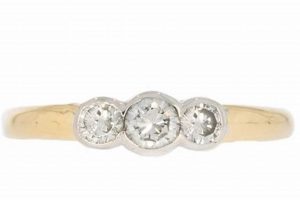
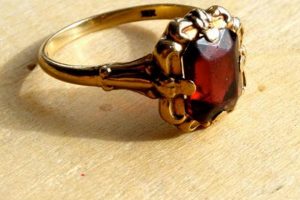
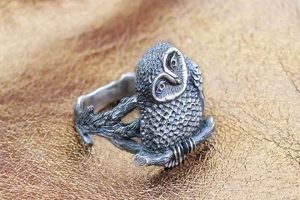
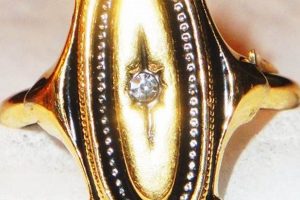
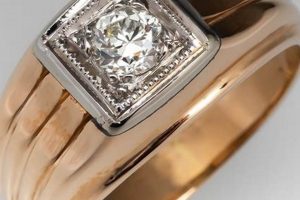
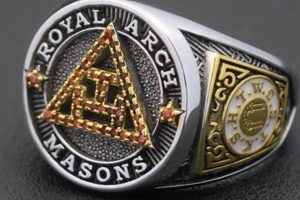
Ornate bands crafted from a precious metal alloy, typically dating from a past era, designed for ceremonial commitment. These adornments often feature intricate detailing, unique engravings, or are set with gemstones, reflecting the stylistic trends prevalent during their creation. For example, an Art Deco era band featuring geometric patterns or a Victorian-era ring showcasing delicate floral motifs exemplifies this type of jewelry.
Possessing a tangible link to history, these items offer a unique alternative to contemporary designs. Their enduring value lies in their craftsmanship, rarity, and the romantic narrative they embody. The acquisition of such a band represents an investment in a piece of wearable art, providing a connection to past generations and a distinct expression of individuality. The aesthetic qualities often surpass those found in mass-produced modern alternatives.
The subsequent sections will delve into the specific characteristics to consider when selecting these bands, including hallmarks, metal purity, gemstone identification, and design considerations. This exploration will provide a comprehensive guide to navigating the acquisition process, ensuring an informed and rewarding experience.
Essential Considerations for Acquiring Antique Silver Bands
Careful evaluation is paramount when procuring antique silver bands intended for matrimonial purposes. These items, by nature of their age, require diligent inspection to ensure both authenticity and structural integrity.
Tip 1: Verify Hallmarks and Maker’s Marks: Authentic bands typically feature hallmarks indicating the metal purity (e.g., “925” for Sterling Silver) and often include a maker’s mark. Research these marks to confirm the ring’s origin and age. Absence of clear hallmarks may suggest a reproduction or a piece of questionable provenance.
Tip 2: Assess Metal Condition and Structural Integrity: Examine the band for signs of wear, such as thinning, cracks, or repairs. Minor surface scratches are common in older pieces, but significant damage can compromise the ring’s longevity. Consider whether the structural integrity is sufficient for daily wear.
Tip 3: Scrutinize Gemstone Settings (If Applicable): If the band includes gemstones, carefully inspect the settings. Ensure that the stones are securely mounted and that the settings are original to the piece. Loose stones or poorly executed repairs may indicate a need for professional restoration.
Tip 4: Evaluate Design Authenticity: Familiarize oneself with the design characteristics of specific historical periods. Compare the band’s design elements (e.g., Art Deco geometric patterns, Victorian floral motifs) against reputable sources to verify its consistency with the purported era. Discrepancies may suggest a later creation or a pastiche of styles.
Tip 5: Seek Professional Appraisal: Engage a qualified jewelry appraiser specializing in antique pieces. A professional appraisal can provide an expert assessment of the ring’s authenticity, condition, and fair market value, mitigating the risk of overpayment or acquiring a counterfeit item.
Tip 6: Inquire About Provenance: Whenever possible, ascertain the history of the piece. Information about its previous ownership or origin can add to its value and significance. Reputable dealers will often have documentation or information regarding the ring’s provenance.
Tip 7: Understand Silver’s Vulnerability: Silver is prone to tarnishing. Regular cleaning with appropriate silver polish will be needed. Discuss long-term care and maintenance with a jeweler. Consider whether this ongoing maintenance is something the intended wearer is prepared to undertake.
Diligent adherence to these considerations will increase the likelihood of acquiring an authentic, well-preserved band suitable for a lasting commitment. Proper evaluation ensures the acquisition of a valuable and meaningful heirloom.
The next stage of this analysis will address the ethical concerns surrounding the purchase of antique jewelry, including responsible sourcing and preservation.
1. Era Characteristics

The historical period in which a silver wedding band was crafted significantly influences its design, materials, and overall aesthetic. Understanding these era-specific characteristics is crucial for identifying authenticity, appreciating historical context, and making informed purchasing decisions. These elements not only define the ring’s physical appearance but also reflect the prevailing cultural values and artistic sensibilities of the time.
- Art Deco (1920s-1930s)
Characterized by geometric shapes, symmetrical designs, and the use of platinum accents with diamonds or colored gemstones (often synthetic). These bands frequently feature stepped patterns, stylized floral motifs, and a strong emphasis on clean lines and machine-age aesthetics. A ring showcasing baguette-cut diamonds set in a geometric pattern is indicative of this era.
- Victorian Era (1837-1901)
Marked by romantic and sentimental designs, often incorporating floral engravings, intricate filigree work, and the use of gemstones such as seed pearls, opals, and garnets. Silver bands from this period may also include personalized engravings, family crests, or symbolic motifs. A ring with a forget-me-not flower engraved in silver exemplifies the Victorian style.
- Edwardian Era (1901-1910)
Known for its delicate and refined designs, often featuring pierced filigree work, milgrain detailing, and the use of diamonds and pearls. Silver bands from this era tend to be lighter and more ethereal in appearance compared to the heavier styles of the Victorian period. A ring featuring a delicate garland design with small diamonds set in silver is a hallmark of the Edwardian era.
- Mid-Century Modern (1940s-1960s)
Reflects a minimalist aesthetic with clean lines, simple geometric shapes, and a focus on functionality. Silver bands from this era may feature brushed finishes, asymmetrical designs, and the occasional use of colored enamel. A ring with a simple, polished silver band and a single, centrally placed gemstone is representative of this style.
These examples demonstrate how era-specific characteristics directly impact the design and materials used in these adornments. The presence or absence of specific design elements, gemstone choices, and manufacturing techniques can serve as indicators of authenticity and provide insight into the ring’s historical provenance. Careful examination of these elements ensures that the item in question is consistent with the purported era, adding to its value and historical significance.
2. Metal purity
The degree of elemental refinement directly influences the value, durability, and aesthetic appeal of these historical artifacts. Silver, in its pure form, is too soft for practical use in jewelry. Consequently, it is alloyed with other metals, typically copper, to enhance its hardness and resilience. Metal purity is thus a crucial factor when assessing the authenticity and potential longevity of antique silver bands.
Sterling silver, designated as .925, signifies that the alloy contains 92.5% pure silver and 7.5% of another metal, commonly copper. This standard became widespread during the Victorian era, and the presence of a “925” hallmark is a common indicator of a vintage piece’s composition. Lower silver content, such as .800 or .835, may be found in older pieces originating from specific regions or periods, reflecting varying manufacturing standards. The presence of hallmarks or assay marks identifying the metal content is of paramount importance, aiding in the authentication process and providing an indication of the items origin. Absence of clear hallmarks should raise concerns about the ring’s genuineness.
Understanding the interplay between metal purity, hallmarks, and historical context is fundamental to evaluating the value and authenticity of these items. Impurities within the alloy can influence the ring’s susceptibility to tarnishing and corrosion over time. Diligent assessment of metal purity ensures the acquisition of a lasting heirloom and avoids investment in misrepresented or inferior pieces. Consideration of the metal composition and its historical context provides both assurance of value and the potential for long-term preservation.
3. Design Motifs

Design motifs, as recurring elements or patterns, are intrinsic to understanding and appreciating the historical and cultural significance of antique silver wedding bands. These motifs serve as visual indicators of specific eras, artistic movements, and societal values, providing insight into the context in which the ring was created.
- Floral Embellishments
Floral motifs, particularly prevalent during the Victorian and Edwardian eras, symbolize love, fidelity, and growth. Roses, lilies, and forget-me-nots were frequently engraved onto silver bands, representing enduring affection. For example, a ring featuring intricately carved roses around its circumference conveyed a message of passionate love. The presence and style of floral embellishments offer clues about the ring’s age and the intended symbolism.
- Geometric Patterns
Geometric patterns, prominent during the Art Deco period, reflect the era’s fascination with modernism, symmetry, and machine-age aesthetics. These patterns often include stepped designs, chevrons, and stylized sunbursts. A ring featuring a series of precisely etched triangles demonstrates this influence. The use of geometric motifs can help identify rings originating from this specific period.
- Filigree Work
Filigree, a delicate metalwork technique involving intricate threads and beads, was commonly employed in rings from various periods, including the Victorian and Edwardian eras. This technique allowed for the creation of elaborate designs with an airy and ethereal quality. For example, a ring featuring a filigree design resembling lace showcases the artistry of this technique. The presence of well-executed filigree work is indicative of skilled craftsmanship and can enhance the ring’s value.
- Personalized Engravings
Personalized engravings, such as initials, dates, or sentimental phrases, provide a unique connection to the ring’s original owner. These engravings offer invaluable insights into the ring’s history and the relationship it represented. A ring inscribed with the initials of the couple and their wedding date is a tangible link to the past. The presence of such engravings enhances the ring’s sentimental and historical value, while also adding an additional element for dating and authentication.
The interplay of these design motifs, coupled with the era-specific techniques used to create them, provide a valuable framework for evaluating the authenticity, provenance, and symbolic significance of antique silver wedding bands. Recognition of these elements enables individuals to acquire items that are not only aesthetically pleasing, but also rich in historical context and personal meaning.
4. Gemstone details

Gemstones, when incorporated into antique silver wedding bands, elevate the artifact’s aesthetic value and historical significance. Their presence offers insights into the era, socioeconomic status, and personal preferences of the original owners. Analyzing gemstone details provides essential information for authentication and appreciation.
- Gemstone Identification
Determining the type of gemstone is crucial. Diamonds, sapphires, rubies, emeralds, and pearls were commonly used in wedding bands, with the specific choice often reflecting the prevailing trends of the time. For instance, seed pearls were popular during the Victorian era, while diamonds gained prominence in the Edwardian and Art Deco periods. Correctly identifying the gemstone helps confirm the ring’s age and potential origin. Misidentified stones can indicate a later alteration or a reproduction.
- Cut and Shape
The cut and shape of the gemstone provide additional clues. Rose-cut diamonds, common in earlier periods, differ significantly from the brilliant-cut diamonds of the 20th century. Similarly, cabochon-cut gemstones, with their smooth, rounded surfaces, were favored in certain eras. Examining the cut and shape helps verify whether the stone is original to the ring or a later replacement. A mismatch in cut can suggest a modified or altered piece.
- Setting Style
The setting style, referring to how the gemstone is secured within the silver band, offers further evidence. Bezel settings, prong settings, and channel settings each represent different eras and techniques. For example, elaborate prong settings are characteristic of Art Deco designs, while simpler bezel settings might be found in earlier bands. The integrity and authenticity of the setting are essential considerations. A poorly executed or mismatched setting can detract from the ring’s value and raise questions about its originality.
- Stone Condition
Evaluating the gemstone’s condition is paramount. Chips, scratches, and abrasions can diminish the stone’s aesthetic appeal and value. Furthermore, significant damage may indicate that the stone has been replaced. Assessing the stone’s clarity and brilliance is equally important. Heavily included or cloudy stones may suggest a lower quality or the presence of artificial enhancements. A gemstone in good condition enhances the ring’s overall value and historical integrity.
The careful examination of gemstone details, encompassing identification, cut, setting, and condition, provides a comprehensive understanding of antique silver wedding bands. These factors, when considered in conjunction with other design elements, contribute to a more accurate assessment of authenticity, historical provenance, and overall value. Gemstone details are not merely decorative; they offer a window into the ring’s past and the values it represents.
5. Hallmark verification

Hallmark verification is a critical process in the authentication and valuation of these historical adornments. These small, often intricate, markings provide essential information about the metal content, origin, and sometimes the maker of the ring. Accurate interpretation of hallmarks is crucial for discerning genuine articles from reproductions or pieces misrepresented in terms of age or material.
- Identifying Metal Purity
Hallmarks frequently indicate the purity of the silver alloy used in the band. Common markings include “925” for Sterling Silver (92.5% pure silver) and “800” or “835” for alloys with lower silver content, often used in continental Europe. The presence and legibility of these markings are primary indicators of authenticity and value. For instance, a ring marked “925” confirms its Sterling Silver composition, while the absence of any such mark necessitates further investigation. Deceptive practices may involve the forging of hallmarks; hence, the style and placement of the marks must align with established historical standards.
- Determining Country of Origin
Many countries have established assay offices that apply distinctive hallmarks to silver items. These marks can pinpoint the country, and sometimes the city, in which the ring was assayed. For example, British hallmarks typically include a lion passant (for Sterling Silver), a town mark indicating the assay office (e.g., London, Birmingham), and a date letter denoting the year of assay. Recognizing these national and regional variations is crucial for tracing the ring’s provenance and assessing its historical significance. Falsified country marks mislead potential buyers and distort the ring’s true history.
- Tracing the Maker
Hallmarks often include the maker’s mark or sponsor’s mark, identifying the silversmith or company responsible for producing the ring. Researching these marks can provide valuable information about the ring’s quality, design style, and historical context. Resources such as online databases and reference books dedicated to silver hallmarks are indispensable for identifying the maker and understanding their contribution to the craft. An identified maker with a known reputation enhances the value of the piece. Conversely, an unidentifiable or inconsistent maker’s mark raises doubts about the ring’s authenticity.
- Detecting Alterations and Repairs
Careful examination of hallmarks can reveal signs of alterations or repairs. For example, if a ring has been resized, the original hallmarks may have been partially or completely removed. Similarly, if a gemstone has been replaced, the hallmarks around the setting might show evidence of tampering. Detecting these alterations is essential for accurately assessing the ring’s condition and value. Undisclosed alterations can significantly impact the historical integrity and diminish its appeal to collectors.
In essence, hallmark verification is a vital component of responsible acquisition. It provides tangible evidence of origin, composition, and maker. Proper verification mitigates the risk of acquiring misrepresented pieces and ensures that the item genuinely represents the era and quality ascribed to it. The process demands both diligent inspection and thorough research, underscoring its importance in preserving and appreciating these historical treasures.
6. Wear assessment

The longevity and suitability of these historical adornments for daily wear necessitate a thorough evaluation of their existing condition. This process, referred to as wear assessment, determines the structural integrity and identifies potential vulnerabilities that could compromise their function and aesthetic appeal.
- Band Thickness and Thinning
The band’s thickness is a primary indicator of its durability. Over time, wear can cause thinning, particularly at the base of the ring, where it experiences the most friction. Areas of significant thinning are prone to cracking or breakage. Measuring the band’s thickness at various points allows for identification of vulnerable sections. For instance, a band measuring less than 1mm in thickness at the base is likely unsuitable for daily wear without reinforcement. The degree of thinning directly impacts the ring’s ability to withstand the stresses of everyday use.
- Joint and Solder Point Integrity
Older rings often feature joints or solder points where different sections of the band or settings are connected. These points are inherently weaker than solid metal and require careful inspection. Signs of cracking, discoloration, or separation at these joints indicate potential failure points. For example, a visible gap at a solder joint surrounding a gemstone suggests a weakened connection that could lead to stone loss. Sound solder joints are essential for maintaining the ring’s structural integrity and preventing component detachment.
- Surface Condition and Scratches
The surface condition provides insights into the ring’s past wear and potential future vulnerabilities. While minor scratches are expected on antique pieces, deep scratches or abrasions can compromise the metal’s integrity and create stress points. Extensive scratching can also obscure hallmarks, hindering authentication. For instance, a ring exhibiting deep scratches around the band’s circumference suggests significant wear that may have weakened the metal. Careful polishing can improve the appearance, but excessive polishing can further thin the metal.
- Setting Security and Stone Stability
If the ring incorporates gemstones, the security of the setting is crucial. Loose prongs, worn bezels, or unstable channel settings pose a risk of stone loss. Gently probing the setting with a non-metallic tool can reveal any looseness or instability. For example, a prong setting that allows a gemstone to wobble indicates a need for immediate repair. Secure settings are vital for preserving the ring’s aesthetic value and preventing the loss of valuable gemstones. Instability in the setting may also point to metal fatigue or prior repairs.
These facets of wear assessment are interconnected and provide a holistic view of the ring’s structural condition. The presence of multiple indicators of wear, such as a thinned band combined with compromised solder joints and loose settings, suggests a ring that is unsuitable for regular use without professional restoration. The comprehensive process ensures that the acquisition of these timeless bands leads to heirloom preservation rather than deterioration.
7. Ethical sourcing

The ethical acquisition of vintage silver wedding bands demands careful consideration of their provenance and the circumstances surrounding their entry into the market. This involves verifying the item’s history and ensuring its procurement does not contribute to unethical practices.
- Conflict-Free Provenance
The primary ethical consideration revolves around ensuring that the silver and any gemstones incorporated into the band were not mined or traded in areas affected by conflict or human rights abuses. Establishing a clear and traceable provenance is crucial. Documentation from reputable dealers, including bills of sale and certificates of origin, can provide assurance that the materials were obtained ethically. Rings lacking such documentation warrant increased scrutiny.
- Respect for Cultural Heritage
The acquisition of certain antique silver bands may implicate cultural heritage considerations. Bands originating from specific cultural or indigenous groups may be subject to restrictions or require consultation with relevant authorities. Procuring such items without due diligence could inadvertently contribute to the illicit trade of cultural artifacts. Reputable dealers will be knowledgeable about and compliant with relevant cultural heritage laws and regulations.
- Avoiding Exploitation of Vulnerable Sellers
Ethical sourcing dictates that sellers, particularly individuals or smaller antique dealers, are treated fairly and transparently. Taking advantage of a seller’s lack of knowledge or financial vulnerability to secure an item at a disproportionately low price is unethical. Fair pricing practices and transparent negotiations are essential for upholding ethical standards. Independent appraisals can provide a benchmark for fair market value.
- Promoting Preservation and Restoration
Supporting businesses that prioritize the preservation and responsible restoration of antique silver bands contributes to ethical sourcing. Restoration efforts should adhere to conservation principles, minimizing alterations to the original design and materials. Supporting skilled artisans who uphold these standards helps ensure the long-term preservation of these historical artifacts. Businesses that prioritize profit over preservation raise ethical concerns.
These ethical considerations collectively shape the responsible acquisition of vintage silver wedding bands. Due diligence in verifying provenance, respecting cultural heritage, treating sellers fairly, and supporting preservation efforts ensures that these items are obtained in a manner that aligns with ethical principles and promotes the long-term preservation of these cultural artifacts.
Frequently Asked Questions
The subsequent questions and answers address common inquiries regarding the acquisition, care, and historical context of antique silver bands intended for ceremonial commitment. These responses aim to provide clarity and guidance for prospective buyers and enthusiasts.
Question 1: How can authenticity be verified?
Authenticity is primarily established through hallmark verification. These markings, typically found on the inner band, indicate the metal purity (e.g., “925” for Sterling Silver), country of origin, and often the maker. Consulting reputable databases and expert appraisers can assist in deciphering these marks and confirming the ring’s provenance. Scrutinizing design characteristics for consistency with the purported era is equally crucial. An expert opinion ensures accuracy.
Question 2: What level of wear is acceptable?
A degree of wear is expected and considered acceptable on antique bands. Minor surface scratches and slight thinning of the band are common. However, significant thinning, cracks, compromised solder joints, or loose gemstone settings indicate structural weaknesses that may require professional restoration. A ring exhibiting extensive damage may not be suitable for daily wear. Prioritize structural integrity.
Question 3: How should these be properly cared for?
Proper care involves regular cleaning with a specialized silver polishing cloth to remove tarnish. Avoid abrasive cleaners or ultrasonic cleaning machines, which can damage delicate details. Store the band in a soft pouch or jewelry box to prevent scratches and oxidation. Periodic professional cleaning and inspection by a jeweler are recommended to maintain its condition. Adherence to these guidelines preserves the ring’s aesthetic appeal.
Question 4: What are the primary design styles to recognize?
Key design styles include Art Deco (geometric patterns), Victorian (floral engravings and filigree), Edwardian (delicate and refined details), and Mid-Century Modern (minimalist and streamlined aesthetics). Familiarity with these styles aids in dating the ring and assessing its authenticity. Recognizing these patterns is key to verification.
Question 5: How does metal purity impact value?
Higher silver content (e.g., Sterling Silver – .925) generally increases the ring’s intrinsic value due to the greater proportion of precious metal. Rings with lower silver content or those crafted from base metals hold less intrinsic value. However, rarity, historical significance, and artistic merit can also influence the ring’s overall value. A thorough assessment of both material composition and historical context is necessary.
Question 6: What ethical considerations are most important?
Ethical considerations center on ensuring a conflict-free provenance, respecting cultural heritage, avoiding the exploitation of vulnerable sellers, and supporting preservation and restoration efforts. Purchasing from reputable dealers who prioritize transparency and ethical practices minimizes the risk of contributing to unethical activities. Prioritize ethical channels for peace of mind.
In summary, the acquisition of valuable pieces hinges upon a meticulous blend of historical awareness, skillful assessment, and strict ethical adherence. This process allows for informed decisions and responsible stewardship.
The next section will delve into considerations when selecting a vendor, further aiding the acquisition process.
Conclusion
The preceding exploration of vintage silver wedding rings has highlighted the multifaceted nature of these historic artifacts. From the verification of hallmarks and assessment of wear to the ethical considerations surrounding their acquisition, a comprehensive understanding of these factors is crucial. The era-specific design motifs, metal purity, gemstone details, and structural integrity each contribute to the ring’s overall value and authenticity. Diligent application of this knowledge ensures responsible stewardship.
The pursuit of vintage silver wedding rings transcends mere acquisition; it represents an engagement with history and a commitment to preserving cultural heritage. Prospective buyers are urged to exercise due diligence, consult expert appraisers, and prioritize ethical sourcing practices. By embracing these principles, one not only secures a tangible piece of the past but also contributes to its continued appreciation and preservation for future generations.