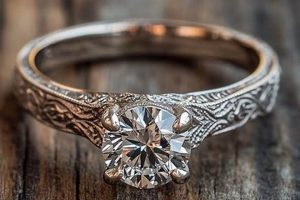
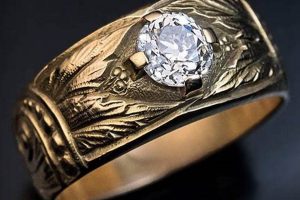
These adornments are characterized by settings crafted from .925 silver, the international standard denoting sterling, and feature prominently the semi-precious gemstone turquoise. Pieces classified as vintage typically predate contemporary mass production, often exhibiting unique craftsmanship and designs reflective of past eras.
The enduring appeal of such jewelry stems from a confluence of factors. The inherent beauty of the gemstone, with its varied matrix and coloration, coupled with the lustrous metal, creates visually arresting pieces. Furthermore, these objects often possess historical significance, providing tangible links to specific artisans, cultural movements, or periods in time. Their collectibility and potential appreciation in value contribute further to their desirability.
The following sections will delve into the intricacies of identifying authentic examples, assessing their value, understanding their cultural context, and providing guidance on their proper care and preservation.
Tips for Evaluating Vintage Sterling Silver and Turquoise Rings
Acquiring these particular items requires discernment and a degree of informed judgment. The following guidelines are intended to assist in evaluating authenticity and value.
Tip 1: Examine Hallmarks and Stamps: Sterling silver is typically marked with “925,” “Sterling,” or similar indicators. In the absence of hallmarks, the piece’s authenticity should be carefully scrutinized. Consider consulting a professional appraiser.
Tip 2: Assess Turquoise Quality: Natural turquoise exhibits variations in color and matrix (the webbing or patterns within the stone). Highly uniform, intensely colored stones may be stabilized or treated, which can affect value. Research typical turquoise characteristics for the period the ring is purportedly from.
Tip 3: Consider the Craftsmanship: Handcrafted rings will exhibit subtle irregularities and unique details. Machine-made pieces often lack the character and intricacy associated with vintage items. Examine the setting and the solder joints for evidence of careful workmanship.
Tip 4: Evaluate the Setting: The way the turquoise is set into the silver can provide clues about the ring’s age and origin. Different eras and cultures employed distinct setting techniques. Research common setting styles from different periods and regions.
Tip 5: Inspect for Wear and Patina: Genuine vintage rings will often exhibit signs of wear consistent with their age, such as slight scratches or a natural patina on the silver. Excessive polishing may diminish the ring’s value.
Tip 6: Investigate the Source: Purchasing from reputable dealers or auction houses with expertise in vintage jewelry can help ensure authenticity and fair pricing. Obtain provenance information when available.
Tip 7: Compare Prices: Research similar rings offered by multiple vendors to establish a fair market value. Factors such as the size and quality of the turquoise, the intricacy of the silverwork, and the ring’s overall condition will influence price.
Adhering to these suggestions enables a more informed approach to acquisition, mitigating the risk of acquiring misrepresented or overvalued items.
The subsequent sections will explore specific regional styles and the historical context surrounding these unique pieces of jewelry.
1. Authenticity
The determination of authenticity is paramount in the realm of vintage sterling silver and turquoise rings. Verifying a piece’s genuine origin, materials, and age significantly impacts its value, collectibility, and historical significance. Several factors contribute to establishing authenticity, each requiring careful examination.
- Hallmarks and Maker’s Marks
Hallmarks, small stamps or engravings on the silver, indicate the metal’s purity (sterling silver is typically marked “925” or “Sterling”) and often the maker’s identity. A legitimate hallmark provides verifiable evidence of the ring’s composition and potentially its origin. However, counterfeit marks exist, necessitating careful scrutiny and comparison with known hallmark registries. The absence of a hallmark does not automatically negate authenticity, but it requires further investigation. For example, some Native American-made rings from earlier periods may lack formal hallmarks.
- Turquoise Source and Characteristics
Different turquoise mines produce stones with distinct colorations, matrix patterns, and mineral compositions. Identifying the likely source of the turquoise, if possible, can help confirm the ring’s age and origin. Natural turquoise often exhibits variations and imperfections, whereas heavily treated or synthetic turquoise typically appears uniform. The presence of specific inclusions or matrix patterns characteristic of a particular mine (e.g., Kingman, Bisbee, or Sleeping Beauty) can be a strong indicator of authenticity, assuming the ring’s purported origin aligns with the turquoise’s known provenance.
- Construction Techniques and Design Style
Vintage rings often exhibit construction techniques and design styles characteristic of specific periods or cultural groups. For instance, Navajo silversmiths employed distinct techniques for setting stones and creating intricate silverwork. Recognizing these stylistic elements requires knowledge of historical jewelry-making practices. Inconsistencies between the construction techniques, design elements, and the ring’s supposed origin should raise concerns about its authenticity. Mass-produced modern imitations often lack the subtle details and hand-crafted feel of genuine vintage pieces.
- Patina and Wear Patterns
Genuine vintage silver develops a natural patina over time a subtle oxidation layer that imparts a warm, aged appearance. While patina can be artificially created, careful examination of the wear patterns and the distribution of the patina can provide clues about the ring’s age. Consistent wear on high-touch areas, such as the shank, is indicative of genuine use. A ring that appears excessively polished or shows signs of recent artificial aging may be less likely to be authentic. The presence of appropriate wear patterns consistent with the ring’s supposed age contributes to its credibility.
These facets, when collectively assessed, contribute significantly to establishing the authenticity of vintage sterling silver and turquoise rings. Determining authenticity demands expertise and attention to detail, offering valuable insight into the pieces history, origin, and intrinsic worth.
2. Workmanship
Workmanship is a foundational element in evaluating vintage sterling silver and turquoise rings. The quality of the craftsmanship directly influences a ring’s aesthetic appeal, durability, and ultimately, its historical and monetary value. Superior workmanship indicates a dedication to detail and skill on the part of the artisan, often reflecting the traditions and values of a particular era or cultural group. Poor workmanship, conversely, raises questions about authenticity and may suggest mass production or amateur origins. For instance, rings crafted by renowned Navajo silversmiths of the mid-20th century are prized for their intricate stamp work, precise stone settings, and overall attention to detail, distinguishing them from later, commercially produced examples.
The impact of workmanship extends to the ring’s longevity and structural integrity. A well-crafted ring, with strong solder joints and securely set stones, is more likely to withstand the test of time, retaining its beauty and value. Conversely, a ring with poorly executed joints, loose stones, or thin silver gauge is susceptible to damage, diminishing its worth. Examining the consistency of the silverwork, the smoothness of the stone settings, and the precision of any decorative elements provides valuable insight into the quality of the workmanship. For example, a ring displaying uneven stamp work or visible gaps between the turquoise and the silver bezel indicates inferior craftsmanship and potentially compromised structural stability.
In summary, workmanship serves as a critical indicator of authenticity, quality, and historical context in vintage sterling silver and turquoise rings. Careful assessment of the craftsmanship allows collectors and enthusiasts to differentiate between skillfully handcrafted pieces and mass-produced imitations, ensuring informed purchasing decisions and a deeper appreciation for the artistry involved. The challenges lie in recognizing subtle variations in craftsmanship and understanding the historical context within which the ring was created, necessitating careful study and, in some cases, expert consultation.
3. Turquoise Origin
The provenance of turquoise in vintage sterling silver rings significantly influences the piece’s value, authenticity, and historical narrative. The specific mine or region from which the turquoise originates imparts distinct characteristics to the stone, affecting its coloration, matrix patterns, and mineral composition. Identifying the turquoise’s origin, when possible, provides valuable context for assessing the ring’s overall significance.
- Color and Matrix Variation
Different turquoise mines yield stones with unique visual attributes. For example, Sleeping Beauty turquoise is known for its clear, sky-blue hue with minimal matrix, while Bisbee turquoise is characterized by its deep blue color and distinctive reddish-brown matrix. These variations serve as visual fingerprints, aiding in identification and potentially confirming the ring’s origin if it aligns with known historical mining practices and trade routes. Furthermore, the presence of specific trace elements within the turquoise, detectable through spectroscopic analysis, can further pinpoint its geographic source.
- Historical Mining Periods
Many historically significant turquoise mines operated during specific periods. Certain mines, such as the Cerrillos mine in New Mexico, were actively mined centuries ago, while others, like the Kingman mine in Arizona, continue to produce turquoise today. Identifying the period during which a particular mine was active allows for a more accurate assessment of the ring’s age and origin. For instance, a ring featuring turquoise with characteristics consistent with early Cerrillos turquoise is more likely to be a genuine antique than one featuring turquoise from a mine that was not yet operational during the ring’s purported era.
- Cultural Significance and Trade Routes
The turquoise trade has historically connected various cultures and regions. Certain turquoise sources held particular cultural significance for Native American tribes, influencing the designs and styles of silverwork. Understanding these cultural associations and trade routes can provide insights into the ring’s potential origin and the influences that shaped its design. For example, rings featuring turquoise from the Southwest are often associated with Navajo or Zuni craftsmanship, reflecting the cultural importance of turquoise within these communities. The distribution of turquoise from specific mines along established trade routes can also offer clues about the ring’s provenance.
- Treatment and Stabilization Techniques
The type of treatment or stabilization applied to the turquoise can also provide clues about its origin and age. Early turquoise jewelry often features untreated or minimally treated stones, while more modern pieces may utilize stabilized or enhanced turquoise. Identifying the presence and type of treatment can help distinguish between vintage and contemporary pieces. For example, rings featuring heavily stabilized turquoise are less likely to be genuine antiques, as stabilization techniques became more prevalent in later periods.
These interconnected aspects of turquoise origin contribute significantly to the evaluation of vintage sterling silver rings. Understanding the geological, historical, and cultural context of the turquoise allows for a more informed assessment of the ring’s authenticity, age, and intrinsic value. This knowledge enables collectors and enthusiasts to appreciate not only the aesthetic beauty of these pieces but also their rich historical significance.
4. Hallmarks Presence

The presence of hallmarks on vintage sterling silver and turquoise rings serves as a critical indicator of authenticity, origin, and material composition. These small, often intricate markings provide valuable information that aids in assessing the ring’s age, maker, and silver purity. Hallmarks are not merely decorative; they are legally protected symbols that historically guaranteed the quality of precious metals and identified the responsible silversmith or assay office. Their presence, or absence, significantly influences the valuation and provenance of these collectible items.
- Identifying Silver Purity and Origin
Hallmarks typically include marks indicating the silver’s fineness, such as “Sterling,” “925,” or other regional equivalents. These marks guarantee that the silver meets a specific purity standard, essential for determining the metal’s intrinsic value. Additionally, hallmarks often incorporate symbols identifying the country or region of origin, allowing researchers to trace the ring’s production to a specific geographic location and its associated silversmithing traditions. Examples include British hallmarks featuring the lion passant for sterling silver or French hallmarks denoting the assay office where the silver was tested. The consistent presence of these marks on vintage rings provides a reliable means of verifying material composition and origin, supporting claims of authenticity.
- Attribution to Specific Makers or Workshops
Many hallmarks include maker’s marks, unique symbols or initials representing the silversmith or workshop responsible for crafting the ring. These marks enable collectors and researchers to attribute the ring to a specific artisan or company, providing valuable insight into its history and design influences. Databases of known maker’s marks, such as those maintained by antique societies and auction houses, allow for the identification of these symbols and the retrieval of biographical information about the associated silversmith. For instance, identifying a maker’s mark associated with a renowned Navajo silversmith significantly enhances the ring’s value and collectibility, due to the recognition of their artistic skill and contribution to Native American jewelry traditions.
- Dating the Ring’s Production Period
Some hallmarks incorporate date letters, alphanumeric codes indicating the year of production. These date letters, typically used in conjunction with other hallmarks, provide a precise means of dating the ring’s creation, assisting in establishing its vintage status and historical context. Systems of date letters varied across different countries and regions, requiring knowledge of specific hallmark conventions to accurately interpret the codes. For example, British hallmarks employed a cyclical system of date letters, changing annually to indicate the year of assaying. The accurate dating of a ring through hallmark analysis allows for the placement of the piece within a specific historical period, influencing its market value and its contribution to the understanding of jewelry design evolution.
- Detecting Fraudulent or Altered Pieces
The absence of expected hallmarks, or the presence of inconsistent or poorly executed marks, raises red flags regarding a ring’s authenticity. Counterfeiters often attempt to replicate hallmarks, but their imitations typically lack the precision and clarity of genuine marks. Inconsistencies in hallmark styles or the presence of anachronistic marks (marks that were not in use during the ring’s purported period) are indicative of fraudulent alteration. Expert examination of hallmarks, often involving magnification and comparison with known examples, can reveal these discrepancies, helping to protect potential buyers from purchasing misrepresented items. The detection of fraudulent hallmarks underscores the critical role of these markings in verifying the integrity of vintage sterling silver and turquoise rings.
The information conveyed through hallmarks on vintage sterling silver and turquoise rings provides essential data for assessing authenticity, provenance, and value. Whether verifying silver purity, attributing the piece to a specific maker, dating its production period, or detecting fraudulent alterations, hallmarks offer a crucial layer of validation for collectors and enthusiasts. The study of hallmarks is therefore indispensable for anyone interested in understanding and appreciating these historical adornments.
5. Design Era

The design era of a vintage sterling silver and turquoise ring is intrinsically linked to its value, aesthetic, and historical significance. The prevailing styles, manufacturing techniques, and cultural influences of a particular period directly shaped the ring’s appearance, construction, and the types of materials used. Understanding the design era provides crucial context for assessing authenticity, appreciating the ring’s artistic merit, and determining its place within the broader history of jewelry.
Different eras showcase distinct characteristics. For instance, rings from the Art Deco period (1920s-1930s) often feature geometric designs, clean lines, and the use of calibrated turquoise stones set in intricate silver filigree. In contrast, mid-century Modern rings (1940s-1960s) may exhibit bolder, more abstract designs, incorporating larger, cabochon-cut turquoise stones in simpler, more streamlined settings. Navajo and Zuni rings from the same periods reflect distinct regional styles and craftsmanship traditions. Understanding these nuances allows one to distinguish a genuine Art Deco ring from a later reproduction or a mid-century piece influenced by Native American designs. Furthermore, the design era can provide clues about the intended market for the ring. Rings designed for tourists during the mid-20th century, for example, often feature simpler designs and less expensive turquoise compared to pieces intended for a more discerning clientele.
In conclusion, the design era is an indispensable component in the evaluation of vintage sterling silver and turquoise rings. It serves as a lens through which authenticity is assessed, artistic merit is appreciated, and historical context is understood. The challenges lie in accurately identifying the design era based on stylistic elements, construction techniques, and material characteristics, often requiring specialized knowledge and access to historical resources. A thorough understanding of design eras not only enhances appreciation for these unique pieces but also informs responsible acquisition and preservation practices.
6. Rarity

Rarity significantly influences the desirability and valuation of vintage sterling silver and turquoise rings. Items classified as rare command higher prices and greater attention from collectors due to their limited availability and unique characteristics. Several factors contribute to the rarity of these adornments.
- Limited Production Runs
Rings produced in small quantities, either due to design experimentation, artisan limitations, or specific historical circumstances, are inherently rarer than mass-produced items. For example, a ring crafted by a renowned silversmith as part of a limited-edition series, with documented production numbers, attains increased value. Evidence of limited production, such as archived records or provenance information, directly impacts the ring’s perceived and actual scarcity.
- Unique Turquoise Varieties
The scarcity of specific turquoise types contributes to the rarity of rings featuring these stones. Mines yielding turquoise with distinct coloration, matrix patterns, or geological origins may have operated for limited periods or produced stones in small quantities. A ring incorporating turquoise from a now-depleted mine, exhibiting a particularly desirable hue or pattern, is deemed rarer than rings with more commonly available turquoise. Examples include rings featuring Lander Blue turquoise, known for its intense blue color and spiderweb matrix, as this mine produced only a small amount of gem-grade material.
- Distinctive Design Elements
Rings incorporating unusual or experimental design elements, deviating from typical styles of a particular era, contribute to rarity. Rings featuring innovative silverwork techniques, unconventional stone settings, or unique combinations of materials may be considered rare due to their deviation from established norms. Documented examples of design patents or awards related to the ring’s design can further validate its uniqueness and scarcity.
- Historical Significance
Rings associated with notable historical events, figures, or cultural movements gain added value due to their historical provenance. A ring documented as having been owned by a prominent historical figure or originating from a significant cultural event is deemed rarer due to its tangible connection to history. Provenance documentation, such as estate records, letters, or historical photographs, substantiates the ring’s historical significance and elevates its rarity.
The rarity of vintage sterling silver and turquoise rings stems from a confluence of factors, including production quantities, material scarcity, design innovation, and historical associations. These elements, when collectively considered, determine the ring’s desirability and value among collectors and enthusiasts. Distinguishing between genuine rarity and artificially inflated scarcity requires careful examination and informed evaluation.
Frequently Asked Questions
This section addresses common inquiries and misconceptions surrounding the acquisition, valuation, and care of vintage sterling silver and turquoise rings. The following questions represent key considerations for collectors, enthusiasts, and potential buyers.
Question 1: How can one differentiate between genuine vintage turquoise and its synthetic counterparts?
Natural turquoise typically exhibits variations in color, matrix patterns, and surface texture. Synthetic turquoise often presents a uniform appearance, lacking the subtle imperfections characteristic of natural stone. Microscopic examination may reveal telltale signs of synthetic production, such as dye concentrations or artificial inclusions. Consultation with a qualified gemologist is recommended for definitive identification.
Question 2: What impact do repairs or alterations have on the value of a vintage sterling silver and turquoise ring?
Repairs and alterations can diminish the value of a vintage ring, particularly if they compromise the original design or construction. Significant alterations, such as replacing the original turquoise with a different stone or modifying the silverwork, can substantially reduce the ring’s collectibility. Minor repairs, executed skillfully and sympathetically to the original design, may have a lesser impact on value.
Question 3: How should vintage sterling silver and turquoise rings be properly stored to prevent damage?
These rings should be stored in a cool, dry environment, away from direct sunlight and extreme temperatures. Individual storage in soft cloth pouches or lined jewelry boxes prevents scratching and abrasion. Avoid storing rings in close proximity to other jewelry that may cause damage. Regular inspection for loose stones or structural weaknesses is advisable.
Question 4: What is the significance of hallmark variations on vintage sterling silver rings?
Hallmark variations reflect differences in regional assay practices, manufacturing periods, and silversmithing traditions. Understanding hallmark conventions specific to different countries and time periods is essential for accurate identification and dating. Reference guides and databases of hallmarks provide valuable resources for deciphering these markings.
Question 5: Does the presence of a patina on sterling silver necessarily indicate authenticity?
While a natural patina can be indicative of age, it is not a definitive indicator of authenticity. Patina can be artificially induced on modern silver. Careful examination of the patina’s consistency, distribution, and underlying surface condition is necessary to differentiate between genuine aging and artificial treatments.
Question 6: How does the condition of the turquoise affect the overall value of the ring?
The condition of the turquoise significantly impacts the ring’s value. Chips, cracks, and excessive wear diminish the stone’s aesthetic appeal and structural integrity. Turquoise that has undergone extensive treatment or stabilization may also be less valuable than natural, untreated stones. The size, color, and matrix patterns of the turquoise also contribute to its overall desirability and value.
In summary, the evaluation and care of vintage sterling silver and turquoise rings require careful consideration of numerous factors, including authenticity, condition, design era, and provenance. Informed decision-making is essential for both collectors and casual buyers.
The following section will provide guidance on resources available for further research and expertise.
Conclusion
This exploration of “vintage sterling silver and turquoise rings” has illuminated critical facets essential for informed appreciation and acquisition. The intricate interplay of authenticity, workmanship, turquoise origin, hallmarks, design era, and rarity collectively determines the value and historical significance of these pieces. Discernment and diligent examination are paramount in navigating the complexities of this collecting field.
The enduring allure of these rings resides not only in their aesthetic beauty but also in their capacity to connect individuals with the past. Continued research, engagement with expert resources, and careful stewardship will ensure the preservation and appreciation of these tangible links to history for generations to come. Diligence is crucial for responsible collecting and the safeguarding of cultural heritage.
![Timeless Vintage Bridal Set Wedding Rings: [Era] Style | Vintage Treasures: Discover Rare Antiques, Collectibles & Retro Finds](https://roopevintage.com/wp-content/uploads/2026/04/th-375-300x200.jpg "Timeless Vintage Bridal Set Wedding Rings: [Era] Style Vintage Treasures: Discover Rare Antiques, Collectibles & Retro Finds")