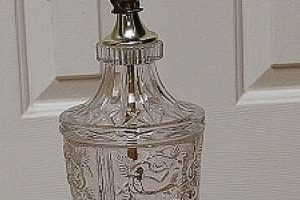
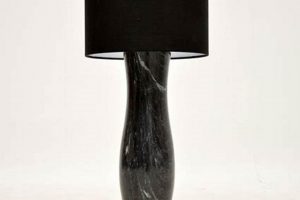
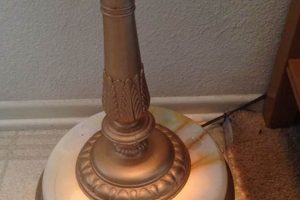
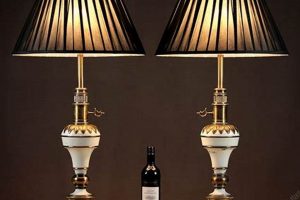
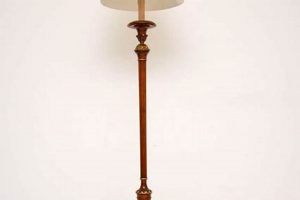
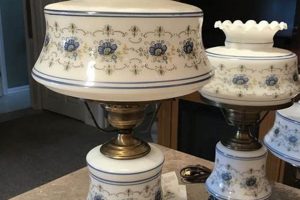
Illuminating desks and studies for generations, these lighting fixtures represent a marriage of form and function from a bygone era. Characterized by adjustable arms, shaded bulbs, and often a distinctive brass or green-cased finish, these lamps provided focused task lighting optimal for reading and writing. An example includes a Banker’s lamp with an emerald green glass shade and a pull-chain switch.
The significance of these classic light sources extends beyond mere illumination. They evoke a sense of history, connecting individuals to the scholarly pursuits of the past. Functionally, their design promoted focused study by reducing glare and minimizing distractions. Historically, these were symbols of educational aspiration, common in libraries, universities, and homes dedicated to learning, contributing to the academic atmosphere.
The following sections will delve into the various styles and restoration considerations for these iconic pieces, explore their value as collectible items, and provide guidance on incorporating them into contemporary interior designs.
Tips on Acquiring and Maintaining a Vintage Student Lamp
The following guidelines offer insights into selecting and preserving a piece of historical lighting, ensuring its functionality and aesthetic appeal for years to come.
Tip 1: Authenticate the Lamp’s Origins. Examination of maker’s marks, patent numbers, and design elements is crucial. Research these details to verify the lamp’s age and origin, mitigating the risk of purchasing a reproduction misrepresented as an original.
Tip 2: Assess the Condition of Electrical Components. Wiring, sockets, and switches must be inspected for damage or deterioration. Professional rewiring may be necessary to ensure safe operation and compliance with current electrical standards.
Tip 3: Evaluate the Finish and Material Composition. Brass, copper, or other metallic finishes should be carefully inspected for corrosion, oxidation, or damage. Cleaning and polishing should be undertaken with appropriate materials to avoid further degradation of the original finish.
Tip 4: Consider the Shade’s Integrity and Authenticity. Glass or fabric shades should be examined for cracks, chips, or discoloration. Matching an appropriate period-correct shade can significantly enhance the lamp’s value and aesthetic appeal.
Tip 5: Research Market Value and Pricing. Investigate recent sales of comparable examples to establish a fair market value. Factors such as condition, rarity, and provenance will influence the price.
Tip 6: Implement Proper Maintenance and Cleaning Procedures. Regular dusting and gentle cleaning with appropriate polishes will help preserve the lamp’s finish and prevent the accumulation of dirt and grime. Avoid abrasive cleaners, which can damage delicate surfaces.
Tip 7: Document the Lamp’s History and Provenance. Keeping records of purchase, restoration, and any known history associated with the lamp enhances its value and provides valuable information for future generations.
These tips are instrumental in maximizing the value and extending the lifespan of period lighting fixtures, ensuring they remain functional and attractive additions to any environment.
The subsequent section will focus on integrating these classic lamps into modern decorating schemes, demonstrating their adaptability across diverse interior styles.
1. Authenticity

The authenticity of a lighting fixture from the past directly affects its value, historical significance, and functional reliability. Genuine examples of these lamps, crafted during specific periods, reflect the manufacturing techniques, material availability, and design aesthetics of their time. Verification of authenticity often involves examining manufacturer’s marks, patent numbers, and design characteristics. For instance, a lamp claiming early 20th-century origins should exhibit construction methods and materials consistent with that era. Reproductions, while aesthetically similar, lack the historical provenance and material integrity of an authentic piece.
The importance of authenticity extends beyond monetary value. An authentic lamp provides a tangible connection to the past, offering insights into the social and cultural contexts in which it was created and used. Conversely, a lack of verifiable authenticity diminishes its significance, rendering it merely a decorative object without the historical depth. Consider a brass-bodied example with a green cased glass shade; its provenance, confirmed by original markings, can trace it back to a specific manufacturer renowned for quality craftsmanship, lending credibility and enhancing its historical narrative.
Determining authenticity can present challenges, requiring expertise in recognizing period-specific design features and construction techniques. However, understanding the criteria for establishing authenticity ensures that individuals can acquire pieces that truly represent the history and craftsmanship associated with these classic light sources. This understanding not only protects consumers from misrepresented reproductions but also preserves the legacy of these historically significant objects.
2. Materials

The constituent substances of these historically significant light sources are fundamental to their aesthetic appeal, durability, and overall value. The selection and quality of these materials reflect the manufacturing capabilities and stylistic preferences of their respective eras, contributing significantly to the lamp’s character and longevity.
- Brass Composition and Workmanship
Brass, commonly employed for the lamp’s base, stem, and hardware, offered durability and a surface amenable to polishing and intricate detailing. The quality of the brass alloy, the method of casting or forming, and the precision of the finishing directly impacted the lamp’s robustness and visual refinement. High-quality brass exhibited minimal impurities and was often meticulously polished to a reflective sheen, enhancing the lamp’s aesthetic appeal. Examples include intricate filigree work on the base or finely threaded joints ensuring structural integrity.
- Glass Shade Characteristics
Glass shades, typically cased glass in green or white, served to diffuse light and reduce glare. The type of glass, its thickness, and the uniformity of its color influenced the quality of illumination and the lamp’s overall aesthetic. Cased glass, consisting of multiple layers, offered superior light diffusion and a richer color tone compared to single-layer glass. Shades were often hand-blown or molded, exhibiting variations in thickness and texture that contribute to their unique character. Consider the difference in light diffusion between a thin, clear glass shade and a thicker, cased green glass shade in illuminating a workspace.
- Iron and Steel Structural Elements
Iron and steel were often used for internal structural components and weighted bases, providing stability and support. The quality of these metals, their rust resistance, and the precision of their machining were critical to the lamp’s long-term functionality. A poorly cast iron base, susceptible to corrosion, could compromise the lamp’s stability, whereas a well-engineered steel support structure ensured durability and safe operation.
- Fabric and Wiring Considerations
Original fabric-covered wiring and internal insulators played a role in the lamp’s safe operation and historical accuracy. The type of fabric used for the wiring, its insulation properties, and the condition of the wiring itself are important considerations during restoration. Deteriorated wiring poses a safety hazard and necessitates replacement with period-appropriate materials to maintain authenticity. The use of asbestos insulation in older lamps presents a health hazard requiring professional remediation.
The careful consideration of materials is essential in evaluating and preserving these historical objects. Understanding the properties and characteristics of these substances allows for informed decisions regarding restoration, maintenance, and proper display, ensuring that these lighting fixtures continue to illuminate and enrich the environments in which they are placed.
3. Functionality
The operational capabilities of classic illumination devices are central to their enduring appeal and practicality. Examining their functional design reveals the principles and considerations that guided their creation, influencing their effectiveness as task lighting.
- Adjustable Arms and Shades
The incorporation of adjustable arms and shades allowed for precise directional control of light. This adaptability enabled users to focus illumination directly on reading materials or work surfaces, minimizing glare and reducing eye strain. An example includes a swing-arm model that can be extended or retracted to alter the light’s proximity to the task, adapting to individual preferences and varying workspace layouts. The implications of this adjustability extended to improving productivity and visual comfort during prolonged periods of study or work.
- Focused Light Distribution
The design of shades, particularly those with downward-facing apertures, concentrated light output onto a specific area. This focused distribution prevented light from scattering unnecessarily, creating a pool of illumination optimized for detailed tasks. A green cased glass shade, for example, effectively filtered and directed light downwards, providing consistent illumination without excessive brightness. This characteristic made it suitable for environments requiring intense concentration and minimal distraction.
- Stable Base and Weight Distribution
Stability was paramount to prevent accidental tipping and ensure consistent illumination. These often featured weighted bases and carefully balanced designs to maintain equilibrium, even when the arms were extended. An example is the use of a heavy cast iron base to counteract the weight of an extended brass arm. This attention to stability ensured safe operation and prevented interruptions caused by accidental movement or dislodgement.
- Ease of Operation and Maintenance
Simple operational mechanisms, such as pull-chain switches or rotary knobs, enhanced usability and convenience. Similarly, designs that facilitated easy bulb replacement and cleaning contributed to long-term maintenance and functionality. An easily accessible bulb socket, for instance, simplified replacement, while a smooth, polished surface facilitated cleaning. These aspects of design ensured ease of use and promoted the longevity of the device.
These functional aspects underscore the pragmatic design of these light sources, highlighting their suitability for academic and professional settings. These features directly addressed the need for adaptable, focused, and reliable illumination, solidifying their place in history as practical and aesthetically pleasing tools for learning and productivity.
4. Aesthetics

The aesthetic qualities of these classic illumination devices are intrinsically linked to their desirability and historical significance. The visual appeal stems from a combination of form, materials, and historical context, influencing their perception as more than mere functional objects. The incorporation of specific design elements, such as gracefully curved arms, richly patinated brass finishes, and elegantly shaped glass shades, contributed to their refined appearance. For instance, a Banker’s lamp, characterized by its emerald green glass shade and brass construction, became a symbol of sophistication and scholarly pursuit, embodying a specific aesthetic associated with the intellectual class.
The influence of aesthetic considerations extends to the selection of materials and manufacturing processes. The use of high-quality brass, meticulously polished to a lustrous sheen, elevated the perceived value and elegance. Similarly, the choice of cased glass for the shade, often hand-blown to achieve a specific shape and color gradient, demonstrated a commitment to visual refinement. These aesthetic choices not only enhanced the lamp’s appearance but also contributed to its durability and longevity. The aesthetic appeal, therefore, acted as a catalyst, ensuring the preservation and appreciation of these artifacts across generations.
In conclusion, understanding the aesthetic component is crucial for evaluating and appreciating the value of period lighting. The aesthetic qualities, interwoven with functionality and historical context, transformed a utilitarian object into a symbol of status, learning, and refined taste. Recognizing the aesthetic principles embedded in their design allows one to fully appreciate their enduring appeal and cultural significance, ensuring these lamps continue to be valued as both functional objects and works of art.
5. Restoration
The preservation of these artifacts hinges upon informed restoration practices. Over time, deterioration due to environmental factors, use, and neglect necessitates intervention to maintain both functionality and aesthetic integrity. Incorrect restoration can diminish the value of a period piece, while appropriate techniques preserve its historical significance. A critical aspect of restoration involves addressing electrical components. Original wiring often degrades, posing safety hazards; replacement with period-appropriate materials is crucial. An example of necessary repair includes rewiring with cloth-covered wires to maintain the original aesthetic while meeting modern safety standards. Addressing corrosion on brass components also requires careful consideration. Abrasive cleaners can damage the patina; instead, gentler methods are preferred to remove oxidation without stripping the original finish.
The integrity of the glass shade represents another key area of focus. Cracks, chips, or discoloration affect the light diffusion and overall appearance. Repairing damaged shades may involve specialized glasswork, while sourcing matching period shades becomes necessary when originals are beyond repair. Authentic shades, bearing the maker’s mark or exhibiting characteristic imperfections, command a premium. The goal of restoration should always prioritize preservation of original materials and finishes whenever possible. This often means opting for reversible interventions that minimize alteration of the lamp’s original state. For instance, stabilizing a loose joint with archival-quality adhesive rather than replacing it with a modern fastener.
Ultimately, responsible restoration aims to strike a balance between preserving historical accuracy and ensuring safe functionality. Consulting with experts, documenting all interventions, and employing appropriate materials are essential steps. By carefully considering the cause and effect of restoration choices, the long-term value and historical narrative of classic lighting can be maintained for future generations, ensuring the lamps continue to illuminate not only spaces, but also the past.
Frequently Asked Questions
The following questions address common inquiries concerning the acquisition, maintenance, and historical significance of these antique lighting fixtures.
Question 1: How can the authenticity of an object identified as a classic desk lamp be verified?
Authentication involves examining manufacturer’s marks, patent numbers, and design characteristics specific to the claimed period of origin. Comparison with known examples and consultation with experts are recommended.
Question 2: What are the primary materials typically used in the construction of period desk lamps?
Brass, iron, steel, and cased glass constitute the primary materials. The quality and composition of these substances significantly impact the lamp’s durability and aesthetic appeal.
Question 3: What safety precautions should be observed when restoring or using antique lighting fixtures?
Inspection and replacement of deteriorated wiring are essential. Professional rewiring with period-appropriate materials ensures compliance with modern safety standards. Asbestos insulation, if present, requires professional remediation.
Question 4: What is the proper method for cleaning and maintaining a vintage lamp without damaging its finish?
Gentle cleaning with mild soap and water, followed by polishing with appropriate metal or glass polishes, is recommended. Abrasive cleaners should be avoided to prevent damage to the original patina.
Question 5: How does the presence of original components affect the valuation of a classic desk lamp?
Original components, including shades, switches, and wiring, significantly enhance the lamp’s value. Replacements, while sometimes necessary, can diminish its historical significance and monetary worth.
Question 6: What factors contribute to the historical significance of these lighting fixtures?
These lights represent a tangible connection to the past, embodying the design aesthetics, manufacturing techniques, and cultural values of their respective eras. Provenance and historical documentation further enhance their significance.
Understanding these aspects assists in making informed decisions regarding acquisition and preservation.
The next section will explore case studies of restoration projects, highlighting specific techniques and challenges.
Conclusion
The preceding analysis has detailed the multifaceted nature of the vintage student lamp, encompassing its design, materials, functionality, aesthetics, and restoration. The historical significance, linked to educational pursuits and evolving lighting technology, underscores its enduring appeal. Identifying authentic pieces, coupled with meticulous preservation, ensures the legacy of these artifacts.
Continued research and responsible stewardship are essential to safeguarding these tangible connections to the past. Further investigation into specific manufacturers, regional variations, and the social history surrounding these lighting fixtures will undoubtedly enrich the understanding and appreciation of this iconic form. Efforts to conserve existing examples and educate future generations about their value will guarantee that the vintage student lamp remains a source of illumination and inspiration for years to come.