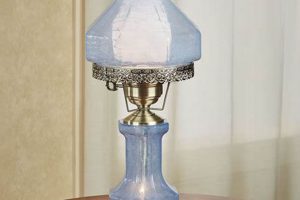
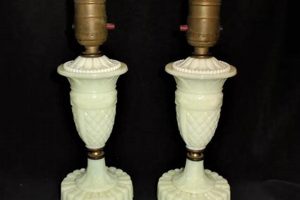
These collectible light fixtures, characterized by their raised, textured surface resembling hobnails and crafted from opaque white glass, represent a distinct aesthetic from a bygone era. Their construction involves molding the glass with the signature hobnail pattern, resulting in a visually tactile and luminous object. Examples range from small bedside lamps to larger floor models, each possessing a unique charm owing to variations in manufacturing and age.
Their significance lies in their historical value as artifacts of mid-20th century design and manufacturing. These pieces offer insights into the popular styles and tastes of the period. Benefits of collecting or restoring these items include the preservation of design history, the addition of unique decorative elements to interior spaces, and potential appreciation in value over time. Their enduring appeal is rooted in their ability to evoke nostalgia and a sense of timeless elegance.
The following sections will delve further into the history, identification, care, and collecting considerations for these unique and sought-after decorative objects. Examining these elements will provide a comprehensive understanding of their place within the broader context of vintage and antique collecting.
Acquiring and Maintaining Collectible Lighting
The following advice addresses critical aspects of acquiring and preserving these specific vintage lighting fixtures. Diligence in these matters ensures both the authenticity and longevity of these valuable items.
Tip 1: Authenticate Before Purchase: Prior to acquisition, carefully examine the glass for manufacturing imperfections consistent with the period of production. Absence of these irregularities may indicate a reproduction. Consult with experienced collectors or appraisers for expert verification.
Tip 2: Assess Condition Meticulously: Thoroughly inspect for chips, cracks, or repairs. Even minor damage can significantly impact value. Professional restoration is possible, but its cost should be factored into the purchase price.
Tip 3: Research Manufacturer Marks: Identify any discernible maker’s marks or labels. These markings provide valuable clues regarding origin and age. Utilize online resources and collector’s guides to decipher these identifiers.
Tip 4: Evaluate Electrical Components: Original wiring is often outdated and poses a safety hazard. A qualified electrician should inspect and, if necessary, replace electrical components to ensure safe operation. Retain original parts for historical accuracy.
Tip 5: Implement Gentle Cleaning Practices: Employ only mild, non-abrasive cleaning solutions and soft cloths to avoid scratching or damaging the delicate milk glass surface. Avoid harsh chemicals or abrasive cleaners.
Tip 6: Control Environmental Factors: Prolonged exposure to direct sunlight can cause fading or discoloration of the milk glass. Position the fixture away from direct sunlight or utilize UV-filtering window treatments to mitigate this risk.
Adherence to these guidelines will contribute to the preservation of these artifacts, ensuring their continued enjoyment and potential appreciation in value. Thorough assessment and careful maintenance are paramount.
The subsequent discussion will concentrate on the market trends and investment potential associated with these sought-after collectibles.
1. Rarity and availability

The rarity and availability of these lamps significantly influence their value and desirability within the vintage market. Certain manufacturers produced limited quantities of specific models or patterns, creating inherent scarcity. External factors, such as breakage, disposal, or alterations over time, further contribute to reduced availability. The interplay of these factors determines the ease with which collectors can acquire particular lamps, directly impacting their market price.
Variations in hobnail patterns, milk glass coloration, and lamp styles exacerbate the effect of limited production. For instance, lamps featuring unique or experimental hobnail arrangements command higher prices due to their uncommon nature. Similarly, specific colors of milk glass, produced only for short periods, are prized by collectors. The geographic distribution of the original manufacturers also plays a role, with some regions potentially yielding a higher concentration of specific models, thereby affecting local availability.
Understanding the relationship between rarity and availability enables informed decision-making for both buyers and sellers. Authenticating the lamp’s origin and production period is paramount, as is assessing its condition relative to its scarcity. While damage invariably decreases value, highly rare lamps may still command substantial prices even with minor imperfections. Ultimately, the assessed rarity and present availability, considered in conjunction with aesthetic appeal and historical provenance, determine the item’s market value, but the original scarcity is the main consideration for the collector’s price.
2. Manufacturing Techniques

The production methods employed in creating these lighting fixtures are integral to understanding their value, authenticity, and inherent characteristics. The techniques shaped not only the aesthetic but also the durability and eventual collectibility of these items.
- Glass Composition and Formulation
The specific blend of silica, soda, lime, and other additives determined the opacity, color, and heat resistance of the milk glass. Recipes varied among manufacturers, resulting in subtle differences in the glass’s appearance and physical properties. These variations are often key indicators when assessing authenticity. For example, Fenton used different formulas than Westmoreland, which are detectable under close examination.
- Molding and Shaping Processes
The hobnail pattern was typically achieved through the use of molds. Molten glass was either pressed or blown into these molds, creating the raised hobnail texture. Different molding techniques resulted in variations in the sharpness and definition of the hobnails. Blown glass often resulted in a more refined and delicate texture, while pressed glass could create a sturdier, more robust piece. Examining mold lines can give insights into the manufacturing era.
- Finishing and Surface Treatments
After molding, the glass underwent finishing processes, which could include grinding, polishing, or the application of surface treatments to enhance its luster or protect it from wear. Some manufacturers applied a satin finish to the glass, creating a softer, more diffused light. Others used enamel paints to add decorative details. The presence and condition of these finishes are important factors in assessing the lamp’s overall value and authenticity.
- Assembly and Hardware Integration
The glass components were then assembled with metal hardware, including lamp bases, sockets, and wiring. The quality and design of this hardware also reflect the manufacturing standards of the period. Original hardware, even if tarnished or worn, is highly valued by collectors, as it contributes to the lamp’s overall authenticity and historical significance. Replacing the hardware with modern components can significantly detract from the lamp’s value.
These distinct manufacturing methods directly influence the appeal and value of antique lighting items. Subtle differences in glass composition, hobnail texture, finishing techniques, and hardware integration serve as vital clues for collectors seeking to authenticate and appreciate these pieces. A detailed understanding of these techniques is, therefore, essential for informed collecting and preservation.
3. Hobnail pattern variations
Distinct hobnail configurations represent a critical attribute of these vintage fixtures, influencing both their aesthetic appeal and historical classification. The arrangement, size, and density of the hobnails directly impact the diffusion of light emitted by the lamp, creating unique visual effects. Changes in hobnail patterns reflect evolving design trends and manufacturing capabilities across different eras and by individual manufacturers. For example, some patterns feature tightly packed, uniformly sized hobnails, while others incorporate more widely spaced, irregular shapes, each causing divergent light disbursement.
Recognizing specific hobnail pattern variations provides essential clues for identifying the lamp’s origin and period of production. Companies like Fenton and Fenton Glass Artistry, for instance, developed proprietary hobnail designs that are readily distinguishable to experienced collectors. Furthermore, the manufacturing process itself influenced the pattern; pressed glass lamps often exhibit sharper, more defined hobnails compared to blown glass examples. Understanding these nuances enables collectors to authenticate items, assess their rarity, and appreciate the craftsmanship involved in their creation. Incorrectly identifying a pattern can lead to misattribution and inaccurate valuation.
In summary, hobnail pattern variations constitute a significant element in the study and appreciation of these vintage artifacts. These pattern variations offer insight into historical design trends. Correct interpretation of these patterns relies on a thorough understanding of manufacturing techniques and historical context. The ability to discern these variations is, therefore, paramount for collectors and historians seeking to accurately classify and value these pieces.
4. Milk glass composition
The specific formulation of milk glass is fundamental to understanding the aesthetic and physical properties of these vintage lamps. Variations in the glass composition influenced the opacity, color, and durability of the finished product, making it a key factor in identifying and appreciating these collectible items.
- Opaque White Coloration
The defining characteristic of milk glass is its opaque, milky-white appearance. This coloration is achieved by adding opacifiers, such as tin dioxide or calcium phosphate, to the molten glass mixture. The concentration of these opacifiers directly influences the intensity of the white color, with higher concentrations resulting in a more intensely opaque glass. Variations in the opacifier used contribute to subtle differences in coloration between manufacturers and across different production periods.
- Influence on Light Diffusion
The opaqueness of milk glass significantly affects the way light is diffused. Unlike transparent glass, milk glass scatters light, creating a soft, even glow. The degree of diffusion is directly related to the density and distribution of the opacifiers within the glass matrix. This light-diffusing property contributed significantly to the appeal of vintage hobnail milk glass lamps, as it provided a gentle, non-glaring illumination.
- Impact on Durability and Heat Resistance
The addition of opacifiers and other additives can also influence the glass’s durability and heat resistance. Specific formulations were designed to withstand the heat generated by incandescent light bulbs without cracking or discoloration. The presence of lead, for example, increased the glass’s refractive index and contributed to its brilliance, while also enhancing its stability. However, leaded milk glass is heavier and more susceptible to certain types of damage.
- Identification and Dating Clues
The precise composition of the milk glass can provide valuable clues for identifying the manufacturer and dating the lamp. Chemical analysis techniques, such as X-ray fluorescence spectroscopy, can reveal the elemental composition of the glass, allowing experts to differentiate between various manufacturers and production periods. Subtle variations in color, opacity, and surface texture, resulting from differences in composition, can also be discerned through careful visual examination.
These compositional factors are essential in assessing the authenticity and value of vintage hobnail milk glass lamps. Recognizing variations in the glass’s opacity, coloration, durability, and chemical composition enables collectors to differentiate between original pieces and reproductions, and to appreciate the craftsmanship involved in their creation. These properties further solidify the lamp’s status as artifacts of its time.
5. Authenticity determination
Establishing the authenticity of vintage hobnail milk glass lamps is paramount in determining their value, historical significance, and collectibility. This process requires a meticulous examination of various characteristics, comparing them against established historical records and manufacturing practices. Accurate authentication safeguards against misrepresentation and ensures the preservation of genuine artifacts.
- Manufacturer’s Marks and Labels
The presence of legible manufacturer’s marks or labels provides direct evidence of origin. These marks, often found on the base or hardware, can be cross-referenced with historical company records to verify the lamp’s production period. However, the absence of a mark does not definitively indicate inauthenticity, as some manufacturers did not consistently mark their products, or the marks may have been lost over time. Conversely, the presence of a known counterfeit mark immediately invalidates the lamp’s claim to originality.
- Glass Composition and Quality
The composition of the milk glass itself offers valuable clues. Original milk glass often exhibits specific characteristics, such as subtle color variations, inclusions, or a particular texture that are indicative of the manufacturing techniques used during the lamp’s purported era. Modern reproductions often employ different glass formulas and manufacturing processes, resulting in a noticeably different appearance or feel. Spectroscopic analysis can be used to determine the elemental composition of the glass, providing further evidence of its authenticity.
- Hobnail Pattern and Design Consistency
The specific hobnail pattern employed by different manufacturers varied in terms of shape, size, spacing, and arrangement. Comparing the pattern against known examples from reputable sources, such as collector’s guides or museum archives, is crucial. Inconsistencies in the pattern, such as irregular hobnail placement or deviations from established designs, may suggest a reproduction or altered piece. The precision and detail of the hobnail pattern also offer insights into the quality of the original mold and manufacturing process.
- Hardware and Electrical Components
The style and materials used in the lamp’s hardware and electrical components should be consistent with the lamp’s purported period of manufacture. Original sockets, switches, and wiring often exhibit distinctive features or markings that can be used for authentication. The presence of modern or anachronistic components raises serious doubts about the lamp’s originality. Examining the patina and wear patterns on the hardware can also provide valuable clues, as genuine vintage hardware typically exhibits signs of age and use that are difficult to replicate convincingly.
The authentication process necessitates a holistic approach, considering multiple lines of evidence and consulting with experienced collectors or appraisers when uncertainty exists. Reliance on a single indicator is insufficient, as skilled counterfeiters may attempt to replicate certain features while overlooking others. Accurate authentication not only protects buyers from fraudulent purchases but also contributes to the preservation of authentic vintage hobnail milk glass lamps for future generations.
6. Electrical safety
The integration of electrical components into vintage hobnail milk glass lamps presents inherent safety considerations. Original wiring and sockets, often dating back several decades, may exhibit degradation of insulation, posing a risk of electrical shock or fire. The age of these components directly correlates with increased vulnerability to damage from heat, moisture, and general wear. For instance, rubber insulation, commonly used in vintage wiring, becomes brittle over time, leading to cracking and exposure of live conductors. This decay can cause short circuits and ignition of nearby flammable materials. Therefore, the electrical integrity of vintage hobnail milk glass lamps must be thoroughly assessed and addressed before use.
Remediation of these hazards typically involves rewiring the lamp with modern, UL-listed components. Replacing the original wiring with contemporary, flame-retardant insulated wire mitigates the risk of short circuits and electrical fires. Additionally, upgrading the socket to a newer model with improved insulation and grounding capabilities enhances safety. While preserving the aesthetic appeal of the lamp is desirable, prioritizing electrical safety is paramount. Examples of unsafe conditions include frayed or cracked wiring, corroded sockets, and loose connections. Failure to address these issues can result in serious injury or property damage. Careful inspection and qualified electrical repair are critical for safe operation.
In summary, electrical safety represents a crucial aspect of owning and utilizing vintage hobnail milk glass lamps. The age and potential deterioration of original electrical components necessitate thorough inspection and remediation. Prioritizing safety through rewiring and component replacement ensures the continued enjoyment of these historical artifacts without compromising well-being. Neglecting these precautions introduces unacceptable risks and undermines the value of these otherwise cherished items.
7. Historical context

The historical backdrop against which these light fixtures were produced profoundly shaped their design, manufacturing processes, and eventual cultural significance. Understanding this context is crucial for appreciating their value as artifacts of specific periods and design movements.
- The Victorian Era Influence
The Victorian era, with its emphasis on ornate detailing and sentimental aesthetics, laid the groundwork for the decorative qualities found in later milk glass designs. The Victorian penchant for imitation and novelty items contributed to the popularity of milk glass as a more affordable alternative to porcelain. This era established a market for decorative lighting fixtures, setting the stage for the rise of hobnail milk glass lamps in subsequent periods. For instance, the Victorian preference for table lamps and parlor lighting directly influenced the types of lamps produced using milk glass and hobnail patterns.
- The American Industrial Revolution and Mass Production
The American Industrial Revolution enabled the mass production of glassware, making decorative items more accessible to a broader segment of the population. Automated glassmaking techniques allowed for the efficient and consistent creation of hobnail patterns on a large scale. This increased production capacity directly contributed to the widespread availability of milk glass lamps during the late 19th and early 20th centuries. Factories like Fenton and Westmoreland leveraged these advancements to create diverse lines of hobnail milk glass lamps, catering to different tastes and budgets.
- Mid-20th Century Design Trends
The mid-20th century witnessed a resurgence in the popularity of milk glass, aligning with the broader trends of nostalgia and a renewed appreciation for traditional aesthetics. Hobnail milk glass lamps became emblematic of mid-century modern and farmhouse chic interiors. This period saw the introduction of new hobnail patterns and variations in milk glass coloration, reflecting the evolving design sensibilities of the time. The prevalence of these lamps in magazines and home dcor publications further solidified their status as iconic pieces of mid-century design.
- The Impact of Electrification and Home Lighting
The widespread adoption of electricity in homes during the early 20th century fundamentally altered the landscape of interior lighting. Electric lamps replaced gas and kerosene lamps, offering cleaner, safer, and more convenient illumination. This transition fueled the demand for electric lighting fixtures, including hobnail milk glass lamps, which were adapted to accommodate electric bulbs. The design of these lamps evolved to maximize the aesthetic and functional benefits of electric lighting, contributing to their enduring appeal as both decorative objects and sources of illumination.
These historical factors collectively shaped the evolution and cultural significance of vintage hobnail milk glass lamps. From the Victorian influences to the impact of mass production and electrification, each era left its mark on the design, manufacturing, and distribution of these collectible items. Examining these lamps through a historical lens provides valuable insights into the social, economic, and technological forces that shaped their creation and lasting appeal. As design trends shifted, lamps were influenced, but their essential form remained through the vintage era.
Frequently Asked Questions
The following section addresses common inquiries regarding the identification, care, and valuation of hobnail milk glass lamps. Clarification of these points aids in informed acquisition and preservation.
Question 1: How can a genuine hobnail milk glass lamp be distinguished from a reproduction?
Authentication involves scrutinizing the glass composition, hobnail pattern, and hardware. Original pieces typically exhibit subtle imperfections and variations in color due to manufacturing processes of the era. Modern reproductions often possess a uniform appearance and may lack the nuanced details found in vintage examples. Consulting with an experienced appraiser is advisable for definitive authentication.
Question 2: What cleaning methods are appropriate for vintage hobnail milk glass?
Gentle cleaning is essential to prevent damage. Use a soft cloth dampened with mild soap and water. Avoid abrasive cleaners or scouring pads, which can scratch the glass surface. Remove dust regularly to maintain the lamp’s luster. Stains should be addressed promptly using specialized glass cleaning solutions, if necessary.
Question 3: What factors influence the valuation of these collectible lamps?
Valuation depends on several factors, including rarity, condition, manufacturer, and historical provenance. Lamps in pristine condition, produced by renowned manufacturers, and possessing documented historical significance command higher prices. Damage, such as chips or cracks, significantly reduces value. Researching comparable sales data provides insight into current market trends.
Question 4: Is it safe to use vintage hobnail milk glass lamps with their original wiring?
Operating vintage lamps with original wiring is strongly discouraged. Over time, insulation degrades, posing a risk of electrical shock or fire. A qualified electrician should inspect and, if necessary, replace the wiring and sockets with modern, UL-listed components to ensure safe operation.
Question 5: How should hobnail milk glass lamps be stored to prevent damage?
Proper storage is crucial for preserving these fragile items. Wrap each component separately in acid-free tissue paper or bubble wrap. Store the wrapped pieces in a sturdy container in a cool, dry place away from direct sunlight. Avoid stacking heavy objects on top of the stored lamps to prevent breakage.
Question 6: Can damaged hobnail milk glass lamps be repaired, and does repair affect their value?
Professional restoration can address minor damage, such as small chips or cracks. However, extensive repairs may diminish the lamp’s value, particularly if original components are replaced. Consult with a qualified restorer to assess the feasibility and potential impact of repairs before proceeding.
In summary, careful examination, gentle cleaning, and safe electrical practices are paramount for preserving and enjoying these pieces. Understanding their history and characteristics enhances appreciation and informs responsible ownership.
The subsequent section will explore the aesthetic integration of these vintage light fixtures into modern interior design schemes.
vintage hobnail milk glass lamps
This exploration has detailed the significance of these lamps as artifacts of design and manufacturing. Key considerations include authentication techniques, appropriate cleaning methods, electrical safety, and historical context. Collectors and enthusiasts must address these aspects to preserve and appreciate these items.
As design trends evolve, the intrinsic historical value of vintage hobnail milk glass lamps remains constant. Responsible stewardship ensures that these artifacts continue to illuminate both interiors and an understanding of past eras. Further research and collaborative knowledge-sharing will contribute to the accurate preservation and appreciation of these unique historical pieces.