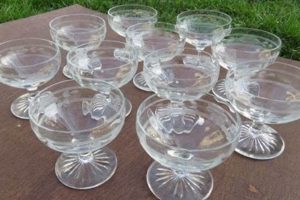
These specialized vessels, typically crafted from leaded glass, are designed to enhance the effervescence and aroma of sparkling wine. Their production often reflects design aesthetics and craftsmanship prevalent in earlier historical periods. The presence of lead oxide in the glass composition contributes to a higher refractive index, resulting in increased brilliance and clarity. Examples can range from Art Deco-inspired coupes to slender, tulip-shaped flutes from the mid-20th century.
The significance of these items extends beyond mere functionality. They represent a tangible link to past eras, embodying the social customs and artistic sensibilities of their time. Owning such objects provides access to history and an appreciation for the artistry involved in their creation. Their value lies not only in their inherent material worth but also in their capacity to elevate the experience of enjoying fine sparkling beverages, adding a layer of elegance and sophistication to any occasion. The evolution of their design mirrors shifts in societal values and technological advancements in glassmaking.
The following sections will delve into the defining characteristics, identifying features, preservation techniques, and collectibility of these historical items, offering a comprehensive understanding of their enduring appeal and intrinsic value.
Preserving and Appreciating Fine, Aged Sparkling Wine Vessels
The subsequent guidance aims to assist in the proper handling, maintenance, and appraisal of these delicate and historically significant objects. Adhering to these practices ensures their longevity and preserves their inherent value.
Tip 1: Gentle Cleaning is Paramount: Avoid abrasive cleaners or scouring pads. Utilize lukewarm water and a mild, pH-neutral detergent. Consider using a soft-bristled brush to dislodge any stubborn residue from intricate patterns or engravings.
Tip 2: Immediate Drying Prevents Water Spots: After washing, immediately dry with a lint-free microfiber cloth. Air drying can lead to unsightly mineral deposits that detract from the glass’s clarity.
Tip 3: Careful Handling Minimizes Risk of Damage: Support the entirety of the object while handling, avoiding pressure points on delicate stems or rims. When placing onto surfaces, ensure stability to prevent accidental tipping.
Tip 4: Proper Storage Protects from the Elements: Store in a location away from direct sunlight and extreme temperature fluctuations. Consider padded storage containers or display cases to prevent scratches and chips.
Tip 5: Identification of Manufacturing Marks Aids Authentication: Examine the object for maker’s marks, hallmarks, or etched signatures. Research these markings to verify the object’s authenticity and provenance.
Tip 6: Professional Appraisal Determines Market Value: For valuable or historically significant items, consult a qualified appraiser specializing in antique glassware. An expert assessment provides accurate valuation and informs insurance considerations.
Tip 7: Lead Content Awareness: Be mindful of potential lead content, particularly in older pieces. While primarily a concern when storing acidic liquids for extended periods, avoid using these vessels for prolonged storage of beverages.
Proper care and informed appraisal are essential for safeguarding the beauty and worth of these refined items. By implementing these practices, one ensures the preservation of these artifacts for future generations.
The following section will examine identifying features and common design motifs associated with these antique objects.
1. Material Composition

The term “crystal” in the context of these antique items denotes a specific glass formulation, primarily characterized by the inclusion of lead oxide. The introduction of lead oxide, typically ranging from 24% to 30% by weight, imparts distinct optical and physical properties to the finished object. This compound increases the refractive index of the glass, leading to enhanced brilliance and sparkle, highly valued attributes. Moreover, lead contributes to a softer working consistency during the manufacturing process, enabling the creation of intricate designs and finer details. Examples include the delicate patterns etched into the bowls of many 19th-century French and Bohemian glasses; such detail would be difficult, if not impossible, to achieve with standard soda-lime glass. Therefore, the inherent visual qualities and manipulative potential of lead crystal are fundamental to the aesthetic character of these objects.
However, material composition affects more than just aesthetics. The presence of lead also impacts the density and resonant properties of the glass. These pieces often exhibit a characteristic “ring” when struck, a sustained tone resulting from the high density and elastic properties imparted by lead. This auditory quality is a tangible indicator of the object’s composition and quality. Furthermore, older manufacturing processes and environmental conditions may have introduced trace elements or impurities into the glass matrix. Analyzing these subtle variations can provide clues about the object’s origin and age, assisting in authentication and valuation. For instance, subtle color variations caused by the presence of manganese or iron can be indicative of specific glassmaking techniques employed during particular periods.
In summary, the material composition is intrinsically linked to the value, visual appeal, and historical context of antique sparkling wine stemware. While the presence of lead enhances aesthetic characteristics and workability, its impact extends to the object’s density, resonant properties, and potential for containing trace elements indicative of origin and age. Understanding these nuances is essential for collectors, appraisers, and anyone seeking to appreciate the artistry and history embedded within these fragile artifacts.
2. Design Period

The stylistic evolution of these refined sparkling wine vessels is intricately linked to distinct historical design periods. Each era imbued these objects with specific aesthetic characteristics, reflecting prevailing artistic movements, technological advancements, and societal values. Therefore, discerning the design period is crucial for understanding the object’s origin, value, and historical context.
- Art Deco (1920s-1930s)
Characterized by geometric shapes, bold lines, and luxurious materials, Art Deco glassware often features stepped designs, stylized floral motifs, and the incorporation of precious metals. Examples include coupes with etched geometric patterns or tall, slender flutes with black enamel accents. This style reflects the exuberance and modernity of the interwar period and represents a significant departure from earlier, more ornate styles.
- Mid-Century Modern (1940s-1960s)
Embracing clean lines, organic forms, and functional design, Mid-Century Modern glassware emphasizes simplicity and elegance. Shapes tend to be more streamlined and less adorned, reflecting the post-war focus on practicality and accessibility. Look for tulip-shaped flutes with slender stems and minimal embellishment. Makers like Orrefors and Holmegaard exemplify this design philosophy.
- Victorian Era (1837-1901)
Marked by elaborate ornamentation, intricate detailing, and a revival of historical styles, Victorian glassware often features hand-painted enamels, intricate cutting patterns, and the use of colored glass. Examples include ornate coupes with floral designs and tall, heavily cut flutes with gilded rims. These pieces reflect the Victorian penchant for grandeur and opulence.
- Art Nouveau (1890-1910)
Inspired by natural forms, Art Nouveau glassware incorporates flowing lines, asymmetrical designs, and the use of organic motifs such as flowers, leaves, and insects. Look for pieces with hand-blown shapes and subtle iridescence. Makers such as Lalique and Daum are known for their contribution to this style.
Identifying the design period allows one to contextualize these objects within a broader historical and artistic framework. From the geometric precision of Art Deco to the organic forms of Art Nouveau, each era contributed unique characteristics to the design of sparkling wine stemware, shaping its aesthetic appeal and historical significance. Understanding these nuances is crucial for collectors and enthusiasts seeking to appreciate the artistry and craftsmanship embedded within these antique artifacts.
3. Craftsmanship Quality
The inherent value and collectibility of vintage crystal champagne glasses are inextricably linked to the caliber of craftsmanship employed in their creation. Superior craftsmanship translates directly to enhanced aesthetic appeal, structural integrity, and, consequently, long-term preservation. Variations in skill level and manufacturing techniques across different eras and regions result in significant differences in the quality of these items. For example, hand-blown glasses from renowned European houses, such as Waterford or Saint-Louis, exhibit a level of clarity, precision cutting, and delicate stem work rarely found in mass-produced examples. These elements demonstrate the artisan’s mastery and command a premium in the antique market.
Poor craftsmanship, conversely, manifests in several detrimental ways. Imperfections such as asymmetrical shapes, uneven glass thickness, visible seams, and poorly executed cuts detract from the visual appeal and can compromise the structural stability of the glass. Furthermore, inferior materials or inadequate annealing processes can render the crystal more susceptible to chipping, cracking, or clouding over time. Identifying indicators of quality, such as crisp, precise facets, a consistent ring when tapped, and the absence of visible imperfections, is essential for assessing the authenticity and value of these historical items. Examining the pontil mark (the scar left from where the glassblower’s pontil rod was attached) can also provide clues. A smoothly ground and polished pontil mark indicates a higher level of attention to detail than a rough, unfinished one.
In conclusion, craftsmanship quality serves as a primary determinant of the desirability and monetary worth of vintage crystal champagne glasses. Recognizing the hallmarks of skilled artistry and the deficiencies indicative of inferior production methods allows collectors and enthusiasts to make informed assessments. This knowledge ensures they acquire authentic, well-preserved examples that represent the pinnacle of glassmaking expertise, safeguarding these treasures for future generations.
4. Rarity Evaluation

The assessment of scarcity is a paramount factor in determining the value and desirability of antique crystal sparkling wine vessels. The interplay of production volume, survival rates, and collector demand significantly influences the rarity of a particular design or manufacturer.
- Limited Production Runs
Pieces produced in limited quantities due to short-lived design trends, experimental techniques, or economic constraints are often considered rarer. For instance, specific patterns manufactured by smaller, regional glassworks with limited distribution networks command higher premiums due to their relative scarcity compared to those produced by larger, more established firms. Documented instances of deliberate limitation also contribute to increased rarity and value.
- Survival Rates and Condition
Fragility and susceptibility to damage significantly impact the survival rate of these delicate items. Glasses that have withstood the test of time, remaining free from chips, cracks, or significant wear, are considerably rarer and more valuable than damaged examples. Complete sets, particularly those including original packaging or documentation, are exceedingly rare due to the increased likelihood of loss or breakage over time.
- Manufacturer and Design Uniqueness
Stemware produced by renowned manufacturers, such as Baccarat, Waterford, or Lalique, often exhibits exceptional craftsmanship and innovative design. However, within these established brands, specific patterns or designs created for limited-edition releases or commissioned for special events are particularly rare and sought after by collectors. Uncatalogued or previously undocumented designs also contribute to rarity, offering unique insights into the evolution of glassmaking techniques.
- Geographic Distribution and Provenance
The geographic distribution of vintage crystal champagne glasses influences rarity based on regional production and market demand. Pieces originating from areas with limited historical glassmaking industries, or those primarily circulated within specific social circles, may be scarcer in global markets. Documented provenance, tracing the ownership history of a piece back to its original manufacturer or a notable collector, further enhances its rarity and historical significance.
The interplay of these factors dictates the relative scarcity of antique crystal sparkling wine vessels. Understanding the nuances of limited production, survival rates, manufacturer prestige, and provenance allows collectors and appraisers to accurately assess rarity and determine the true value of these historical artifacts. This evaluation ultimately impacts their desirability and placement within the broader context of fine art and decorative arts collecting.
5. Provenance Documentation

Provenance documentation represents a critical aspect in the authentication and valuation of antique crystal champagne glasses. Tracing the history of an object from its creation to its present ownership establishes its legitimacy and provides insights into its cultural and historical significance.
- Manufacturer’s Marks and Labels
Identifying marks etched, engraved, or applied to the glass serve as primary indicators of origin. These marks, often subtle or requiring magnification to discern, provide direct evidence of the manufacturer and, potentially, the year of production. Examples include the acid-etched mark of Baccarat or the engraved signature of Moser. The presence of these verifiable marks significantly enhances the object’s credibility and value.
- Historical Records and Catalogs
Cross-referencing existing documentation, such as historical manufacturer catalogs, sales records, or period advertisements, validates the design and production timeline of a particular glass. These sources provide corroborating evidence that the object aligns with the manufacturer’s offerings during a specific period. For example, a catalog depicting a particular Waterford pattern in 1920 supports the claim of a glass bearing that pattern originating from that era.
- Auction Records and Estate Sales
Previous auction listings or estate sale inventories can provide a documented chain of ownership, tracing the object through various collectors and owners. These records often include descriptions, photographs, and valuations, contributing to a comprehensive understanding of the glass’s history and market value. Inclusion in a notable collection or prominent estate sale can further enhance its prestige and desirability.
- Expert Appraisals and Certificates of Authenticity
Professional appraisals conducted by qualified experts provide independent assessments of the object’s authenticity, condition, and value. Certificates of authenticity, issued by reputable appraisers or antique dealers, serve as formal documentation of their expert opinion, based on thorough examination and research. These certificates offer assurance to potential buyers and strengthen the object’s provenance.
The presence of verifiable provenance documentation significantly enhances the desirability and value of antique crystal champagne glasses. These records establish authenticity, contextualize the object within its historical period, and provide insights into its journey through time. Conversely, the absence of such documentation raises questions about legitimacy and can substantially diminish its worth.
Frequently Asked Questions
The following questions and answers address common inquiries regarding the identification, care, and valuation of aged crystal sparkling wine vessels. This information aims to provide clarity and guidance for collectors and enthusiasts.
Question 1: How can one differentiate between genuine crystal and standard glass in such items?
Genuine crystal typically contains lead oxide, imparting a higher refractive index, resulting in greater brilliance. A distinct ringing tone when gently tapped is also indicative of crystal. Standard glass lacks these properties.
Question 2: What are the primary risks associated with using antique crystal items for serving beverages?
Prolonged storage of acidic beverages in leaded crystal can potentially leach lead, posing a health hazard. It is advisable to use such glasses primarily for serving and immediate consumption.
Question 3: What are the optimal cleaning methods for preserving the delicate nature of crystal champagne stemware?
Gentle hand washing with lukewarm water and a mild, pH-neutral detergent is recommended. Abrasive cleaners and dishwashers should be avoided to prevent scratching and damage.
Question 4: How does one assess the authenticity of a purported vintage piece?
Examine the item for manufacturer’s marks, hallmarks, or acid-etched signatures. Compare these markings with documented resources to verify the maker and period of production.
Question 5: What factors significantly influence the market value of aged crystal sparkling wine glasses?
Rarity, condition, design period, manufacturer, provenance, and the presence of original documentation are key determinants of value.
Question 6: Is professional appraisal necessary for all such objects, and under what circumstances is it most beneficial?
Professional appraisal is recommended for valuable or historically significant pieces. It is particularly beneficial for insurance purposes, estate planning, or when considering sale or acquisition.
These answers provide a foundational understanding of key considerations when dealing with historical crystal champagne glasses. Diligence and careful examination are paramount in ensuring proper care and accurate valuation.
The subsequent section will provide insight into how to build a crystal champagne glasses vintage collection.
Crystal Champagne Glasses Vintage
This examination has underscored the multifaceted nature of antique crystal sparkling wine stemware, extending beyond mere functionality to encompass historical significance, artistic merit, and material value. Elements such as craftsmanship, design period, provenance, and rarity contribute to the overall worth and desirability of these artifacts. Meticulous care and informed appraisal are essential for preservation and accurate valuation.
The enduring appeal of crystal champagne glasses vintage resides in their capacity to evoke a sense of elegance and sophistication, linking contemporary appreciation to the refined aesthetics of past eras. Continued research and informed collecting practices are vital to ensure the preservation of these historical objects for future generations. To dismiss their value is to disregard a tangible link to historical craftmanship.