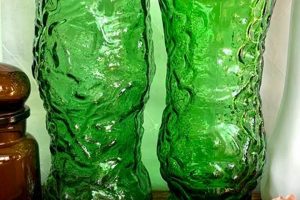
A type of mass-produced glassware, often transparent or translucent and typically tinted green, was widely manufactured during the period roughly spanning the 1920s and 1930s. Examples include plates, bowls, and serving dishes, often featuring simple, molded designs. The affordability and availability of this glassware made it commonplace in many households of the era.
This glassware provides insight into the economic and social conditions of the early 20th century. Its appeal lay in its accessibility during a time of financial hardship. Its presence in homes speaks to resourcefulness and a desire for beauty even amidst challenging circumstances. Furthermore, the color variations and designs reflect evolving aesthetic preferences of the period.
The following sections will delve into specific manufacturing techniques, identifying marks, and popular patterns associated with this type of glassware, providing collectors and enthusiasts with valuable information for identification and appreciation.
Identifying and Caring for Vintage Green Depression Glass
Proper identification and care are crucial for preserving the value and beauty of this collectible glassware.
Tip 1: Examine for Manufacturing Imperfections: Due to mass production techniques, the glassware often exhibits imperfections such as bubbles, mold marks, and slight variations in color. These characteristics, while seeming like flaws, are generally indicative of authentic pieces.
Tip 2: Identify the Color: While green is most common, variations exist, ranging from light green (Vaseline glass) to darker shades (forest green). Correctly identifying the specific shade assists in narrowing down the manufacturer and timeframe.
Tip 3: Research Known Patterns: Several distinct patterns were produced by various manufacturers. Familiarize yourself with popular patterns like “Princess,” “Sharon,” and “Cameo” to aid in identification. Pattern reference guides are invaluable resources.
Tip 4: Check for Maker’s Marks: Though not always present, some pieces bear a maker’s mark. These marks, often subtle and located on the base, can provide definitive proof of origin.
Tip 5: Handle with Care: The glassware is inherently fragile. Avoid using abrasive cleaners or placing it in dishwashers. Hand washing with gentle soap is recommended.
Tip 6: Protect from Extreme Temperatures: Rapid temperature changes can cause cracking. Avoid exposing this glassware to sudden shifts between hot and cold environments.
Tip 7: Store Properly: When not in use, store glassware in a protected environment to minimize the risk of damage. Padding between pieces is advised.
By implementing these tips, collectors and owners can enhance their knowledge and ensure the longevity of their valuable pieces.
The subsequent sections will cover the market value and current trends surrounding vintage glassware collecting, offering insights for both seasoned collectors and newcomers.
1. Color variations

Color variations significantly impact the value and collectibility of vintage glassware. Beyond the standard green hue, subtle differences in shade and composition can denote specific manufacturers, production eras, and material formulations, thereby influencing desirability among collectors.
- Vaseline Glass
Vaseline glass, also known as uranium glass, exhibits a yellow-green hue and fluoresces under ultraviolet light due to the inclusion of small amounts of uranium oxide in its composition. This unique characteristic makes it highly sought after by collectors and distinguishes it from other types of glassware.
- Jadeite
Characterized by its opaque, pale green color, jadeite was popular for kitchenware items. The distinct color resulted from specific additives during the manufacturing process. Variations within jadeite, from lighter to darker shades, can impact value based on rarity and collector preference.
- Forest Green
A darker, more saturated green color, forest green glassware offers a richer aesthetic compared to lighter shades. This color variation was often used for decorative pieces and serving dishes, providing a contrast to the more common pastel greens of the era. It is less common than other green variants.
- Lime Green
A brighter and more vibrant color compared to other shades, Lime Green glassware can sometimes be mistaken for more modern pieces, so collectors must be aware of the manufacturing and patterns of the time.
Understanding these color variations is essential for accurately identifying and appraising vintage glassware. The subtleties in color not only reflect the aesthetic trends of the time but also provide clues about the origin and potential value of individual pieces. Collectors and enthusiasts should consult reference guides and expert opinions to navigate the complexities of color identification effectively.
2. Pattern identification

Pattern identification is crucial for accurately evaluating and appreciating vintage green depression glass. The mass-production techniques of the era led to a wide array of patterns, each possessing distinct characteristics that aid in determining manufacturer, timeframe, and potential value. The design motifs, ranging from geometric shapes to floral arrangements, serve as key identifiers. The absence of readily available makers’ marks on many pieces underscores the necessity of pattern recognition for attribution. Incorrect pattern identification can lead to misrepresentation of the piece, affecting its perceived value and historical context. For example, the “Sharon” pattern, characterized by its distinctive cabbage rose design, is often mistaken for other floral patterns, resulting in inaccurate assessments. The use of pattern reference guides and expert consultation mitigates these errors.
Successful pattern identification offers practical benefits for collectors and enthusiasts. It allows for informed purchasing decisions, preventing overpayment for common patterns and enabling the recognition of rarer, more valuable designs. Furthermore, it facilitates the assembly of complete sets, enhancing the aesthetic appeal and potential worth of the collection. The ability to differentiate between similar patterns, such as the “Princess” and “Queen Mary” patterns, requires careful examination of specific design elements and the use of reliable reference materials. Auction houses and antique dealers rely heavily on accurate pattern identification to catalog and appraise pieces correctly, highlighting its significance in the market.
In conclusion, pattern identification forms an essential component of understanding vintage green depression glass. It bridges the gap between simple observation and informed appreciation, providing a framework for assessing historical context, manufacturer attribution, and monetary value. Challenges such as subtle pattern variations and incomplete historical documentation necessitate continuous learning and refinement of identification skills. Accurate pattern identification not only enriches the experience of collecting but also preserves the historical legacy of this mass-produced yet culturally significant glassware.
3. Manufacturer marks

Manufacturer marks provide crucial evidence for authenticating and identifying vintage green depression glass. The presence, absence, or type of mark offers insights into the piece’s origin, production period, and potential value. However, understanding these marks requires careful attention to detail and familiarity with the practices of various glass manufacturers from the depression era.
- Limited Use of Marks
Many manufacturers of depression glass did not consistently mark their products. Mass production focused on affordability, often omitting the extra step and cost of applying a maker’s mark. The lack of a mark, therefore, does not automatically indicate a reproduction; many authentic pieces remain unmarked. However, the presence of a known manufacturer’s mark can greatly increase confidence in a piece’s authenticity.
- Types of Marks
When present, manufacturer marks vary. Some are molded directly into the glass, appearing as raised or indented symbols. Others are acid-etched, creating a frosted appearance. Certain companies, like Jeanette Glass, used paper labels which have often been lost over time. The type of mark used can sometimes indicate the production period or line of glassware.
- Identifying Specific Manufacturers
Several companies produced green depression glass, each with distinct marks (when used) and patterns. Hocking Glass Company (later Anchor Hocking), Jeanette Glass Company, and Hazel-Atlas Glass Company were major manufacturers. Familiarizing oneself with the distinctive marks (or known patterns from these companies) is essential for accurate attribution.
- Marks and Value
A clear and identifiable manufacturer’s mark can positively impact the value of a piece of vintage green depression glass. It offers concrete evidence of origin and authenticity, appealing to collectors seeking verifiable provenance. However, the rarity of the pattern, the condition of the piece, and overall market demand still play significant roles in determining value.
In summary, while manufacturer marks are not universally present on vintage green depression glass, their presence serves as a valuable tool for identification and authentication. The absence of a mark should not immediately disqualify a piece, but the presence of a known mark can significantly increase its desirability and value. Careful study of manufacturing practices and known marks is crucial for anyone interested in collecting or appraising this glassware.
4. Production flaws

Production flaws are inherent characteristics of vintage green depression glass, arising from the manufacturing techniques employed during the early 20th century. The rapid and cost-conscious mass production of this glassware resulted in imperfections that are now considered hallmarks of authenticity. These flaws include the presence of bubbles within the glass matrix, variations in color density, mold marks, and slight surface imperfections. These irregularities arose due to factors such as inconsistent raw material quality, limitations in mold design, and the speed of the manufacturing process. The presence of such flaws provides a valuable indication that the item is indeed a product of the depression era, distinguishing it from later reproductions created with more refined manufacturing standards. For instance, small air bubbles trapped within the glass, easily visible upon close inspection, are a common feature of original pieces and often absent in modern imitations.
The appreciation and understanding of production flaws have practical significance for collectors and enthusiasts. Recognizing these imperfections helps differentiate authentic pieces from contemporary reproductions, guarding against misidentification and overpayment. For example, a nearly flawless piece of “Cherry Blossom” pattern glassware, a popular design from the period, should immediately raise suspicion due to the typical presence of mold seams and minor imperfections in original examples. Furthermore, the specific type and location of flaws can sometimes provide clues about the manufacturer or the specific production line used. Experienced collectors utilize this knowledge to assess the relative rarity and potential value of an item. Ignoring these subtleties can lead to inaccurate appraisals and potentially costly errors in collecting.
In conclusion, production flaws are inextricably linked to the identity of vintage green depression glass. They are not defects to be disregarded but rather integral components that authenticate and define the character of these mass-produced items. Recognizing and appreciating these imperfections is crucial for informed collecting, accurate appraisal, and the preservation of the historical context associated with this unique category of glassware. While imperfections may detract from a modern perspective, in the realm of depression glass, they serve as a testament to the era and the manufacturing processes employed.
5. Rarity factors

Rarity factors exert a significant influence on the value and desirability of vintage green depression glass. Certain patterns, colors, and specific pieces are far less common than others, commanding higher prices and increased collector interest.
- Color Scarcity
Certain color variations within green depression glass are demonstrably rarer than others. While standard green was commonly produced, colors such as pink, amethyst, and cobalt blue were manufactured in smaller quantities, leading to increased demand and higher market values. A pink Miss America pattern plate, for instance, is significantly more valuable than its green counterpart.
- Pattern Production Length
The duration for which a specific pattern was manufactured directly correlates with its scarcity. Patterns produced for only a short period, due to design changes or economic factors, are less prevalent on the market. The “Homespun” pattern by Jeanette, produced for a relatively limited time, is scarcer than more ubiquitous patterns like “Cherry Blossom.”
- Limited Production Pieces
Within common patterns, specific pieces or serving items were sometimes produced in smaller quantities. These limited-production items are highly sought after by collectors aiming to complete sets or acquire unique examples. A covered butter dish in the “Royal Lace” pattern, for example, is harder to find than standard dinner plates.
- Manufacturing Imperfections as Rarity Markers
While typically viewed as flaws, certain manufacturing imperfections, when coupled with other factors, can paradoxically increase rarity. A specific pattern exhibiting a consistent, unusual flaw attributable to a manufacturing error, if documented and known, might become a sought-after variation. Documented examples are scarce, so only serve as rarity factors when provenance is confirmed.
These rarity factors, operating in isolation or in combination, shape the landscape of vintage green depression glass collecting. The intersection of color, pattern, production duration, and even specific manufacturing anomalies dictates the relative scarcity and, consequently, the market value of individual pieces. The nuanced understanding of these factors is indispensable for collectors and dealers alike.
6. Market value

The market value of vintage green depression glass is a dynamic indicator influenced by a complex interplay of factors, reflecting both historical significance and contemporary collector demand. Condition, rarity, pattern desirability, and color variations directly impact the price a piece can command. Pieces in pristine condition, free from chips, cracks, or significant surface wear, generally fetch higher prices. Scarce patterns, those produced for shorter durations or in limited quantities, also increase market value. For example, a complete set of the “Cherry Blossom” pattern in excellent condition will be significantly more valuable than individual pieces with damage. Color variations, such as rarer shades like pink or cobalt blue, can substantially elevate the price compared to more common green pieces. Consequently, understanding these value drivers is paramount for both collectors and sellers navigating the market.
Auction houses and online marketplaces serve as key barometers of market value. Prices realized at auction provide concrete data points, reflecting the willingness of collectors to pay for specific items. Analyzing trends in auction results can reveal shifts in collector preferences and fluctuations in demand for particular patterns or colors. Similarly, monitoring online marketplaces, such as eBay and specialized antique sites, offers insights into the current pricing landscape. However, it’s crucial to account for the potential for inflated or unrealistic prices in these online venues. Real-world examples illustrate the variability in market value: A “Miss America” pattern water pitcher in green might sell for $50-$75 in good condition, while the same pitcher in pink could easily fetch $200 or more. This disparity highlights the crucial role that color and rarity play in determining price.
In summary, the market value of vintage green depression glass is a multifaceted consideration, driven by condition, rarity, pattern popularity, and color. Vigilant monitoring of auction results and market trends, combined with a thorough understanding of these influencing factors, equips collectors and sellers to make informed decisions. The inherent challenges in assessing value underscore the importance of seeking expert opinions and consulting reliable price guides. By approaching the market with diligence and knowledge, one can effectively navigate the complexities of collecting and selling these enduring pieces of American history.
7. Preservation

The preservation of vintage green depression glass is paramount to maintaining its intrinsic value, historical significance, and aesthetic appeal. Exposure to environmental factors, improper handling, and inadequate storage can precipitate irreversible damage, diminishing the object’s collectibility and its ability to serve as a tangible link to the past. The chemical composition of the glass, combined with its age, renders it particularly vulnerable to degradation. For instance, prolonged exposure to ultraviolet light can cause fading of the color, reducing the vibrant green hue to a muted, less desirable shade. Similarly, drastic temperature fluctuations can induce stress fractures, leading to cracks or complete breakage. Proper preservation practices are therefore essential to mitigate these risks and ensure the long-term survival of these artifacts.
Practical application of preservation techniques involves several key measures. Careful handling, using clean, dry hands or lint-free gloves, minimizes the transfer of oils and contaminants. Cleaning should be performed using mild, non-abrasive soaps and soft cloths, avoiding harsh chemicals that can etch the surface of the glass. Storage in a stable environment, away from direct sunlight, extreme temperatures, and humidity, is crucial. Wrapping individual pieces in acid-free tissue paper or using padded dividers can prevent scratches and chipping. Displaying items in enclosed cabinets with UV-filtering glass provides additional protection. For example, a collector who carefully stores their “Royal Lace” pattern set in a climate-controlled display case will significantly extend its lifespan compared to someone who leaves the pieces exposed to the elements on an open shelf.
In summary, the preservation of vintage green depression glass is a proactive endeavor that requires consistent vigilance and informed decision-making. Neglecting preservation practices accelerates the deterioration process, resulting in the loss of both monetary value and historical context. While challenges such as environmental factors and the inherent fragility of the material exist, implementing proper handling, cleaning, and storage protocols can significantly enhance the longevity of these pieces, allowing future generations to appreciate their beauty and historical significance. The long-term preservation of these items is an investment in the past, ensuring that these tangible remnants of the depression era endure for years to come.
Frequently Asked Questions
The following questions address common inquiries and misconceptions surrounding vintage green depression glass, providing concise and informative answers for collectors and enthusiasts.
Question 1: How can authenticity of vintage green depression glass be determined?
Authenticity can be assessed by examining for manufacturing imperfections typical of the period, identifying known patterns, researching manufacturer marks (though often absent), and scrutinizing color consistency. Consult reference guides for pattern verification.
Question 2: What factors most significantly influence the market value of this glassware?
Market value is primarily driven by the glassware’s condition, rarity of the pattern, color variations (with rarer colors commanding higher prices), and overall demand among collectors.
Question 3: What are common preservation methods to ensure the longevity of these glass items?
Preservation involves gentle cleaning with mild soaps, avoiding abrasive materials and dishwashers, storing away from direct sunlight and temperature extremes, and handling with care to prevent chips and cracks.
Question 4: Are production flaws indicative of lower quality, or do they serve as authentication markers?
Production flaws, such as bubbles and mold marks, are common in vintage green depression glass due to mass-production techniques and serve as authentication markers, differentiating it from more modern, flawless reproductions.
Question 5: How should differences in green color tones be interpreted?
Differences in green tones, from Vaseline to forest green, can denote specific manufacturers, production periods, or variations in material composition. Certain shades are rarer and more valuable.
Question 6: Is the absence of a manufacturer’s mark a definitive sign that the glassware is not authentic?
The absence of a manufacturer’s mark is not definitive. Many pieces were produced without marks due to cost-saving measures during the depression era. Other factors, such as pattern and production flaws, should be considered.
Understanding these key points will assist in making informed decisions regarding the identification, valuation, and preservation of this collectible glassware.
The subsequent section will provide a conclusion summarizing the key aspects covered in this exploration of this glassware.
Conclusion
The preceding exploration has provided an overview of the multifaceted aspects surrounding vintage green depression glass. From understanding the nuances of pattern identification and recognizing the significance of production flaws to appreciating the impact of color variations on market value, a comprehensive understanding of this glassware requires diligent study and careful observation. The historical context, marked by economic hardship and mass production, shapes the very essence of these collectible items. Furthermore, adherence to proper preservation techniques is paramount for ensuring their longevity and continued accessibility for future generations.
Continued research and thoughtful collecting practices will safeguard the legacy of vintage green depression glass. As these tangible remnants of the past become increasingly scarce, the responsibility falls upon collectors and enthusiasts to preserve their historical and cultural significance. By fostering a deeper appreciation for their unique characteristics and historical context, the future of vintage green depression glass is secured.