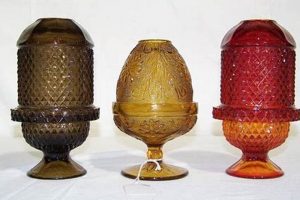
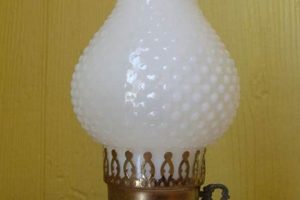
These collectible items represent scaled-down versions of functional lighting devices powered by oil. Typically crafted from glass, metal, or ceramic, they often feature intricate designs and working burners, mirroring the aesthetics of their full-sized counterparts but on a significantly smaller scale. They serve as decorative objects, historical artifacts, and testaments to the ingenuity of miniature craftsmanship.
The diminutive lamps provide insight into past lighting technologies and societal norms regarding illumination. Their existence highlights the importance of light in daily life throughout history, even extending to dollhouses and miniature collections. Furthermore, these items represent a tangible connection to a time before electricity, offering a glimpse into historical design trends and manufacturing techniques.
Subsequent sections will delve into the various types, materials, makers, and factors that influence the value of these historical collectibles. Detailed descriptions of construction methods, identification tips, and preservation strategies will also be provided.
Tips for Collectors of Vintage Miniature Oil Lamps
Acquiring and maintaining a collection requires careful consideration. The following guidelines offer essential advice for both novice and experienced collectors.
Tip 1: Research Manufacturers: Familiarize oneself with prominent makers. Names such as Fenton, Consolidated Lamp Company, and Baccarat are associated with high-quality examples. Understanding manufacturer hallmarks can aid in identifying genuine pieces.
Tip 2: Inspect for Damage: Examine potential acquisitions closely for cracks, chips, or repairs. Imperfections diminish value, particularly in pieces intended for display. Use a magnifying glass to check for hairline fractures.
Tip 3: Verify Authenticity: Be wary of reproductions. Compare the design, material, and construction with known authentic examples. Consult reputable dealers or specialized literature to avoid purchasing fakes.
Tip 4: Assess Burner Condition: A complete and functional burner assembly significantly impacts the value. Ensure the wick adjuster operates smoothly and that all components are present and undamaged. Replacement parts can be difficult to source.
Tip 5: Consider Rarity and Design: Limited production runs and unique designs command higher prices. Pieces with intricate detailing, unusual colors, or rare molds are generally more desirable. Research auction records to gauge market demand.
Tip 6: Preserve with Care: Handle items with clean hands and store them in a dust-free environment, away from direct sunlight. Avoid harsh cleaning agents; use a soft cloth to gently remove surface dirt.
These tips provide a foundation for informed collecting, helping enthusiasts to acquire and safeguard valuable pieces. Proper research, careful inspection, and responsible preservation are crucial for maximizing the enjoyment and potential appreciation of these delicate antiques.
The article will conclude with a summary of key considerations for both buying and selling these collectibles.
1. Material Composition

The selection of materials in these miniature lamps significantly dictates their aesthetic appeal, durability, and historical value. Glass, often hand-blown or molded, constitutes a primary component, its composition ranging from clear crystal to colored or opalescent varieties. The glass’s chemical makeup influences its resistance to heat and potential discoloration over time. Metal, typically brass, copper, or pewter, forms crucial structural elements such as the burner assembly, collar, and base. The interaction between these materials affects the lamp’s overall longevity; for instance, corrosion of a metal burner can render an otherwise pristine glass lamp non-functional.
Variations in glass coloring techniques further exemplify the importance of material composition. Uranium glass, for example, glows under ultraviolet light due to the presence of uranium oxide, a characteristic that distinguishes it from common glass. Similarly, cranberry glass achieves its ruby hue through the addition of gold chloride during the manufacturing process. The presence or absence of specific elements, and the processes by which they are incorporated, directly contribute to the lamp’s rarity and market value. Real-life examples include lamps made with iridescent glass by companies like Steuben, highly sought after for their shimmering surfaces achieved through complex chemical treatments.
In summary, the materials comprising these lamps are not merely passive components but active contributors to their identity and historical significance. The careful consideration of material properties by the original manufacturers, and the subsequent impact of aging and environmental factors, provide crucial insights for collectors and researchers alike. The identification of specific materials and their associated manufacturing techniques forms a cornerstone of authenticating and appreciating these miniature relics.
2. Manufacturing Techniques

The creation of these lamps involved a spectrum of techniques, each leaving discernible marks on the finished product. Hand-blowing, a labor-intensive process, resulted in unique variations in glass thickness and shape, distinguishing early examples from those produced with automated machinery. Mold-blowing, while still requiring skilled labor, allowed for greater uniformity and the replication of intricate patterns. The use of different molds explains variations in size and design within the same manufacturer’s catalog. Metal components, such as burner assemblies and bases, were often cast using intricate molds, revealing details about period metallurgy and metalworking practices. The joining of glass and metal elements, a delicate procedure, further exemplifies the precision demanded by miniature production. Specific examples include the use of pressed glass techniques by firms such as Boston & Sandwich Glass Company, enabling mass production of patterned lamps at a lower cost, but also resulting in identifiable mold marks.
The transition from manual to mechanized processes had a profound effect on the availability and design of these items. Automated glassblowing and metal stamping increased production volume, making them more accessible to a wider market. However, this shift often resulted in a reduction in the artistic complexity and unique character found in earlier, handcrafted pieces. The study of manufacturing techniques, therefore, allows for a deeper understanding of the economic and technological forces that shaped their production and distribution. Collectors can use this knowledge to differentiate between high-quality, handcrafted examples and mass-produced items, informing their purchasing decisions and historical appreciation.
In conclusion, manufacturing techniques are intrinsic to the identification and valuation of these collectibles. They provide insight into the era of production, the level of craftsmanship involved, and the economic factors that influenced their creation. Recognizing the telltale signs of specific manufacturing processes allows collectors and enthusiasts to navigate the market with greater confidence and to appreciate the historical and artistic significance of these miniature objects. The challenge lies in the careful examination and interpretation of physical characteristics, requiring both knowledge and meticulous observation.
3. Design Aesthetics

Design aesthetics, encompassing the principles of beauty and artistic expression, are central to understanding the appeal and value of vintage miniature oil lamps. The visual characteristics of these objects reflect prevailing artistic movements, technological innovations, and cultural preferences of their respective eras.
- Form and Proportion
Form refers to the overall shape and structure, while proportion dictates the relationship between different components. Miniature lamps exhibit diverse forms, ranging from simple cylindrical designs to elaborate Victorian styles. Accurate proportions enhance visual harmony, contributing to the lamp’s aesthetic appeal. For instance, a lamp with a disproportionately large font (oil reservoir) relative to its chimney might appear awkward, detracting from its value. The replication of full-sized lamp designs in miniature necessitates careful attention to scaling, influencing the overall aesthetic impact.
- Ornamentation and Detailing
Ornamentation includes decorative elements such as applied motifs, engravings, or colored glass. Intricate detailing enhances visual interest, reflecting the skill of the artisan or the capabilities of the manufacturing process. Examples include floral patterns on Victorian-era lamps or geometric designs on Art Deco pieces. The presence and quality of ornamentation significantly affect the lamp’s collectibility, with rarer or more complex designs commanding higher prices. The degree of detailing serves as an indicator of the lamp’s intended market, distinguishing between utilitarian and luxury items.
- Color and Material Combinations
The selection of colors and the combination of materials are critical aspects of design aesthetics. The use of specific colors, such as cranberry glass or opalescent finishes, aligns with period trends and manufacturing techniques. The juxtaposition of glass, metal, and ceramic components further contributes to the visual appeal. Harmonious color palettes and thoughtful material combinations enhance the lamp’s aesthetic value. A lamp featuring contrasting colors, such as a cobalt blue font paired with a brass burner, exemplifies this principle.
- Style and Period Influence
Design aesthetics are intrinsically linked to prevailing artistic styles and historical periods. Victorian lamps often exhibit ornate designs and elaborate detailing, reflecting the era’s emphasis on embellishment. Art Nouveau lamps incorporate flowing lines and organic motifs, while Art Deco pieces feature geometric shapes and streamlined forms. Recognizing these stylistic influences provides context for understanding the lamp’s design and its place in history. An understanding of period styles aids in authenticating and valuing these miniature artifacts.
The design aesthetics inherent in these lamps serve as a window into the past, reflecting the values, tastes, and technological capabilities of their time. By analyzing the form, ornamentation, color combinations, and stylistic influences, one can gain a deeper appreciation for the artistry and historical significance of these miniature artifacts. The study of design aesthetics informs the evaluation of rarity, authenticity, and overall collectibility, enriching the collector’s experience and promoting a more nuanced understanding of these tangible links to the past.
4. Historical Context
The production and use of vintage miniature oil lamps are inextricably linked to historical contexts, reflecting societal reliance on oil-based lighting before widespread electrification. These miniature versions mirrored the full-sized lamps prevalent in homes, businesses, and public spaces, offering a glimpse into the daily lives and technological constraints of past eras. The rise and decline of their popularity correspond directly to the availability of kerosene and the subsequent adoption of electric lighting. Understanding the historical forces driving their creation, distribution, and eventual obsolescence is crucial for appreciating their significance as artifacts.
The social and economic conditions of the 19th and early 20th centuries directly impacted the design and availability of these lamps. For instance, the development of efficient kerosene burners spurred innovation in lamp design, while mass production techniques allowed for wider distribution and affordability. Specific examples, such as miniature lamps designed for use in dollhouses, reflect the evolving roles of women and children in society and the increasing emphasis on domestic comfort. Furthermore, the geographic distribution of manufacturers and the prevalence of specific lamp styles in certain regions provide insights into trade routes, economic activities, and regional preferences. Examining period catalogs, advertisements, and social commentaries reveals the importance of these lamps as both functional objects and symbols of domesticity and social status.
In conclusion, considering the historical context of these items is not merely an academic exercise but a practical necessity for collectors and researchers. It informs authentication, valuation, and preservation efforts by providing a framework for understanding their origin, purpose, and cultural significance. The challenges of interpreting fragmented historical evidence are considerable, but the rewards a deeper understanding of past societies and technologies are substantial. The ongoing study of these miniature lamps contributes to a broader understanding of the interplay between technology, culture, and everyday life in historical contexts.
5. Rarity Factors

The scarcity of certain vintage miniature oil lamps significantly influences their desirability and value within the collecting community. Several factors contribute to their rarity, stemming from production limitations, historical circumstances, and the inherent fragility of these diminutive objects.
- Limited Production Runs
Some manufacturers produced specific designs in limited quantities due to experimental processes, specialized commissions, or brief periods of popularity. These limited runs inherently restrict the availability of such lamps, increasing their rarity. For example, lamps featuring uranium glass or complex overlay techniques often experienced shorter production cycles, resulting in fewer surviving examples. The existence of production records confirming limited output further elevates their value.
- Material Scarcity
The use of rare or exotic materials in the construction of these lamps directly impacts their availability. Lamps incorporating precious metals, unique glass formulations (such as those containing rare earth elements), or components sourced from specific geographic locations are inherently more scarce. An example includes lamps adorned with hand-painted enamelwork using pigments derived from limited sources, rendering their production both costly and restricted. The identification of rare materials through spectroscopic analysis can confirm their scarcity and historical significance.
- Survival Rates
The fragile nature of glass and the susceptibility of metal components to corrosion contribute to low survival rates for many lamps. Accidental breakage, improper storage, and environmental factors lead to the destruction or degradation of these delicate objects. Consequently, even lamps that were initially produced in reasonable quantities can become rare over time due to attrition. Lamps with intact chimneys, burners, and delicate ornamentation are particularly scarce due to their vulnerability to damage. The discovery of a well-preserved example is therefore a significant event for collectors.
- Geographic Specificity
Certain styles or manufacturers of lamps were primarily distributed within specific geographic regions. These regionally specific lamps are less likely to be encountered outside their original areas of distribution, making them rare in a global context. For example, lamps produced by smaller, regional glassworks may have limited documentation and distribution records, further increasing their scarcity outside their area of origin. Collectors often specialize in lamps from particular regions, reflecting the inherent rarity associated with these geographically limited artifacts.
These rarity factors, individually and collectively, contribute to the complex landscape of vintage miniature oil lamp collecting. The interplay of limited production, material scarcity, survival rates, and geographic specificity shapes the availability and value of these historical artifacts, underscoring the importance of informed collecting practices and diligent research. The identification and documentation of these rarity factors are essential for preserving the legacy of these diminutive relics and ensuring their continued appreciation.
6. Functional Integrity
Functional integrity, in the context of vintage miniature oil lamps, signifies the completeness and operational capability of all original components necessary for the lamp to perform its intended function: producing light. This extends beyond mere aesthetic appeal; it encompasses the working order of the burner assembly, the integrity of the wick adjustment mechanism, the presence of an uncompromised chimney, and the absence of leaks within the oil reservoir. Damage or the absence of any of these elements directly diminishes the lamp’s functional integrity, consequently impacting its value and historical significance. A lamp with a cracked oil font, regardless of its rarity or aesthetic beauty, loses a significant portion of its worth due to its inability to safely contain and supply fuel. Similarly, a missing or damaged burner renders the lamp incapable of producing light, essentially transforming it from a functional lighting device into a purely decorative object.
The importance of functional integrity is particularly relevant when assessing authenticity. Reproduction or “married” lamps (those assembled from parts originating from different lamps) often exhibit inconsistencies in burner design, thread compatibility, or material composition that betray their non-original state. A close examination of the wick carrier, wick adjuster, and air vents can reveal modifications or replacements that compromise the lamp’s original functional design. Moreover, the ability to safely and reliably ignite the lamp, demonstrating the proper capillary action of the wick and the effective combustion of the fuel, serves as a practical test of its functional integrity. Examples include lamps from the Victorian era, where intricate burner designs with precise air-to-fuel ratios were critical for achieving bright and stable illumination; a compromised burner in such a lamp would not only diminish its functionality but also obscure its historical and technological significance. The presence of a signed or numbered burner corresponding to the lamps manufacturer acts as authentication.
In conclusion, functional integrity is a paramount consideration for collectors and historians of vintage miniature oil lamps. It serves as a crucial indicator of authenticity, preservation, and historical relevance. The challenges of assessing functional integrity lie in the need for specialized knowledge of lamp mechanics, material properties, and historical manufacturing techniques. However, the rewards for meticulous evaluation are substantial, allowing for a deeper appreciation of these artifacts as both objects of beauty and functional remnants of a pre-electric era. The continued emphasis on functional integrity ensures that these lamps are not merely viewed as static displays but as tangible links to a time when light was a precious and carefully managed resource.
Frequently Asked Questions
This section addresses common inquiries regarding the identification, valuation, and preservation of vintage miniature oil lamps. The provided answers aim to clarify misconceptions and offer guidance based on established knowledge.
Question 1: How can the authenticity of a vintage miniature oil lamp be verified?
Authenticity verification involves scrutinizing the lamp’s construction materials, manufacturing techniques, and design elements. Comparison with documented examples from reputable sources, such as period catalogs or museum collections, is recommended. Examining the burner for manufacturer’s marks and assessing the quality of the glass or metal components can provide further clues. Consultation with an expert appraiser may be necessary for definitive confirmation.
Question 2: What factors influence the value of a vintage miniature oil lamp?
Value determinants include rarity, condition, manufacturer, design complexity, and historical significance. Lamps produced in limited quantities, featuring unusual materials, or possessing documented provenance command higher prices. The absence of cracks, chips, or repairs significantly enhances value, as does the presence of all original components, including the burner and chimney. Market demand for specific styles or manufacturers also affects valuation.
Question 3: Is it safe to burn oil in a vintage miniature oil lamp?
While some collectors choose to demonstrate functionality, burning oil in a vintage lamp carries inherent risks. Leaks, burner malfunctions, or improper fuel selection can create fire hazards. If attempting to burn a lamp, use only high-quality lamp oil specifically designed for oil lamps and ensure adequate ventilation. Never leave a burning lamp unattended, and always exercise extreme caution. It is often advisable to preserve the lamp’s condition by refraining from its use.
Question 4: How should vintage miniature oil lamps be cleaned and stored?
Cleaning requires gentle methods to avoid damaging delicate materials. Use a soft, lint-free cloth to remove surface dust. For more stubborn dirt, a mild soap solution can be applied sparingly. Avoid harsh chemicals or abrasive cleaners, which can etch glass or corrode metal. Lamps should be stored in a cool, dry environment away from direct sunlight to prevent fading or material degradation. Individual storage in padded containers minimizes the risk of accidental breakage.
Question 5: What are common types of damage observed in vintage miniature oil lamps?
Common damage includes cracks in the glass font or chimney, chips along the edges, corrosion of metal components (particularly the burner), and discoloration of the glass due to prolonged exposure to light or contaminants. Replacement of original parts with non-authentic components also constitutes a form of damage, diminishing the lamp’s historical value.
Question 6: How can reproductions of vintage miniature oil lamps be identified?
Reproductions often exhibit inconsistencies in design, material quality, or manufacturing techniques compared to authentic examples. Look for signs of modern mass production, such as uniform glass thickness, absence of manufacturer’s marks, or the use of contemporary materials. Comparison with documented examples and consultation with experts can aid in identifying reproductions. Be wary of lamps offered at prices significantly below market value for genuine articles.
The information provided here serves as a general guide. Specific cases may require further research and expert evaluation. Diligent investigation and careful observation remain essential for successful collecting and preservation.
The subsequent section will offer a concluding summary of key considerations for collectors of vintage miniature oil lamps.
Vintage Miniature Oil Lamps
The preceding exploration has illuminated diverse facets of vintage miniature oil lamps, encompassing their historical context, manufacturing techniques, design aesthetics, rarity factors, and functional integrity. The significance of these diminutive artifacts extends beyond their decorative appeal, offering tangible connections to a pre-electric era and providing insights into past technological and cultural practices. Discernment in identification, valuation, and preservation remains paramount for collectors and historians alike.
Continued study and conscientious stewardship are essential to ensure the longevity of these historical treasures. Future research may further refine our understanding of specific manufacturers, regional variations, and the evolving social significance of these lamps. Appreciating and safeguarding vintage miniature oil lamps serves as a valuable contribution to preserving tangible links to the past, benefiting both current and future generations.