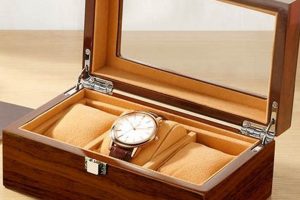
These cherished items represent a confluence of artistry, mechanics, and nostalgia. They are defined as antique or older-model musical mechanisms encased within decorative boxes, often featuring intricate designs and playing recognizable melodies. An example would be a Swiss cylinder music box from the late 19th century, meticulously inlaid with mother-of-pearl and playing excerpts from popular operas.
The significance of these items lies in their preservation of musical heritage and craftsmanship. They offer a tangible connection to the past, showcasing the ingenuity of earlier eras and providing insights into the social and cultural context of their creation. Furthermore, these objects can appreciate in value, presenting potential investment opportunities for discerning individuals. Their historical relevance is evident in their evolution from simple, manually-operated devices to more complex, automated contraptions.
The subsequent sections will delve into the various types of these sought-after artifacts, exploring factors that influence their value, providing guidance on their proper preservation, and offering resources for those interested in acquiring or learning more about these fascinating mechanical treasures.
Tips for Acquiring and Maintaining These Sought-After Mechanical Treasures
The following suggestions offer guidance for individuals interested in acquiring and preserving antique musical mechanisms housed within decorative boxes. Careful consideration of these points can enhance the enjoyment and longevity of these delicate artifacts.
Tip 1: Research Authenticity and Provenance: Prior to acquisition, meticulously examine the piece for hallmarks, manufacturer’s stamps, or documented history. Confirm its authenticity through reputable sources and scrutinize any available documentation pertaining to its origin and previous ownership.
Tip 2: Evaluate Mechanical Condition: Assess the functionality of the musical mechanism. Ensure the cylinder or disc rotates smoothly, and all teeth on the comb play clearly and without distortion. Damaged or missing components significantly diminish value.
Tip 3: Inspect the Case for Damage: Thoroughly examine the box for signs of wear, damage, or repairs. Cracks, warping, or missing veneer can negatively impact both aesthetic appeal and structural integrity. Look for evidence of prior restoration attempts.
Tip 4: Consider Rarity and Desirability: Certain manufacturers, musical arrangements, or decorative styles are inherently more valuable. Research the scarcity of the specific model and its appeal to collectors. A limited production run, coupled with high collector demand, can increase value substantially.
Tip 5: Implement Proper Storage and Handling: Store the item in a stable environment with controlled temperature and humidity. Avoid direct sunlight and excessive handling. Use appropriate padding during transportation to prevent damage to delicate components.
Tip 6: Seek Professional Servicing: When necessary, engage a qualified horologist or musical box restorer to perform repairs or maintenance. Avoid attempting repairs without specialized knowledge, as improper handling can cause irreparable damage.
Tip 7: Document Your Collection: Maintain a detailed record of each item, including photographs, purchase details, and any relevant historical information. This documentation is essential for insurance purposes and can aid in future valuation.
Adhering to these guidelines promotes informed acquisition decisions and contributes to the long-term preservation of these significant cultural artifacts.
The subsequent sections will delve into resources for further learning and exploration of the world of antique musical mechanisms, as well as providing insights into market trends and collector communities.
1. Mechanical Condition
The mechanical condition of antique musical mechanisms fundamentally dictates their value and desirability within the realm of sought-after relics. As intricate automatons, their ability to produce the intended musical output is paramount. A fully functional mechanism, capable of playing its melodies with clarity and precision, distinguishes a valuable artifact from a mere decorative object. Conversely, any degree of mechanical impairment, ranging from sluggish movement to missing or damaged components, invariably diminishes the artifact’s worth and collectibility.
The interrelation between mechanical health and value can be illustrated through specific examples. Consider two seemingly identical cylinder music boxes. One, meticulously maintained and playing its full repertoire of tunes without fault, would command a significantly higher price than the other, burdened by a broken spring or corroded comb. The former exemplifies the preservation of the object’s intended purpose, while the latter represents a diminished state, requiring costly restoration to regain its functional integrity. The presence of rust, broken teeth on the comb, or damage to the governor can cause improper timing, affecting the speed and pitch. These problems prevent correct music from playing.
In summary, the state of the mechanism serves as a critical determinant for assessment. Preserving the operational integrity of these artifacts is vital for maintaining their value and ensuring the continuation of their cultural and artistic significance. A deep understanding of the mechanisms involved is paramount when considering repair and restoration, and the effect of poor mechanical operation on collectability is important to consider during repair or restoration.
2. Case Ornamentation
Case ornamentation within vintage musical mechanisms housed in decorative boxes represents a significant determinant of value and aesthetic appeal. The exterior embellishments provide a visual complement to the internal musical mechanism, collectively contributing to the artifact’s overall desirability. The artistry employed in the case’s design, the materials utilized, and the condition of the ornamentation directly impact the collectibility and market value. Intricate marquetry, hand-painted scenes, or inlays of precious materials such as mother-of-pearl transform a functional object into a work of art.
Consider, for example, two antique cylinder music boxes of comparable mechanical condition. One features a plain, unadorned wooden case, while the other boasts a meticulously crafted case adorned with intricate floral inlays and gilded accents. The latter, showcasing superior case ornamentation, would command a significantly higher price due to its enhanced visual appeal and perceived artistic merit. Damage to the case, such as cracks, missing veneer, or faded paint, negatively affects value. The preservation of original ornamentation, or sympathetic restoration that maintains the integrity of the original design, is crucial for preserving the artifact’s historical and aesthetic significance.
In summary, the case ornamentation serves as a vital component in the overall assessment of antique musical mechanisms. Its aesthetic quality, condition, and historical accuracy directly influence its desirability and market value. Collectors and enthusiasts must meticulously evaluate the case ornamentation to make informed acquisition decisions and ensure the long-term preservation of these culturally significant objects. The case not only protects the delicate mechanism but also gives a visible representation of the time it came from, as well as providing an insight into the culture and craftsmanship of that era.
3. Rarity and Provenance
The scarcity of a particular antique musical mechanism housed within a decorative box, coupled with its documented history of ownership and origin, significantly elevates its value and desirability among collectors. Understanding these factors is paramount for discerning enthusiasts seeking to acquire exceptional pieces.
- Limited Production Runs
Music boxes manufactured in limited quantities due to specialized craftsmanship, experimental designs, or short-lived production periods inherently possess greater rarity. Examples include music boxes commissioned for specific events or those produced by manufacturers who ceased operations prematurely. The fewer examples extant, the greater the premium demanded by collectors.
- Distinguished Ownership
Provenance tracing a musical box to a notable historical figure, royal family, or prominent collector enhances its historical significance and market value. Documented ownership, verifiable through bills of sale, letters, or estate inventories, provides a tangible connection to the past and adds to the object’s narrative appeal.
- Unique Design Elements
Variations from standard production models, such as custom-ordered cases, unusual musical arrangements, or experimental mechanical features, contribute to rarity. These deviations often reflect the preferences of the original owner or the manufacturer’s innovative spirit, making them highly sought after by collectors seeking one-of-a-kind pieces.
- Geographical Origin
Music boxes originating from regions with a limited history of musical box production or those reflecting distinct regional stylistic characteristics can be considered rare. These examples often showcase unique craftsmanship techniques and musical arrangements not found in more common production centers, adding to their collectibility.
The interplay between limited availability and verified historical background provides a compelling narrative that resonates with collectors, thereby increasing the perceived value. Scarcity, when combined with a well-documented and compelling history, transforms a mere object into a tangible link to the past, justifying premium valuations within the market.
4. Musical Arrangement

The musical arrangement inherent within antique musical mechanisms housed in decorative boxes constitutes a primary factor influencing their desirability and value. The selection of melodies, the complexity of their arrangement, and the fidelity of their reproduction contribute significantly to the object’s collectibility.
- Tune Selection
The repertoire contained within a music box profoundly affects its appeal. Pieces featuring popular operatic excerpts, folk tunes, or compositions by renowned composers often command higher prices than those with obscure or less desirable musical selections. The presence of well-known melodies increases the object’s cultural relevance and broadens its appeal to collectors.
- Arrangement Complexity
The intricacy of the musical arrangement, encompassing the number of notes, the presence of harmonic embellishments, and the overall sophistication of the musical presentation, enhances its desirability. Arrangements that replicate complex orchestral scores or feature elaborate counterpoint demonstrate the manufacturer’s technical prowess and artistic ambition.
- Mechanical Fidelity
The accuracy with which the mechanism reproduces the intended musical arrangement is crucial. Factors such as the precision of the comb teeth, the smoothness of the cylinder or disc rotation, and the overall mechanical integrity contribute to the fidelity of the musical output. A clear, undistorted sound, closely resembling the original composition, is highly valued.
- Rarity of Arrangement
Music boxes featuring unique or rarely encountered musical arrangements possess increased collectibility. This includes examples with custom-ordered melodies, experimental arrangements, or tunes specifically composed for a particular manufacturer. Scarcity in musical arrangement elevates the object’s desirability and distinguishes it from more commonplace examples.
The interplay between these elements determines the overall musical quality and appeal of antique musical mechanisms. Collectors meticulously evaluate the tune selection, arrangement complexity, mechanical fidelity, and arrangement rarity to assess an artifact’s overall value and cultural significance. Musical arrangement, therefore, remains a core component in the assessment of vintage music boxes. Its presence can greatly increase, or indeed decrease the value and appeal of the item.
5. Manufacturer's Mark

The manufacturer’s mark on antique musical mechanisms housed in decorative boxes provides critical information concerning origin, authenticity, and historical context. These marks, often subtle or concealed, serve as invaluable tools for collectors and researchers in the assessment and valuation process.
- Identification and Attribution
Manufacturer’s marks allow for the definitive identification of the maker, enabling accurate attribution and historical context. These marks, often comprising names, initials, or logos, link the artifact to a specific company and production period. For example, a “Reuge” stamp on a Swiss music box confirms its origin and provides a starting point for further research into the company’s history and product lines.
- Authentication and Fraud Prevention
The presence of a legitimate manufacturer’s mark acts as a primary indicator of authenticity, helping to distinguish original pieces from reproductions or forgeries. Close examination of the mark’s style, font, and placement can reveal inconsistencies indicative of fraudulent activity. The absence of a known mark, or the presence of a suspicious one, warrants careful scrutiny.
- Dating and Production Period
Variations in manufacturer’s marks over time can assist in approximating the date of production. Companies often updated their logos or added specific date codes to their products. Analyzing these variations, cross-referenced with historical records, allows collectors to narrow down the production period of a music box. For example, changes in the Paillard mark can indicate whether a piece was manufactured in the 19th or early 20th century.
- Valuation and Market Impact
The presence of a well-known or highly regarded manufacturer’s mark typically increases the market value of a vintage music box. Certain manufacturers, such as Nicole Frres or Mermod Frres, are renowned for their quality and innovation, resulting in higher demand and premium prices for their products. The perceived prestige associated with a particular manufacturer significantly influences collector interest and valuation.
In conclusion, the manufacturer’s mark serves as a crucial identifier, authenticator, and historical indicator for vintage musical mechanisms. Its presence, style, and historical context are essential considerations for collectors seeking to acquire and appreciate these historically significant artifacts. Its information can give valuable insight to collectors and give more value to an item.
6. Restoration Quality

The quality of restoration performed on antique musical mechanisms housed in decorative boxes directly impacts their value and desirability within the collectors’ market. A well-executed restoration can preserve the historical integrity of the object, returning it to a functional and aesthetically pleasing state. Conversely, a poorly executed restoration can diminish its value, irrevocably altering its original character. The ramifications of restoration quality are far-reaching, affecting not only the object’s monetary worth but also its historical significance.
The interplay between meticulous restoration and preservation is evident in numerous examples. Consider two identical cylinder music boxes, one unrestored and the other subjected to differing levels of restoration. The unrestored example, though perhaps showing signs of age and wear, retains its original components and patina, offering valuable insights into its manufacturing process and usage history. A skillfully restored example, where damaged components are carefully repaired or replaced with historically accurate materials, can enhance its aesthetic appeal and mechanical functionality without compromising its authenticity. However, an amateurish restoration, involving the use of inappropriate materials, irreversible alterations, or over-polishing, can detract from its historical accuracy and diminish its value. For instance, replacing original comb teeth with modern substitutes, or refinishing a case with anachronistic varnish, compromises the object’s integrity.
In summary, restoration quality is a critical factor in the assessment of vintage musical mechanisms. A judicious and historically informed approach to restoration can preserve the object’s cultural significance and enhance its value, while a careless or uninformed restoration can have detrimental effects. Collectors must carefully evaluate the quality of any restoration performed on these artifacts, seeking evidence of skilled craftsmanship and a commitment to preserving historical accuracy. Ultimately, the goal of restoration should be to stabilize and preserve the object for future generations, rather than to erase its history through insensitive alterations.
Frequently Asked Questions About Vintage Music Box Collectables
The following addresses common inquiries and clarifies misconceptions surrounding the acquisition, valuation, and preservation of vintage musical mechanisms housed within decorative boxes. These answers aim to provide clear and concise guidance for both novice enthusiasts and seasoned collectors.
Question 1: What factors primarily determine the value of a vintage music box?
Several factors influence valuation, including mechanical condition, case ornamentation, rarity, provenance, musical arrangement, and manufacturer. Superior examples in excellent working order, featuring elaborate decoration and traceable history, command higher prices.
Question 2: How can one authenticate a vintage music box and avoid reproductions?
Authentication requires careful examination of manufacturer’s marks, construction techniques, and materials used. Comparison with known authentic examples and consultation with experts are advisable. Red flags include inconsistencies in design, poor craftsmanship, and the absence of identifiable markings.
Question 3: What are the optimal storage conditions for preserving these delicate artifacts?
Optimal storage involves maintaining stable temperature and humidity levels, avoiding direct sunlight, and protecting against dust and physical damage. Proper storage minimizes deterioration and preserves the artifact’s mechanical and aesthetic integrity.
Question 4: Should one attempt to repair a malfunctioning music box independently, or is professional assistance required?
Professional servicing by a qualified horologist or music box restorer is strongly recommended. Attempting repairs without specialized knowledge can cause irreversible damage to delicate components.
Question 5: How does the musical arrangement impact the collectibility of a music box?
The selection of melodies, the complexity of their arrangement, and the fidelity of their reproduction significantly affect its value. Pieces featuring popular or historically significant tunes, arranged with complexity and reproduced accurately, are more desirable.
Question 6: What documentation should accompany a vintage music box to enhance its provenance?
Supporting documentation includes original bills of sale, historical records, letters of provenance, and expert appraisals. These documents establish the artifact’s history, authenticity, and value, enhancing its collectibility and market appeal.
In summary, approaching the world of antique musical mechanisms housed in decorative boxes with diligence, informed research, and a commitment to preservation ensures long-term enjoyment and value appreciation.
The subsequent section will offer a curated list of resources for those seeking further knowledge and engagement with these fascinating historical objects.
Vintage Music Box Collectables
This examination has traversed the multi-faceted landscape of vintage music box collectables, elucidating the crucial elements that govern their value, authentication, and preservation. Factors ranging from mechanical condition and aesthetic ornamentation to rarity, provenance, and the subtleties of musical arrangement profoundly influence an artifacts market worth and historical significance. Meticulous evaluation, coupled with informed acquisition strategies, ensures the safeguarding of these delicate relics.
The preservation of vintage music box collectables transcends mere financial investment; it constitutes a tangible connection to the past, allowing future generations to appreciate the craftsmanship and musical ingenuity of bygone eras. Continued research, responsible restoration practices, and dedicated collector communities are vital to maintaining the cultural legacy embodied within these treasured objects, ensuring their appreciation for years to come.