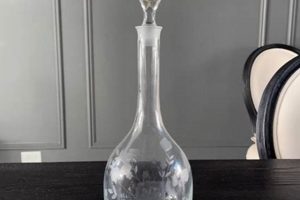
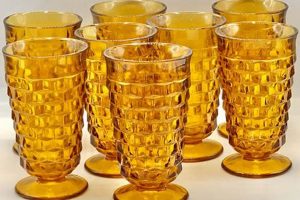
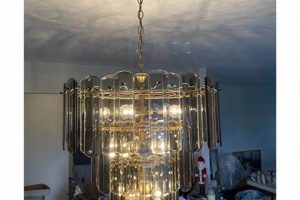
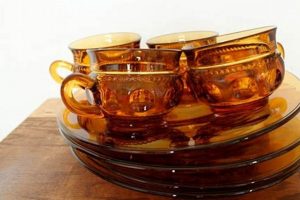
A specific category of glassware, prized for its rich, deep color resulting from the addition of cobalt salts during its production, offers visual appeal and collectibility. Examples include decorative vases, tableware, and lighting fixtures crafted decades ago, frequently exhibiting unique design elements reflective of their era.
The inherent beauty and historical significance of these objects contribute to their desirability among collectors and designers. Their use can enhance the aesthetic of interior spaces, serving as focal points or complementary elements. Furthermore, their survival and preservation contribute to an understanding of past manufacturing techniques and artistic trends.
The following sections will delve into specific aspects of identifying genuine pieces, assessing their value, and exploring the diverse range of available forms within this captivating area of historical glassware.
Identifying Authentic Cobalt Blue Vintage Glass
Acquiring authentic pieces requires careful observation and knowledge. The following tips offer guidance in differentiating genuine articles from reproductions.
Tip 1: Examine the Color. True coloration in historical examples is typically consistent throughout the glass, though subtle variations may exist due to manufacturing processes. Modern imitations may exhibit an uneven or surface-applied color.
Tip 2: Assess for Imperfections. Evidence of handcrafting, such as slight bubbles or tool marks, is common in older pieces. While not a guarantee of authenticity, their absence should warrant further scrutiny.
Tip 3: Check for a Pontil Mark. On items where the blowpipe was attached, a rough or ground pontil mark may be present on the base. This indicates that the piece was hand-blown, a characteristic of older production methods.
Tip 4: Inspect the Seams. If seams are present, their sharpness or smoothness can offer clues. Older mold-blown glass often has less defined seams than modern machine-made items.
Tip 5: Consider the Weight and Clarity. Generally, vintage examples possess a certain weight and clarity consistent with the materials and techniques used at the time of their creation. Unusually lightweight or cloudy glass may be a sign of reproduction.
Tip 6: Research the Manufacturer’s Mark. Identifying the manufacturer’s mark, if present, can provide valuable information about the origin and age of the piece. Reference guides and online databases can assist in deciphering these marks.
Tip 7: Be wary of pieces that are too perfect. Mass-produced glass of today can achieve a level of exactness that was not possible in the early eras of production.
Applying these identification techniques can significantly reduce the risk of acquiring misrepresented items, ensuring the value and authenticity of any collection.
The next section explores the preservation and care of these delicate historical artifacts.
1. Color Saturation

Color saturation represents a critical attribute in assessing the quality and value of the historical glassware. It directly impacts the visual appeal and, consequently, the collectibility of pieces.
- Influence of Cobalt Concentration
The intensity of the color originates from the quantity of cobalt oxide incorporated during the glassmaking process. Higher concentrations typically yield more vibrant shades, while lower concentrations produce paler tones. The specific chemical composition and the smelting process also affect the final color.
- Impact of Manufacturing Era
Glass produced during specific eras exhibits distinctive color characteristics due to variations in raw materials and manufacturing techniques. For example, early 20th-century pieces may demonstrate a richer saturation compared to later, mass-produced examples using different formulations.
- Role in Authentication
Careful examination of saturation levels aids in authenticating. Modern reproductions often struggle to replicate the precise hue of older glass, sometimes appearing too uniform or artificial. Subtle variations and depth of color are often indicative of original vintage production.
- Effect on Value
In the collector’s market, items with exceptionally rich and even saturation often command higher prices. The depth and purity of the coloration significantly contribute to a piece’s aesthetic desirability and perceived rarity.
The interplay of cobalt concentration, manufacturing era, authentication, and value underscores the paramount significance of color saturation. Appreciating these nuances equips collectors and enthusiasts with essential tools for evaluating and appreciating the craftsmanship of bygone eras.
2. Manufacturer Marks and Vintage Glass

Manufacturer marks serve as critical identifiers for determining the origin and authenticity of examples. These marks, typically located on the base or body of the piece, provide direct attribution to the glassworks responsible for its production. The presence of a recognized mark significantly enhances a piece’s value, as it establishes verifiable provenance and allows for historical context to be established. For example, pieces marked with the “Steuben” fleur-de-lis or the “Lalique” signature often command higher prices due to the reputation for quality and artistry associated with those firms. The absence of a mark does not automatically negate authenticity, but it necessitates a more rigorous examination of other factors such as color consistency, manufacturing techniques, and stylistic characteristics.
The process of researching manufacturer marks involves consulting historical databases, reference guides, and expert opinions. Many glassworks employed distinct marks that evolved over time, reflecting changes in ownership, production methods, or design trends. Understanding these variations allows for a more precise dating of a piece and helps to differentiate between genuine articles and later reproductions. For instance, early Fenton glass often featured a different mark than later pieces, enabling collectors to discern production periods. Moreover, recognizing regional variations in marking practices is essential, as European glassmakers often used different symbols or numbering systems than their American counterparts.
In conclusion, the presence and accurate identification of manufacturer marks represent a cornerstone in the appraisal and appreciation of vintage glassware. While not the sole determinant of authenticity or value, these marks provide indispensable evidence of origin and craftsmanship. Successfully deciphering these identifiers unlocks a deeper understanding of the historical context and artistic merit inherent within each piece, allowing collectors and enthusiasts to engage with these artifacts on a more informed and meaningful level.
3. Form and Function

The interplay between form and function is central to understanding and appreciating the artistic and practical merit of vintage glassware. The shape and design of these pieces were often dictated by their intended use, reflecting the aesthetic sensibilities and technological capabilities of the period in which they were created.
- Drinking Vessels
Goblets, tumblers, and decanters exemplify the fusion of form and function. The shape of a goblet, for example, was designed to enhance the aroma and presentation of wine, while a decanter’s form facilitated aeration. The addition of handles to mugs and pitchers improved their practicality for everyday use. These design choices reflect a clear understanding of how form can enhance the user’s experience.
- Decorative Objects
Vases, bowls, and figurines represent instances where form prioritized aesthetic appeal. While capable of holding flowers or other items, their primary purpose was to serve as decorative elements. The intricate shapes, delicate curves, and detailed embellishments were intended to captivate the eye and elevate the visual ambiance of a space. These pieces demonstrate the role of form in expressing artistic creativity and cultural values.
- Lighting Fixtures
Lamp shades and chandeliers illustrate how form and function collaborated to create both illumination and visual interest. The shape of a lampshade influenced the direction and diffusion of light, while the overall design contributed to the stylistic character of a room. Clear glass allowed for maximum light transmission, whereas frosted or colored glass created a softer, more diffused glow. These examples highlight the integration of form and function in creating functional and aesthetically pleasing lighting solutions.
- Pharmaceutical and Scientific Glassware
Apothecary bottles and laboratory beakers demonstrate how functional requirements dictated form in specialized contexts. Apothecary bottles were designed for secure storage and dispensing of medicinal substances, often featuring tight-fitting stoppers and labeled exteriors. Laboratory beakers were crafted from heat-resistant glass, with graduated markings for precise measurements. These pieces exemplify how form followed function in demanding applications where accuracy and safety were paramount.
These instances illustrate the diverse ways in which form and function were integrated in various types of glassware. Whether prioritizing practical utility, aesthetic expression, or specialized application, the shape and design of each piece reflect a conscious consideration of its intended purpose. Studying the relationship between form and function provides a deeper appreciation for the artistry and craftsmanship.
4. Era characteristics

The properties of the antique glassware are significantly determined by the era in which it was created. Manufacturing techniques, prevalent design aesthetics, and the availability of resources all contributed to the unique characteristics of pieces produced during different periods. For example, glassware from the Victorian era often exhibits ornate detailing and intricate patterns, reflecting the opulence and extravagance that defined the period. This contrasts sharply with the streamlined, geometric designs that characterized the Art Deco era, where a focus on industrial materials and modern aesthetics prevailed. Specific glassmaking techniques, such as the development of specific mold-blowing methods or the introduction of new coloring agents, also correlate to specific historical periods, resulting in identifiable features within glassware from those eras.
The chemical composition can also act as a signature of a time. The raw materials used in manufacturing will depend on location and the time period. Impurities in the raw materials also influenced the color and clarity. Therefore, the examination of elements can assist in dating a glass piece. This can be achieved through several methods like X-ray fluorescence or ICP-MS. These analysis method is widely used in Archeology.
Understanding the relationship between era characteristics and glassware production is vital for accurate identification, authentication, and appreciation. Collectors and enthusiasts can learn to differentiate between pieces from different periods, assess their historical significance, and evaluate their market value. Ignoring era characteristics can lead to misidentification and potential misrepresentation, highlighting the critical importance of this knowledge in the field of antique glassware collecting.
5. Glass condition

The physical condition of antique pieces directly impacts their value, collectibility, and historical significance. Scrutinizing a piece for imperfections reveals critical information about its past and potential future.
- Cracks and Fractures
Cracks represent structural weaknesses that significantly diminish a piece’s value. Fine hairline fractures might be overlooked but can worsen over time. Extensive or repaired cracks often render a piece undesirable to serious collectors. For example, a vase with a significant crack running down its side may only be suitable for decorative display, not as a valuable collectible. Cracks also pose a potential safety hazard.
- Chips and Nicks
Chips and nicks along the edges or surface of a piece are common signs of wear and tear. While small chips may be considered acceptable in very old or rare pieces, larger or numerous chips detract from its aesthetic appeal and monetary worth. For instance, a glass with a chipped rim is less valuable than one with an intact rim. The size and location of the damage are critical factors in valuation.
- Cloudiness and Staining
Over time, may develop cloudiness or staining due to mineral deposits from water or chemical reactions with the glass itself. This cloudiness can obscure the brilliance and color, reducing its visual appeal. Staining, especially from hard water, is often difficult to remove and can permanently damage the surface. Severely clouded glassware may have limited collector appeal.
- Repairs and Restorations
Evidence of repairs or restorations must be carefully examined. While professional repairs can improve the appearance, they generally decrease the value compared to an undamaged example. Unprofessional or poorly executed repairs can further detract from the overall aesthetic and structural integrity. Collectors should always seek full disclosure of any repairs before acquiring a piece.
Assessing these factors, from cracks and chips to cloudiness and repairs, is crucial in determining the true value and historical significance. Pristine examples remain highly sought after, while pieces exhibiting significant damage may still hold decorative appeal, albeit at a reduced value.
Frequently Asked Questions Regarding Cobalt Blue Vintage Glass
This section addresses common inquiries and misconceptions surrounding antique and collectible glassware of the cobalt variety, offering clarifications based on expertise and historical context.
Question 1: How can genuine pieces be distinguished from modern reproductions?
Authenticity is often determined by a combination of factors including color saturation, presence of a pontil mark, subtle imperfections indicative of handcrafting, and stylistic consistency with known historical examples. Modern reproductions often exhibit overly uniform color and lack the nuanced details found in vintage pieces.
Question 2: Does the presence of bubbles within the glass indicate a defect?
Not necessarily. Small bubbles, often referred to as “seeds,” are common in older hand-blown pieces due to the manufacturing processes used at the time. While excessive bubbling may detract from value, the presence of a few small bubbles is generally considered a characteristic of vintage glass and not a defect.
Question 3: How should examples of cobalt glassware be properly cleaned and maintained?
Gentle handwashing with mild soap and lukewarm water is recommended. Abrasive cleaners or harsh chemicals should be avoided as they can scratch or damage the surface. Pieces should be dried thoroughly with a soft cloth to prevent water spots or staining. Avoid placing in the dishwasher.
Question 4: What impact do repairs or restorations have on the value?
Repairs or restorations generally diminish the value, particularly if they are not professionally executed. While a well-executed repair may improve the aesthetic appearance, collectors typically prefer original, undamaged pieces. The extent to which a repair affects value depends on the quality of the repair and the rarity of the piece.
Question 5: Are specific manufacturers more highly valued than others?
Yes, certain manufacturers with a reputation for quality craftsmanship, innovative designs, or historical significance command higher prices in the market. Well-known examples include Steuben, Lalique, and Fenton, whose marked pieces are often highly sought after.
Question 6: Is there a correlation between size and value?
Size can influence value, but it is not the sole determining factor. Larger, more impressive pieces may command higher prices, but rarity, design complexity, and overall condition also play significant roles. A smaller piece with exceptional craftsmanship or historical provenance may be more valuable than a larger, more common example.
In summary, acquiring a comprehensive understanding of factors such as manufacturing techniques, manufacturer marks, condition, and historical context is crucial for informed acquisition and appreciation.
The concluding section summarizes best practices for responsible collecting and long-term preservation.
Conclusion
The preceding analysis has explored various facets of “cobalt blue vintage glass,” encompassing identification techniques, market valuation factors, historical context, and preservation strategies. Key considerations include verifying authenticity through examination of color saturation, scrutinizing manufacturer marks, assessing physical condition, and understanding the influence of era characteristics on design and production methods. Emphasis has been placed on the nuanced interplay between these elements in determining both the aesthetic and monetary worth of individual pieces.
As a tangible link to past artistry and craftsmanship, “cobalt blue vintage glass” warrants careful consideration and responsible stewardship. Continued research and diligent application of the outlined principles will ensure its enduring appreciation and preservation for future generations. The pursuit of knowledge and ethical collecting practices remains paramount in safeguarding the historical and cultural value inherent within these artifacts.