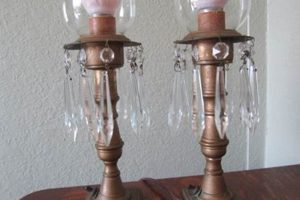
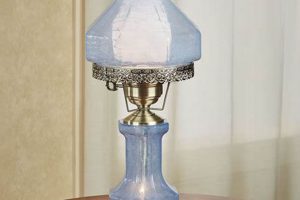
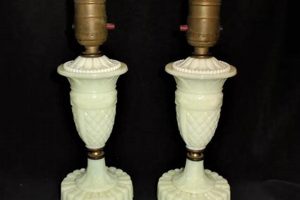
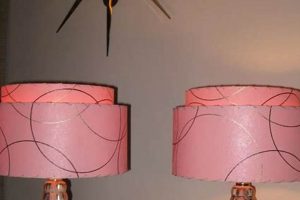
An antique lighting fixture adorned with strings or clusters of decorative glass or crystal elements represents a specific design aesthetic from a bygone era. These artifacts often feature intricate patterns and offer a distinctive ambient glow, reflecting light through the faceted surfaces of the individual components. A prime example would be a 1920s boudoir light featuring delicate floral motifs rendered in iridescent glass beads.
These decorative objects possess significant value for collectors and enthusiasts due to their aesthetic appeal and historical context. They provide a tangible connection to past design trends and craftsmanship, adding character and elegance to interior spaces. Their popularity stems from their ability to serve as both functional light sources and decorative art pieces, enhancing the ambiance of a room while simultaneously acting as a conversation starter and focal point.
The subsequent discussion will delve into the various styles, materials, and care considerations associated with these unique lighting fixtures, providing a comprehensive overview for those interested in acquiring, preserving, or understanding them further. We will explore the defining characteristics that distinguish different periods and regions, as well as offering guidance on proper maintenance to ensure longevity.
Tips for Identifying and Caring for a Vintage Beaded Lamp
Proper identification and maintenance are crucial for preserving the value and aesthetic appeal of these artifacts. The following guidelines offer valuable insights into discerning authentic pieces and ensuring their longevity.
Tip 1: Examine the Beads Closely: Authentic examples typically exhibit variations in bead size, shape, and color due to the manufacturing processes of the time. Mass-produced modern replicas often display uniformity. Look for subtle imperfections that indicate handcrafting.
Tip 2: Assess the Wiring and Hardware: Original wiring may be brittle or frayed and should be replaced by a qualified professional for safety. However, note any original hardware, such as sockets or switches, as these can contribute to the item’s value and should be preserved if possible.
Tip 3: Research the Lamp’s Origin: Identifying the manufacturer or region of origin can provide valuable information about the lamp’s age and style. Consult reference books and online resources to compare the lamp’s design and features to known examples.
Tip 4: Clean with Care: Use a soft, dry cloth to gently dust the beads regularly. Avoid harsh chemicals or abrasive cleaners, as these can damage the delicate surface. For stubborn dirt, a slightly damp cloth may be used, followed by immediate drying.
Tip 5: Protect from Direct Sunlight: Prolonged exposure to direct sunlight can fade the colors of the beads and weaken the supporting structure. Position the fixture in a location that minimizes direct sunlight exposure.
Tip 6: Store Properly When Not in Use: If the item is not being displayed, wrap it carefully in acid-free tissue paper and store it in a cool, dry place. Avoid storing it in damp or humid environments, as this can lead to deterioration.
The application of these tips will aid in the responsible stewardship of such pieces, enabling enthusiasts to appreciate their beauty and historical significance for years to come.
The subsequent section will provide a deeper understanding of the stylistic variations and material compositions encountered in various examples, enhancing your ability to discern quality and value.
1. Era
The era in which a lighting fixture adorned with decorative glass or crystal elements was produced significantly influences its design, materials, and overall value. Different periods are characterized by distinct aesthetic trends and technological advancements, shaping the characteristics of these artifacts.
- Art Deco (1920s-1930s)
This period favored geometric patterns, streamlined shapes, and luxurious materials like crystal and chrome. Fixtures from this era often feature stepped designs and bold color combinations, reflecting the era’s embrace of modernity and opulence. An example is a pendant lamp featuring cascading strands of crystal beads arranged in a stylized waterfall motif.
- Victorian (1837-1901)
The Victorian era was characterized by ornate details, elaborate embellishments, and a romantic aesthetic. Lighting fixtures from this period often incorporate floral motifs, intricate metalwork, and richly colored glass beads. A typical example is a table lamp featuring a domed shade adorned with intricate beadwork depicting flowers and foliage.
- Mid-Century Modern (1945-1960s)
This era embraced simplicity, functionality, and organic forms. While fixtures from this period are less common, some examples feature streamlined designs with minimalist bead accents, reflecting the era’s emphasis on clean lines and natural materials. A possible example includes a pendant lamp with a simple, spherical glass shade accented by a few strategically placed beads.
- Art Nouveau (1890-1910)
Art Nouveau is characterized by flowing lines, organic forms, and inspiration from nature. Lighting fixtures from this era often feature delicate beadwork depicting flowers, insects, and other natural elements, emphasizing the era’s celebration of natural beauty. An example would be a wall sconce shaped like a flower, with beaded stamens and petals.
Understanding the stylistic characteristics associated with each era enables collectors and enthusiasts to accurately identify and appreciate these artifacts. The specific period of origin dictates the design principles, material choices, and construction techniques employed, all contributing to the overall historical and aesthetic value of the decorative object.
2. Bead Material
The material composition of the decorative elements significantly influences the aesthetic character, durability, and perceived value of these lighting fixtures. The beads, serving as the primary decorative component, contribute substantially to the overall visual appeal and historical context of the artifact. Understanding the types of materials used is crucial for proper identification, conservation, and valuation.
- Glass Beads
Glass beads, prevalent across various eras, exhibit diverse characteristics depending on their origin and manufacturing process. Venetian glass beads, renowned for their intricate designs and vibrant colors, often appear in higher-end examples. Czech glass beads, mass-produced but still possessing considerable aesthetic appeal, are common in more affordable fixtures. The presence of lead crystal beads indicates higher quality due to their superior light refraction properties. Examples include opaline glass beads, iridescent beads, and hand-painted glass beads.
- Crystal Beads
Crystal beads, typically composed of leaded glass, offer exceptional brilliance and light dispersion. The addition of lead enhances the refractive index, resulting in a captivating sparkle. Vintage examples may feature cut crystal beads, faceted for maximum light reflection, or molded crystal beads with intricate patterns. The presence of high-quality crystal beads elevates the perceived value and aesthetic appeal of the piece. These beads are often found in chandeliers and more elaborate lighting fixtures.
- Plastic Beads
While less desirable than glass or crystal, plastic beads were sometimes used in more economical versions, particularly in later periods. These beads lack the brilliance and durability of their glass and crystal counterparts. Identifying plastic beads is crucial in determining the authenticity and potential value. Characteristics include a duller appearance, lighter weight, and a tendency to exhibit wear or discoloration over time. Examples might include celluloid or early forms of acrylic beads.
- Other Materials
In some instances, unconventional materials were incorporated into the beadwork, adding to the fixture’s unique character. Examples include wooden beads, metal beads, or even beads made from natural materials such as shells or seeds. These variations are more commonly found in folk art or handcrafted examples, reflecting the individual artisan’s creativity and resourcefulness. Their presence can contribute to the rarity and distinctiveness of a particular lamp.
The specific material composition of the beads, therefore, serves as a crucial indicator of the lamp’s age, origin, quality, and overall value. Examining the beads provides valuable insights into the historical context and craftsmanship associated with the piece, aiding in its proper identification and appreciation.
3. Lamp Style

The “Lamp Style” in the context of a vintage beaded lighting fixture dictates its form, function, and aesthetic appeal. This aspect encompasses the lamp’s overall design, including its silhouette, base, shade (if present), and any additional decorative elements beyond the beads themselves. Recognizing the specific style is crucial for accurate identification and valuation.
- Table Lamps
Table lamps, designed for placement on desks, side tables, or nightstands, are a prevalent form factor for beaded fixtures. The style can range from Victorian-era lamps with ornate metal bases and beaded shades to Art Deco lamps with streamlined designs and geometric bead patterns. An example is a boudoir lamp from the 1920s featuring a silk shade adorned with delicate glass beads, providing a soft, diffused light ideal for personal spaces. Their portability and versatility have made them popular throughout various design movements.
- Floor Lamps
Floor lamps, characterized by their height and floor-standing design, offer ambient or task lighting. Within the realm of vintage beaded fixtures, floor lamps may feature beaded shades, beaded accents on the stand, or entire columns of beads. A notable example is a torchiere-style lamp from the Art Deco period, where the upward-facing shade is embellished with cascading crystal beads, reflecting light towards the ceiling and creating a dramatic effect. Their commanding presence makes them focal points in larger rooms.
- Chandeliers
Chandeliers, suspended from the ceiling, represent the most elaborate and opulent expression of vintage beaded lighting. These fixtures often incorporate hundreds or even thousands of beads, arranged in intricate patterns and cascading strands. A grand example is a Victorian-era chandelier featuring multiple tiers of crystal beads, reflecting light throughout the room and creating a dazzling display. These fixtures are primarily suited for formal living spaces or dining rooms.
- Wall Sconces
Wall sconces, mounted on walls, provide accent or ambient lighting. Vintage beaded wall sconces can range from simple designs with a few strategically placed beads to more elaborate creations with cascading bead strands. An example is an Art Nouveau wall sconce shaped like a flower, with beaded accents representing the petals and stamens, adding a touch of elegance to hallways or bedrooms. Their space-saving design and decorative flair make them versatile additions to various interior spaces.
In summary, “Lamp Style” is a defining characteristic that distinguishes various types of decorative lighting fixtures, reflecting their intended function and aesthetic appeal. From the portability of table lamps to the grandeur of chandeliers, each style offers a unique interpretation of beaded ornamentation, contributing to the overall value and historical context of the piece.
4. Construction

The construction methods employed in creating a lighting fixture adorned with decorative glass or crystal elements are integral to its structural integrity, aesthetic character, and historical value. The techniques used, the materials selected for the frame and stringing, and the overall craftsmanship directly impact the longevity and presentation of the artifact. Faulty or substandard construction can lead to bead displacement, structural instability, and a diminished aesthetic appeal, ultimately affecting the item’s worth. For example, a beaded chandelier featuring a poorly welded frame is susceptible to breakage, while one constructed with low-quality stringing material may experience bead detachment over time, compromising its original design.
Understanding the construction techniques provides valuable insights into the lamp’s origin, age, and quality. Hand-strung beads, characteristic of earlier periods, often exhibit slight irregularities that attest to their artisanal creation. Conversely, mass-produced examples may reveal machine-stringing techniques with uniform bead placement. The type of wire or thread used for stringing the beads also offers clues: linen thread was common in earlier periods, while synthetic materials appeared later. Furthermore, the method of attaching the beads to the frame whether through wiring, glue, or other fastening mechanisms influences the lamp’s durability and ease of repair. Consider a table lamp where the beaded shade is meticulously hand-sewn onto a metal frame, demonstrating a high level of craftsmanship compared to one where the beads are simply glued onto a plastic substrate. Such distinctions significantly impact the perceived value and desirability.
In summary, the construction of a lighting fixture adorned with decorative glass or crystal elements is not merely a technical aspect but a defining feature that informs its historical context, aesthetic quality, and structural integrity. Recognizing the nuances of construction techniques empowers collectors and enthusiasts to assess the authenticity, value, and preservation needs of these artifacts, ensuring their continued appreciation for generations. The structural components are just as essential to evaluate as the aesthetic components for the integrity of the piece.
5. Originality
The “Originality” of a vintage beaded lamp directly correlates with its value, historical significance, and collectibility. A completely original fixture, retaining all its initial components and finishes, offers an unaltered representation of its era’s design and manufacturing practices. The presence of original wiring, sockets, shades, and even the manufacturer’s label provides verifiable evidence of authenticity, allowing for a more accurate assessment of its historical context. For instance, a 1930s Art Deco lamp with its original silk shade, bakelite socket, and cloth-covered cord commands a premium over an identical lamp with replaced parts. This is due to the former’s demonstrable link to its creation period, untouched by modern alterations.
Conversely, modifications or replacements diminish the item’s originality and, consequently, its worth. While necessary repairs, such as rewiring for safety, are often unavoidable, the replacement of decorative elements, such as beads or shade fringes, with non-original materials significantly impacts the lamp’s aesthetic integrity and collectibility. Consider a Victorian-era chandelier where some of the original crystal beads have been replaced with modern plastic beads. Though the chandelier retains its overall form, the substitution compromises the authenticity of the piece, devaluing it in the eyes of collectors. The practical implication of this understanding is the need for careful assessment during acquisition. Prospective buyers should prioritize fixtures with minimal alterations and seek expert advice when evaluating the authenticity of components.
In conclusion, “Originality” serves as a primary determinant of a vintage beaded lamp’s value and historical relevance. While complete preservation is not always feasible, the extent to which a fixture retains its original components and finishes directly influences its collectibility and ability to represent its era accurately. The challenges lie in discerning authentic components from replacements and balancing the need for functional repairs with the preservation of historical integrity. This understanding is crucial for both collectors and restorers seeking to appreciate and preserve these artifacts responsibly.
6. Condition
The state of preservation, or “Condition,” is a paramount factor influencing the valuation, desirability, and historical significance of a vintage beaded lamp. A fixture’s physical state directly reflects its past handling, storage environment, and any interventions undertaken during its lifespan. Assessments of condition encompass a thorough evaluation of all components, both structural and decorative, and their collective impact on the artifact’s overall integrity.
- Bead Integrity and Completeness
The presence of all original beads, free from cracks, chips, or significant discoloration, is a primary indicator of superior condition. Missing or damaged beads detract from the fixture’s aesthetic appeal and necessitate costly and often imperfect replacements. For instance, a lamp with a complete complement of evenly matched, clear crystal beads will command a higher value than one with numerous missing or mismatched plastic replacements.
- Structural Stability of the Frame
The lamp’s frame, whether constructed of metal, wood, or other materials, must exhibit structural soundness. Warping, corrosion, or breakage compromise the fixture’s stability and render it unsafe for use. A beaded chandelier with a severely rusted frame, for example, poses a significant safety hazard and diminishes its collectible value, regardless of the bead’s individual condition.
- Original Wiring and Electrical Components
While original wiring and electrical components may contribute to a fixture’s historical accuracy, their safety is paramount. Frayed or brittle wiring, deteriorated sockets, and non-functional switches represent significant safety hazards. Rewiring with historically appropriate materials, while preserving original components where possible, is often necessary to ensure safe operation. The existence of original components in functional condition adds to the lamp’s desirability.
- Finish and Patina
The surface finish and any accumulated patina contribute to the character and historical narrative of the lamp. An untouched, original finish, even with minor wear, is often more desirable than a poorly executed restoration. Conversely, excessive dirt, grime, or corrosion detract from the lamp’s visual appeal and may obscure underlying details. Careful cleaning, using appropriate methods, can enhance the lamp’s appearance without compromising its historical integrity.
The collective assessment of these elements determines the overall “Condition” rating, influencing its appeal to collectors, decorators, and historians. A well-preserved example, demonstrating minimal degradation and careful maintenance, represents a valuable and historically significant artifact, offering a tangible connection to its era of origin and a lasting testament to its original craftsmanship. The intricacies of “Condition” directly impact the appeal and historical significance of “vintage beaded lamp”.
7. Rarity
The scarcity, or “Rarity,” of a vintage beaded lamp significantly amplifies its value and desirability in the collector’s market. This factor transcends mere age, encompassing the interplay of production volume, survival rate, design uniqueness, and historical provenance.
- Limited Production Runs
Lamps produced in small quantities due to specialized craftsmanship, experimental designs, or short-lived manufacturing ventures command higher prices. A lamp commissioned for a specific event or retailer, with documented evidence of its limited availability, exemplifies this facet. The inherent scarcity associated with low production numbers ensures a heightened demand among collectors seeking unique items.
- Unique Design Attributes
Lamps featuring unconventional beadwork patterns, innovative material combinations, or distinctive stylistic elements are deemed rarer than mass-produced counterparts. For example, a beaded lamp incorporating rare types of glass beads, or displaying an avant-garde design atypical for its period, holds increased appeal. The presence of demonstrable design originality separates such pieces from standardized offerings.
- Survival Rate and Condition
The number of lamps that have survived in good condition over time directly impacts their rarity. Fragile materials, complex construction, or exposure to damaging environments can lead to high attrition rates. A lamp that remains intact with minimal damage, retaining its original beads and finish, is considered rarer due to its resilience against the ravages of time and circumstance.
- Documented Provenance and Historical Significance
Lamps with traceable ownership histories, particularly those associated with notable individuals or events, acquire added value. A lamp formerly owned by a prominent historical figure or featured in a significant exhibition gains increased desirability. Documented provenance validates the lamp’s historical narrative, enhancing its status as a collectible artifact.
The convergence of these factors determines the overall scarcity of a particular vintage beaded lamp. Lamps exhibiting a combination of limited production, unique design, excellent survival rate, and documented provenance represent the pinnacle of collectibility within this category. The assessment of “Rarity” is therefore integral to understanding the true worth and historical significance of these decorative lighting fixtures.
Frequently Asked Questions
The following addresses prevalent inquiries regarding vintage beaded lamps, providing clarity on identification, care, and value assessment. The information is intended to offer practical guidance for collectors, enthusiasts, and prospective buyers.
Question 1: How can the age of a beaded lamp be determined?
The era of a beaded lamp can often be ascertained through an examination of its style, materials, and construction techniques. Specific design motifs, bead types (glass vs. plastic, leaded crystal vs. non-leaded), and wiring methods are indicative of particular periods. Consulting reference materials and seeking expert opinions can further refine the age determination.
Question 2: What are the common issues that affect the value?
Several factors can negatively impact the value of a beaded lamp, including missing or damaged beads, structural instability of the frame, non-original replacement parts, and compromised electrical wiring. The presence of significant wear, corrosion, or poorly executed repairs also detracts from the lamp’s overall worth.
Question 3: What is the best way to clean a vintage beaded lamp?
Gentle cleaning is recommended to maintain the lamp’s aesthetic appeal without causing damage. A soft, dry cloth should be used to dust the beads regularly. For stubborn dirt, a slightly damp cloth can be employed, followed by immediate drying. Harsh chemicals or abrasive cleaners should be avoided, as they can damage the delicate surfaces.
Question 4: Are replacement parts detrimental to value?
The presence of non-original replacement parts typically reduces the lamp’s value, particularly if they are readily identifiable and detract from the overall aesthetic integrity. However, necessary repairs, such as rewiring for safety, are often accepted and may not significantly impact the value if performed with historically appropriate materials and techniques.
Question 5: How can the authenticity of a beaded lamp be verified?
Authenticity verification requires careful examination of the lamp’s design, materials, and construction in comparison to known examples from the purported era. Consulting with experts knowledgeable in vintage lighting and decorative arts can provide valuable insights. Documented provenance, such as original sales receipts or historical photographs, further strengthens claims of authenticity.
Question 6: What considerations are paramount when storing the lamp?
Proper storage is crucial for preventing damage and deterioration. The lamp should be wrapped carefully in acid-free tissue paper and stored in a cool, dry place away from direct sunlight and extreme temperature fluctuations. Avoiding damp or humid environments prevents corrosion and mildew growth. Proper storage conditions help maintain the long-term preservation of its original condition.
These FAQs provide a foundational understanding of the critical factors surrounding the assessment and maintenance of “vintage beaded lamp”. This knowledge is intended to assist enthusiasts in making informed decisions regarding acquisition, preservation, and restoration.
The subsequent section will address specific restoration techniques and ethical considerations for preserving these artifacts responsibly.
Conclusion
The preceding discourse has illuminated the multifaceted nature of the vintage beaded lamp, encompassing aspects ranging from stylistic categorization and material composition to construction techniques, condition assessment, and the critical determination of originality and rarity. Understanding these factors is paramount for both the astute collector and the casual enthusiast seeking to appreciate these artifacts.
The preservation and responsible stewardship of these unique lighting fixtures remain crucial. Continued research, meticulous care, and informed appreciation will ensure that the aesthetic beauty and historical significance of the vintage beaded lamp endure for generations to come, serving as tangible links to the design sensibilities of eras past.